
Floor spring problems · Gurgaon & Noida
Glass door closing too fast or slamming: what's wrong
A glass door that slams usually has its floor spring's closing or latching valve opened too far, or a spring that is losing hydraulic oil and with it the damping. A valve re-set often fixes the first; the second means replacing the floor spring before the glass takes a hit.
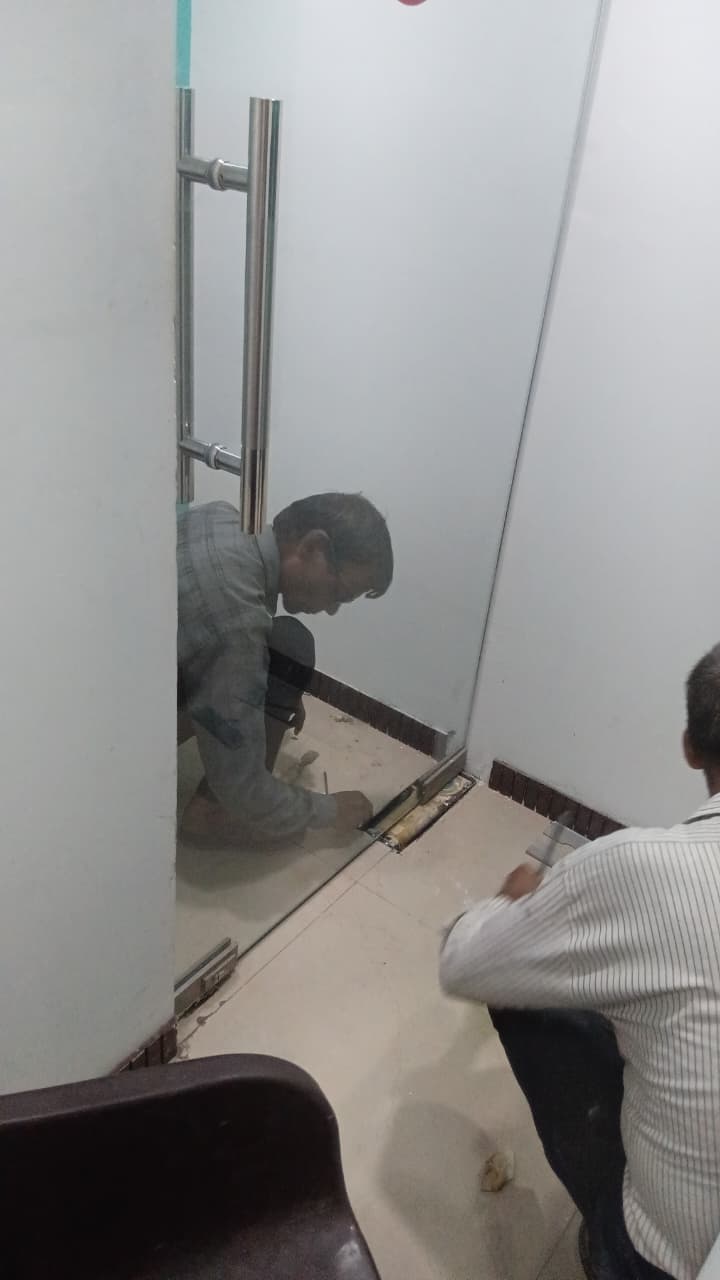
A slamming glass door is more than an annoyance in a quiet office or clinic in Gurugram. Every hard stop sends a shock through the patch fittings into the edge of the glass, and repeated shocks at an edge are one of the classic routes to a toughened panel suddenly shattering. If the door has started banging, it's worth sorting before it turns into a broken toughened glass replacement.
Why a glass door closes too fast
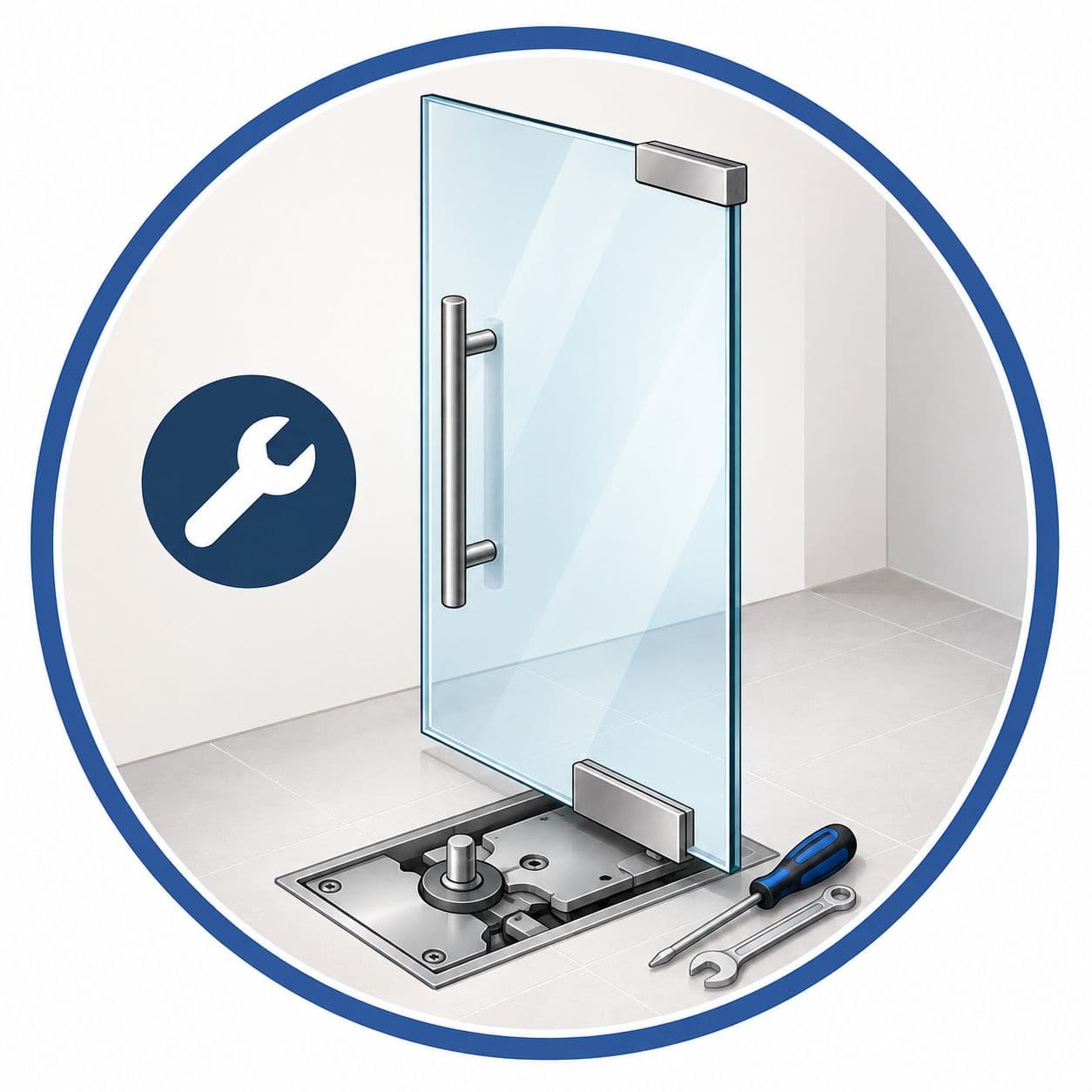
Frameless doors are controlled by a hydraulic floor spring. The spring supplies the closing force; oil pushed through small valves controls the speed. Most units have a main closing-speed valve and a separate latching valve for the last 10 to 15 degrees, and some have a back-check that cushions the door if it's flung open. Too fast means one of those controls isn't doing its job.
The latching valve is wide open (most common)
The door travels at a sensible speed, then snaps the last bit and bangs. That's the latching valve. People often open it deliberately so the door closes against an AC draught, and overdo it.
The closing-speed valve is wide open
The whole swing is fast from the moment you let go. Again, usually an adjustment rather than a fault, unless it has drifted on its own.
The spring is losing oil
If the door used to be well behaved and has become faster over weeks, with no one touching the valves, the unit is usually leaking. Less oil means less resistance, so the door accelerates. You'll often see an oily film under the cover plate. This won't stay fixed with valve turns; see floor spring leaking oil.
Pressure difference or wind
Entrance doors between a cooled office and a corridor, or shopfront doors facing the road, get pushed by air pressure. A floor spring that is fine on a calm day may slam when the AC or a gust adds force. Sometimes the answer is a stronger spring size or a back-check, not just a tighter valve.
A door closer that's the wrong kind or size
Framed aluminium doors usually use an overhead hydraulic door closer rather than a floor spring. Its arm and valve work the same way, and an undersized closer on a heavy door will slam however you set it.
| Symptom | Likely cause | Fix |
|---|---|---|
| Normal swing, then bangs at the end | Latching valve too open | Re-set latching speed |
| Fast from the start | Closing-speed valve too open | Re-set closing speed |
| Got faster over time, oily floor plate | Seals failed, oil lost | Replace floor spring |
| Slams only when the AC is on or it's windy | Air pressure on a light spring | Re-size spring or add back-check |
| Framed door with an arm at the top slams | Overhead closer set or sized wrong | Adjust or replace closer |
Safe checks before you call anyone
- Open the door fully and time how long it takes to close. A well-set door usually takes several seconds.
- Watch where it speeds up: all the way, or only near the frame.
- Look at the floor cover plate for oil or rust.
- Notice whether it only slams with the AC running or the main door open.
How it's fixed and quoted
Send a short video of the door closing, plus a photo of the floor cover plate, on WhatsApp. Repairs don't need the paid site visit that new installations do. From the video we can usually tell whether it needs a valve re-set or a new unit, and repair work is quoted from that rather than from a published rate, since the floor spring model, the door size and any worn fittings change the job.
If the unit is sound, the fix is a careful re-set of both valves until the door closes in a controlled sweep and latches without a bang. If it's leaking, the floor spring is swapped through a glass door floor machine repair and set the same way. Our guide to replacing an office door machine explains what that day looks like.
Keeping it from slamming again
- Don't add rubber stoppers to mask a slam; they move the shock into the glass instead.
- Ask for a back-check if staff tend to fling the door open.
- On busy entrances, choose a floor spring rated for the door's weight and traffic.
A door that does the opposite is covered in glass door not closing. The full glass repair catalogue lists the other fixes, and offices in Noida can start from glass repairs in Noida. A clip of the door slamming, sent on WhatsApp, is the fastest way to get an answer.
Common questions
How do I stop my glass door from slamming?
Usually by reducing the latching or closing speed on the floor spring under the door. If the door has got faster over time on its own, or there's oil under the floor plate, the spring is losing damping and adjustment won't last; the unit needs replacing.
Can a slamming door break toughened glass?
It can. Repeated hard stops shock the glass through its patch fittings, and toughened glass is most vulnerable at its edges. A chip or stress point there can make the whole panel shatter into small pieces, sometimes days after the knock that caused it.
Floor spring ki speed kaise kam karein?
Floor springs have small valves under the cover plate for closing speed and latching speed, but they're easy to over-turn and the unit is under load. It's safer to send us a video on WhatsApp and have it set properly, especially on a heavy 12mm door.
Why does my glass door only slam when the AC is on?
Air pressure between a cooled room and a corridor adds force to the closing door. A spring that's fine on its own can then slam at the latch. The fix is usually a slower latching speed, a back-check, or a floor spring sized for the door.