

Bathroom Glass Work
Sliding vs Hinged Shower Door: How to Choose for Your Bathroom
A hinged glass door swings; a slider glides along a rail. How that one difference changes space, entry width, sealing, upkeep and price.
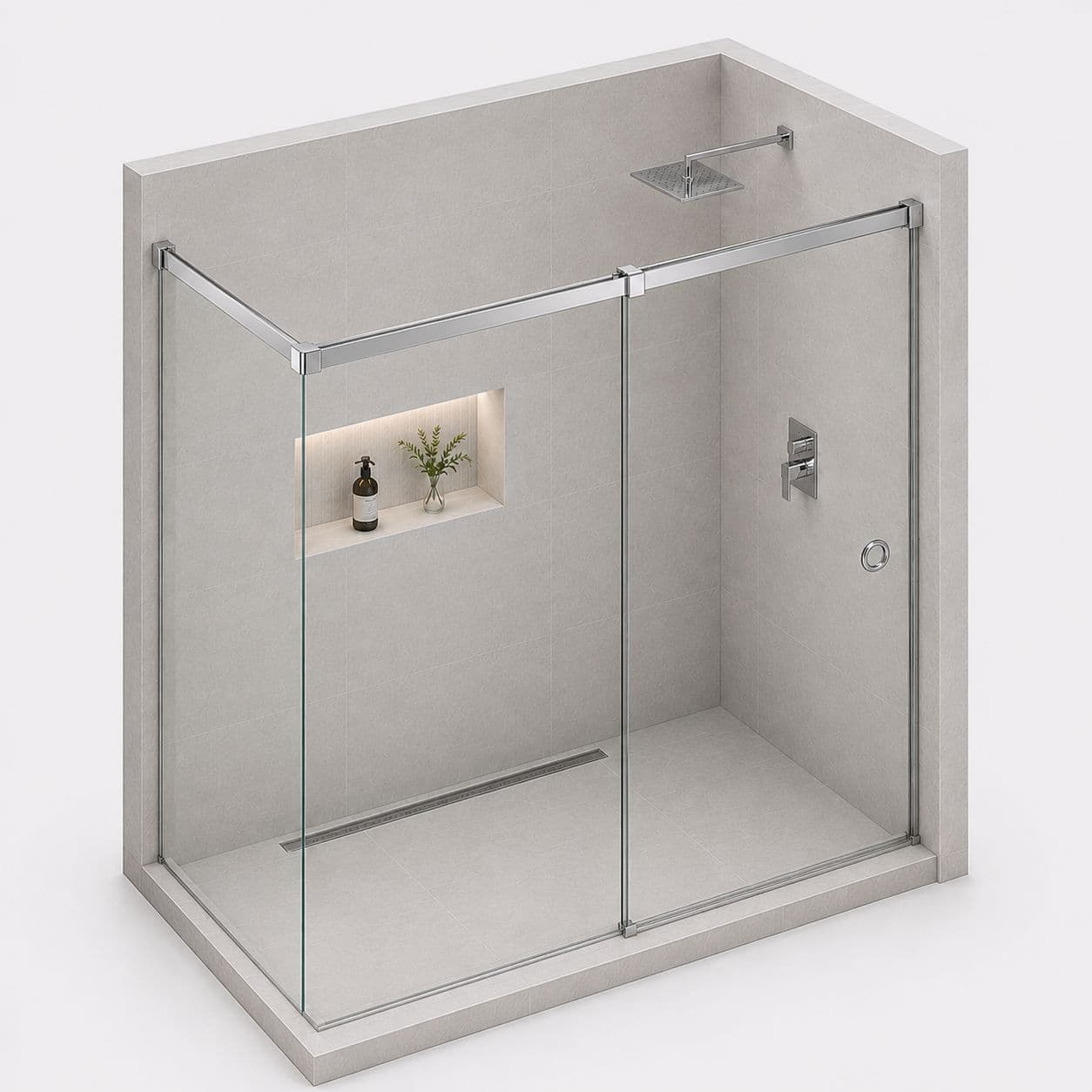
Choose a sliding shower door when the bathroom has no clear floor for a door to swing, and a hinged shower door when it does and you want the widest entry and the simplest hardware. In Gurugram and Noida homes, sliders suit narrow bathrooms and corner showers next to the WC; hinged doors suit larger master bathrooms and anyone who finds stepping through a narrow gap awkward.
Both use the same 10mm Saint-Gobain toughened glass on our rate card, so the decision is about movement, space and upkeep rather than glass quality. Here is how the two compare on the points that matter after a few years of daily use.
How do sliding and hinged shower doors compare?
| Point | Hinged door | Sliding door |
|---|---|---|
| Floor space needed | About the door's width in clear floor to swing | None outside the glass line |
| Entry width | Full door width, usually around 2 ft | Narrower, because panels overlap |
| Hardware | Two hinges and a handle | Top rail, rollers, guide and handle |
| Sealing | Seal strips on the door edges | Overlap plus seals; small gaps at the ends |
| Upkeep | Check hinge screws yearly | Wipe rail and rollers monthly |
| Frameless partition rate | ₹500 per sq ft | ₹550 per sq ft |
| Corner enclosure rate | ₹500 per sq ft | ₹570 per sq ft |
How much space does a hinged door really need?
A hinged door needs a clear arc in front of it roughly as deep as the door is wide. Most frameless shower doors are around 2 ft wide, so plan for about 2 ft of open floor with nothing in the arc: no WC, no basin pedestal, no towel rail at handle height, and no main bathroom door swinging into the same space. Doors can be hinged to open outward, and some layouts allow inward opening too, but inward swing eats into the shower itself.
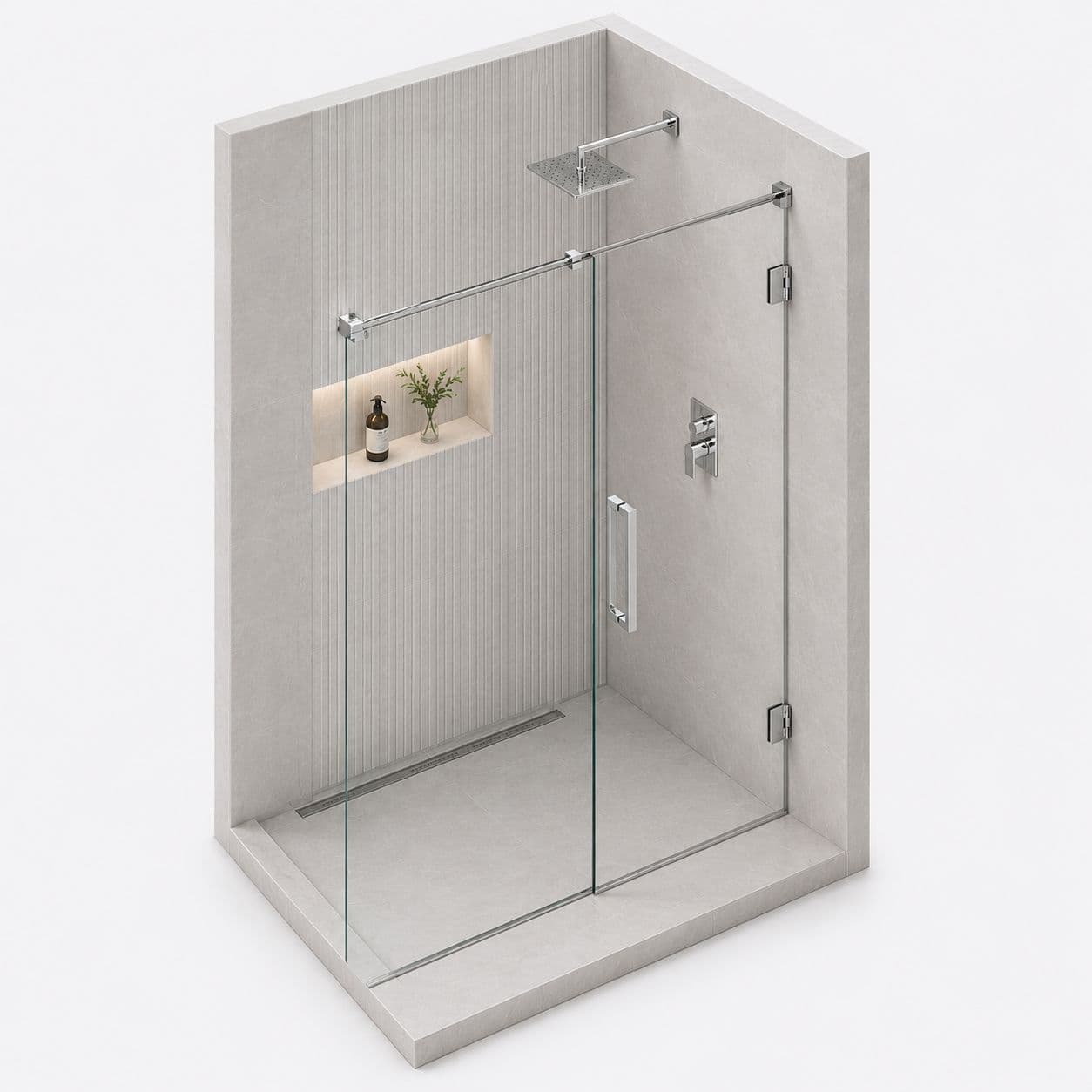
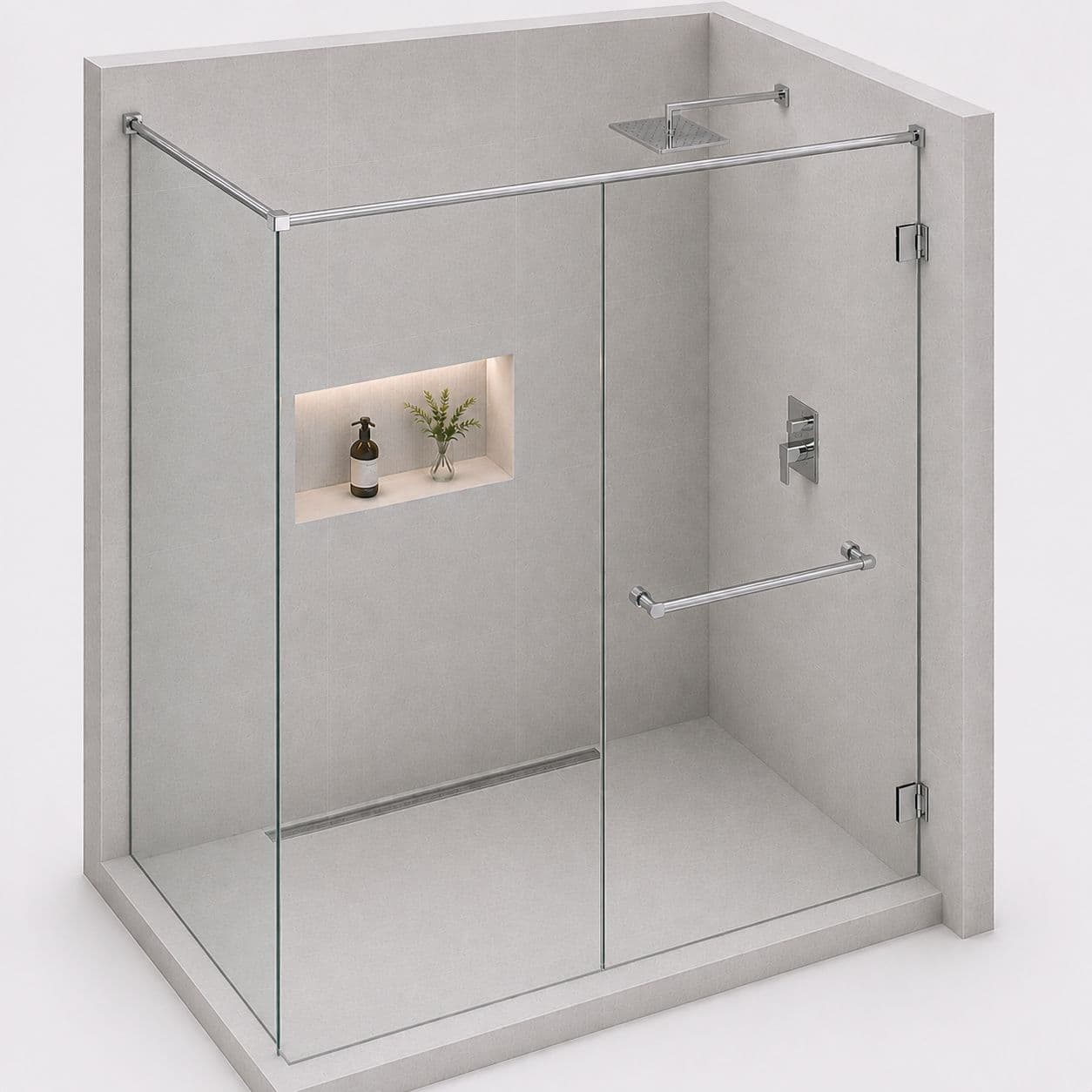
If the arc clears, a frameless partition with a hinged door is the simplest option, from ₹500 per sq ft. If it does not, a slider is not a compromise, it is the right design.
What do you give up with a slider?
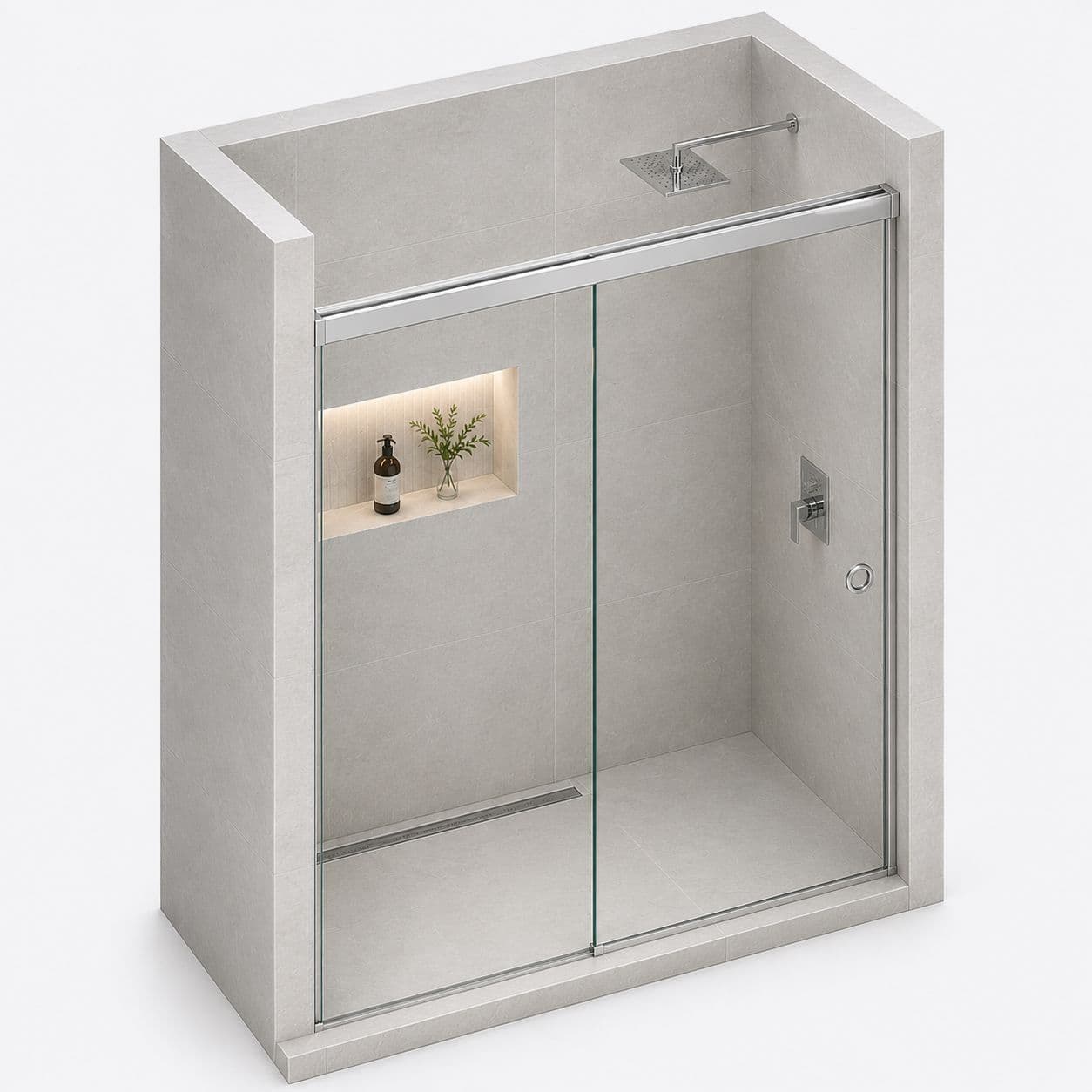
- A narrower opening. The moving panel overlaps the fixed one, so on a 4.5 ft partition the entry may be around 2 ft. Fine for most adults; tighter for anyone who needs help in the shower.
- More moving parts. Rollers and a top rail need occasional cleaning. Hair, soap and scale in the track are the usual reason a slider starts to stick; see shower slider off its roller.
- A slightly higher rate. On our card the frameless sliding partition starts at ₹550 per sq ft, a little above the hinged version, because of the rail and roller hardware.
What do you give up with a hinged door?
- Floor space, as above.
- Drips on the bathroom floor. When a wet door swings out, it drips onto the dry side. A small mat helps.
- Load on two hinges. The whole door hangs from them, so they must be fixed into solid wall. A door that drops over time is usually a hinge issue; see shower door sagging and shower door hinge stuck.
- A magnet or stop to keep it closed. If it stops holding, the door drifts open; see shower door magnet not holding.
Which one seals better against splashing?
Both keep water in when they are fitted and sealed well. A hinged door closes against seal strips along its edges, so it can seal very tightly. A slider relies on the overlap between panels and on seals at the ends, and there is usually a small gap where the moving panel meets the wall. In practice, splash depends more on where the shower head points and on the floor slope than on the door type. Point the head away from the door gap, and make sure the floor drains toward the drain, not toward the glass.
What about corner showers?
In a corner, the same logic applies on two sides. An L-shaped enclosure with a hinged door starts at ₹500 per sq ft; the L-shaped enclosure with a slider starts at ₹570 per sq ft. For a 3 ft by 3 ft corner with 6.5 ft glass, about 39 sq ft, that is a starting budget of roughly ₹19,500 hinged or ₹22,230 sliding.
Which is better for elderly family members or children?
A hinged door gives a wider, clearer entry, and the door can be held open while someone helps. Sliders are easier for small hands to operate but the entry is narrower. For a bathroom used by someone with limited mobility, a fixed walk-in screen with no door at all may be the safest option, provided the shower zone is deep enough to contain splash. Our guide to small bathroom shower partition designs shows the walk-in layouts.
How do you decide on the day?
- Stand where the glass will go and open your arms to about 2 ft. If you touch the WC, basin or a door, go sliding.
- Check who uses the bathroom. Wider entry needs favour hinged.
- Think about upkeep. Hinged is lower maintenance; sliders need a monthly rail wipe.
- Book a site visit for ₹99; we measure and confirm both options if both fit, and send a written quote, usually within about 2 hours.
We work across Gurgaon, Noida and Delhi, with visits usually arranged within 24 to 48 hours. Both door types carry a 1 year functional warranty on hardware; the glass is not covered. You can compare every bathroom style in the shower cubicle catalogue or see full budgets in the shower cubicle cost guide.
Common questions
Is a sliding or hinged shower door better?
Neither is better everywhere. A hinged door gives a wider entry and simpler hardware but needs about 2 ft of clear floor to swing. A sliding door needs no swing space, so it suits narrow bathrooms and showers next to the WC, but the entry is narrower and the rail needs occasional cleaning. The room usually decides.
Does a sliding shower door cost more than a hinged one?
Slightly. On our rate card a frameless sliding partition starts at ₹550 per sq ft and a frameless partition with a hinged door at ₹500 per sq ft. For corner enclosures, the slider starts at ₹570 per sq ft against ₹500 per sq ft hinged. The difference is the rail and roller hardware.
Sliding shower door ya opening door, chhote bathroom ke liye kaunsa?
For a small bathroom, a sliding door is usually the better choice because it does not need space to swing open. An opening (hinged) door needs about 2 ft of clear floor in front of it. If that space is free of the WC and basin, a hinged door gives a wider entry.
Do sliding shower doors leak more?
Slightly more often than a well-sealed hinged door, because there is a small gap where the moving panel meets the wall. In practice, leaks depend more on the floor slope, the direction of the shower head and the condition of the seals. A correctly fitted slider with good seals keeps the bathroom floor dry.
How do I stop a sliding shower door from getting stuck?
Wipe the top rail and run a soft brush along it every month to remove scale, soap and hair. Check that the rollers sit on the rail properly and are not cracked. A door that jumps off its rollers or drags usually needs a roller adjustment or replacement rather than new glass.
Can I change a hinged shower door to a sliding one later?
Usually not by reusing the same glass. Toughened glass is drilled or notched for its hinges or rollers before toughening and cannot be reworked afterwards, so switching from hinged to sliding normally means new panels and new hardware. It is worth settling the door type at the measurement stage, before production starts.
What this page is about
Read next
- Shower Partition Designs for Small Bathrooms in Gurgaon HomesFive glass shower layouts that actually fit a compact bathroom, how much floor each one needs, and how to choose between them before anyone measures.
- Frameless vs Framed Shower Partition: Which Suits Your Bathroom?Frameless glass or a slim black frame? What each one does well, why the framed option costs more on our rate card, and the bathrooms where each makes sense.
- Shower Glass Thickness: 8mm vs 10mm vs 12mm ExplainedWhat changes between 8mm, 10mm and 12mm toughened glass in a shower: weight, stiffness, hinge load and feel, with the maths to check any quote.