

Bathroom Glass Work
Shower Glass Thickness: 8mm vs 10mm vs 12mm Explained
What changes between 8mm, 10mm and 12mm toughened glass in a shower: weight, stiffness, hinge load and feel, with the maths to check any quote.
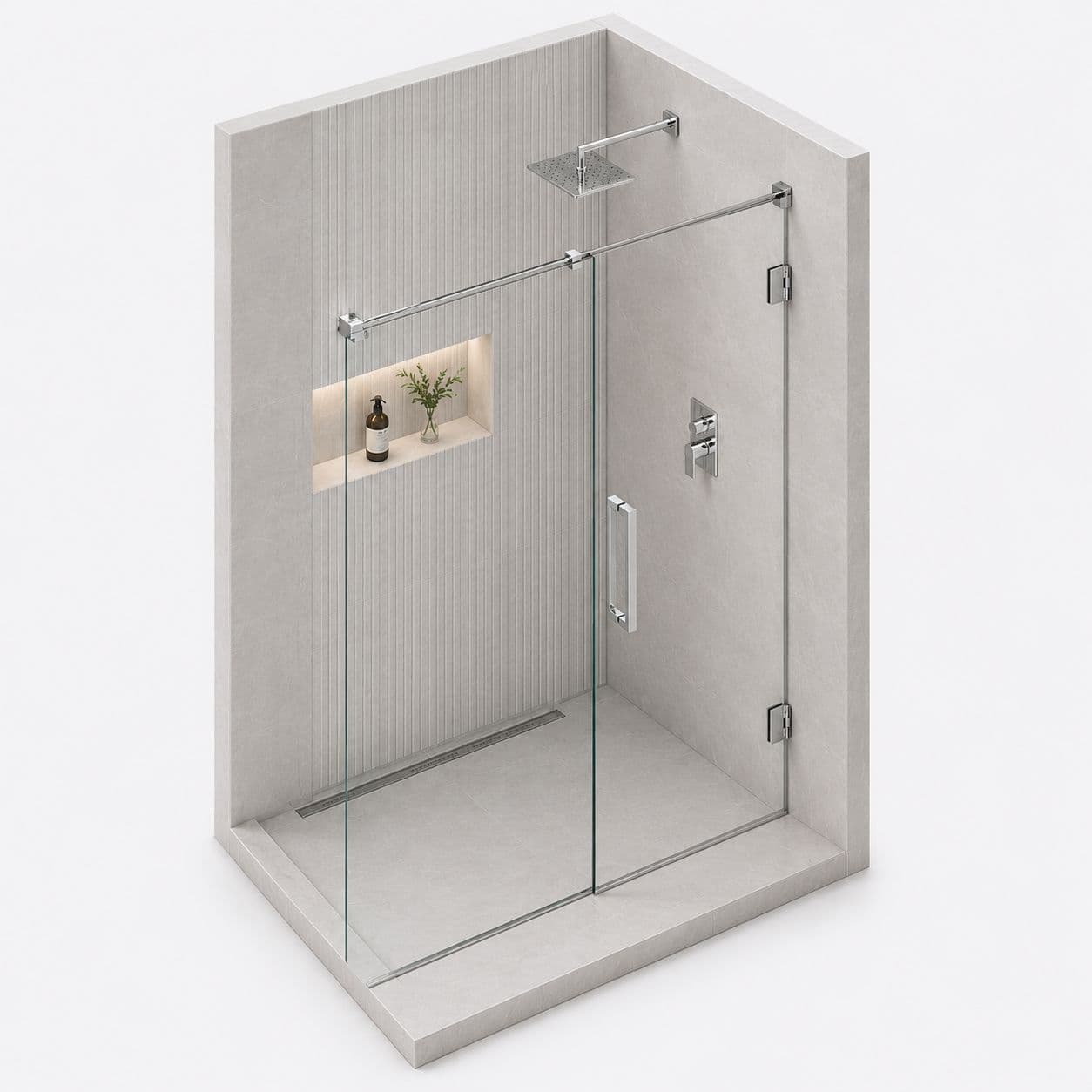
For a frameless shower partition, 10mm toughened glass is the usual sweet spot: stiff enough to stand without a frame and light enough for standard shower hinges. 8mm suits framed or small fixed panels; 12mm is heavier than most bathroom hardware is designed for and is more common in office partitions. Every bathroom style FabWise fits in Gurgaon and Noida uses 10mm Saint-Gobain toughened glass.
This guide is about the numbers behind that choice: how much each thickness weighs, what it does to the hinges, how it feels when you push the door, and how to read a quote that names a thickness. For a broader look at thickness across every kind of glass work, see the glass thickness guide in our glossary.
How much does shower glass weigh at each thickness?
Glass weighs roughly 2.5 kg per square metre for every millimetre of thickness. Converted to sq ft, that gives the figures below. They are approximate and the same for clear and toughened glass, because toughening changes the strength, not the weight.
| Thickness | Approx. weight per sq ft | A 2 ft × 6.5 ft door (13 sq ft) | Typical use in a bathroom |
|---|---|---|---|
| 8mm | About 1.9 kg | About 24 kg | Framed cubicles, small fixed panels |
| 10mm | About 2.3 kg | About 30 kg | Frameless doors, sliders and screens |
| 12mm | About 2.8 kg | About 36 kg | Large fixed panels; mostly offices |
Six kilograms between 10mm and 12mm on a single door sounds small, but it sits on two hinges screwed into tile, and it swings hundreds of times a month. You can check any panel with our glass weight calculator.
Is 8mm glass safe for a shower?
Yes, 8mm toughened glass is safety glass and is used widely in framed shower cubicles. The limitation is stiffness, not safety. A tall 8mm panel with no frame flexes more when you push the door or lean on it, and that movement loosens fittings over time. So 8mm works where a frame or a short span supports it, and is less suited to a full-height frameless partition.
Why do most frameless showers use 10mm?
- Stiffness without a frame. 10mm holds its shape across a 6.5 to 7 ft height, so the door feels solid rather than springy.
- Matched to shower hardware. Standard glass-to-glass hinges, wall hinges and clamps are commonly designed around 8 to 10mm glass in this weight range.
- Manageable weight. A 10mm door is heavy enough to feel good and light enough that hinges, wall plugs and tiles carry it comfortably.
- Polished edges look right. At 10mm the exposed edge reads as deliberate and finished.
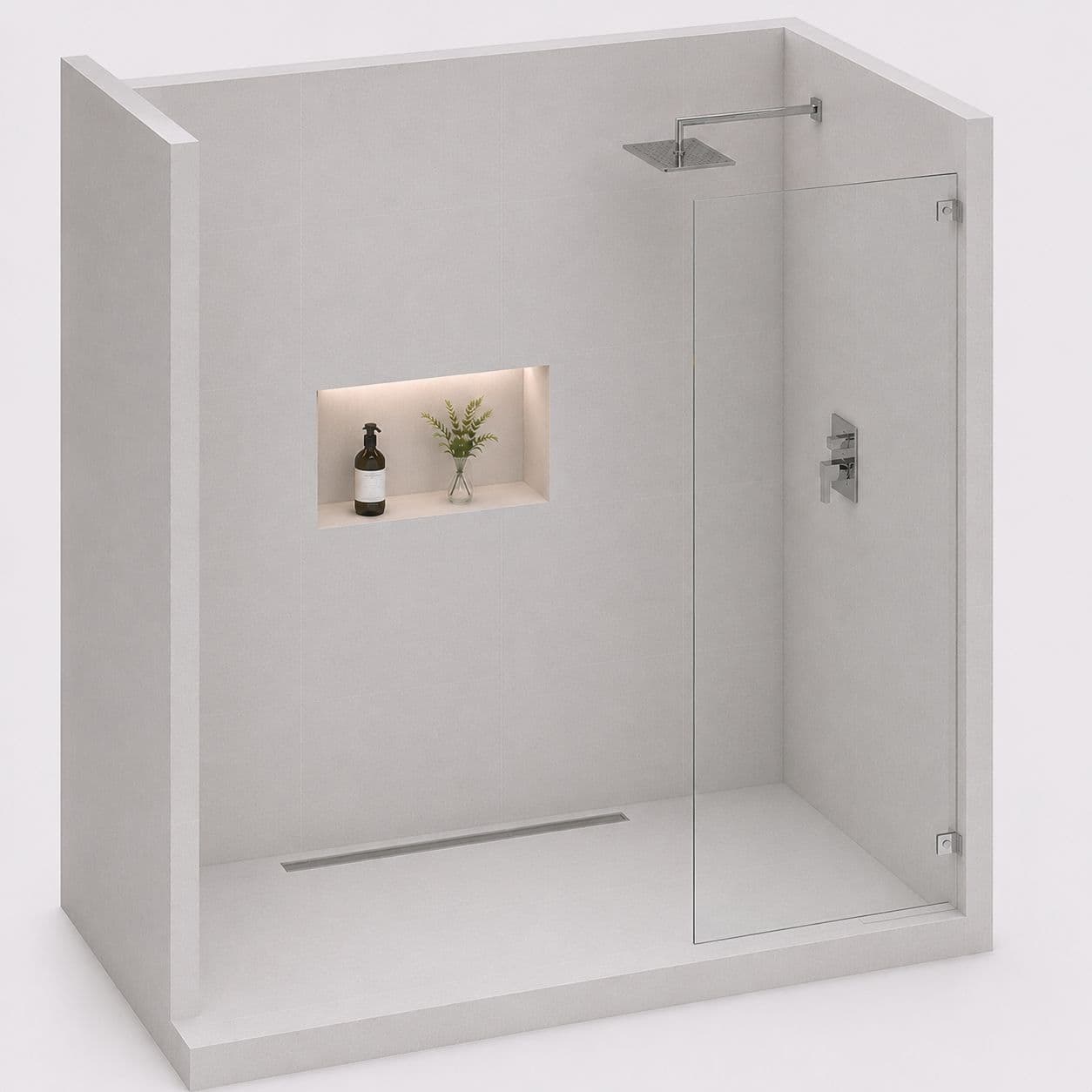
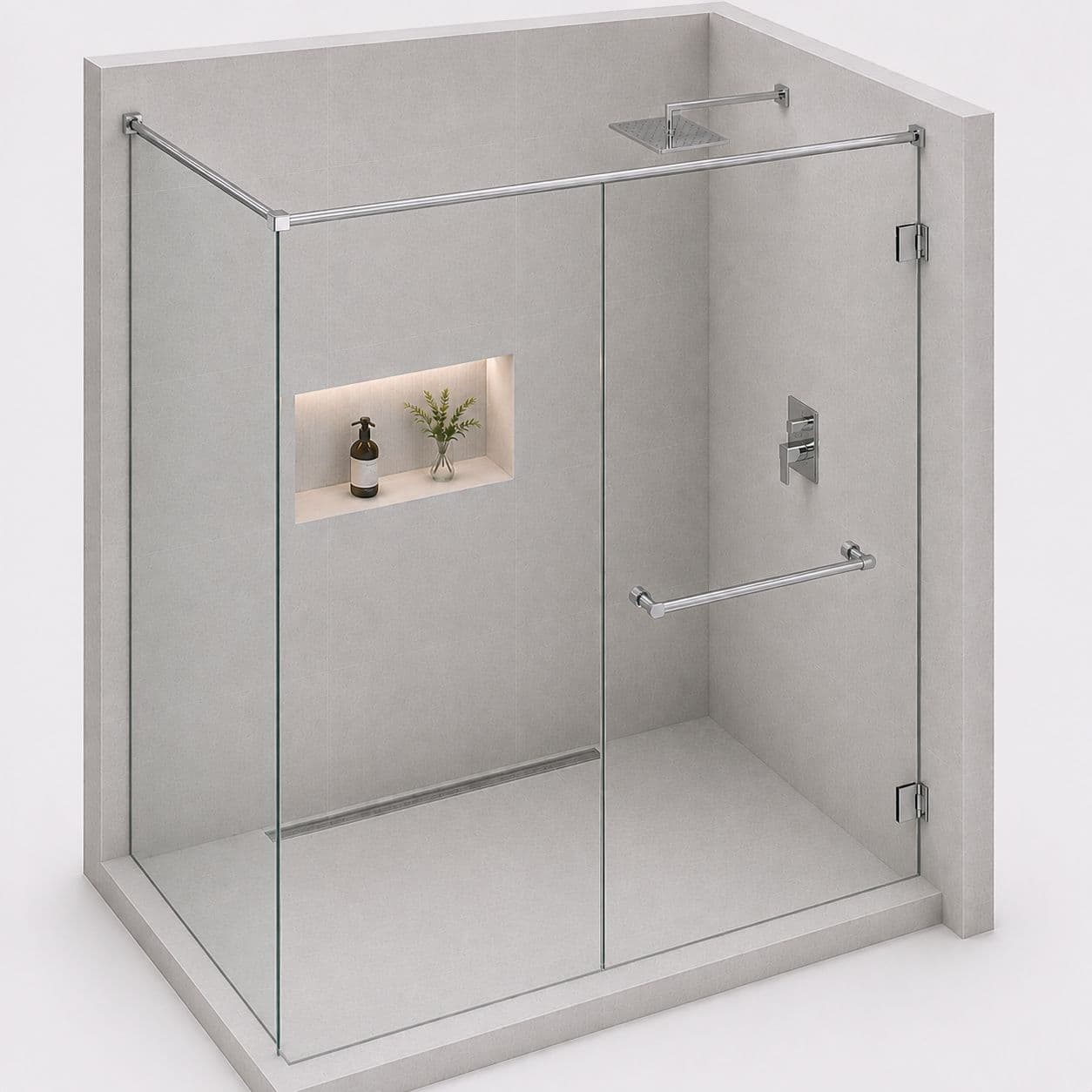
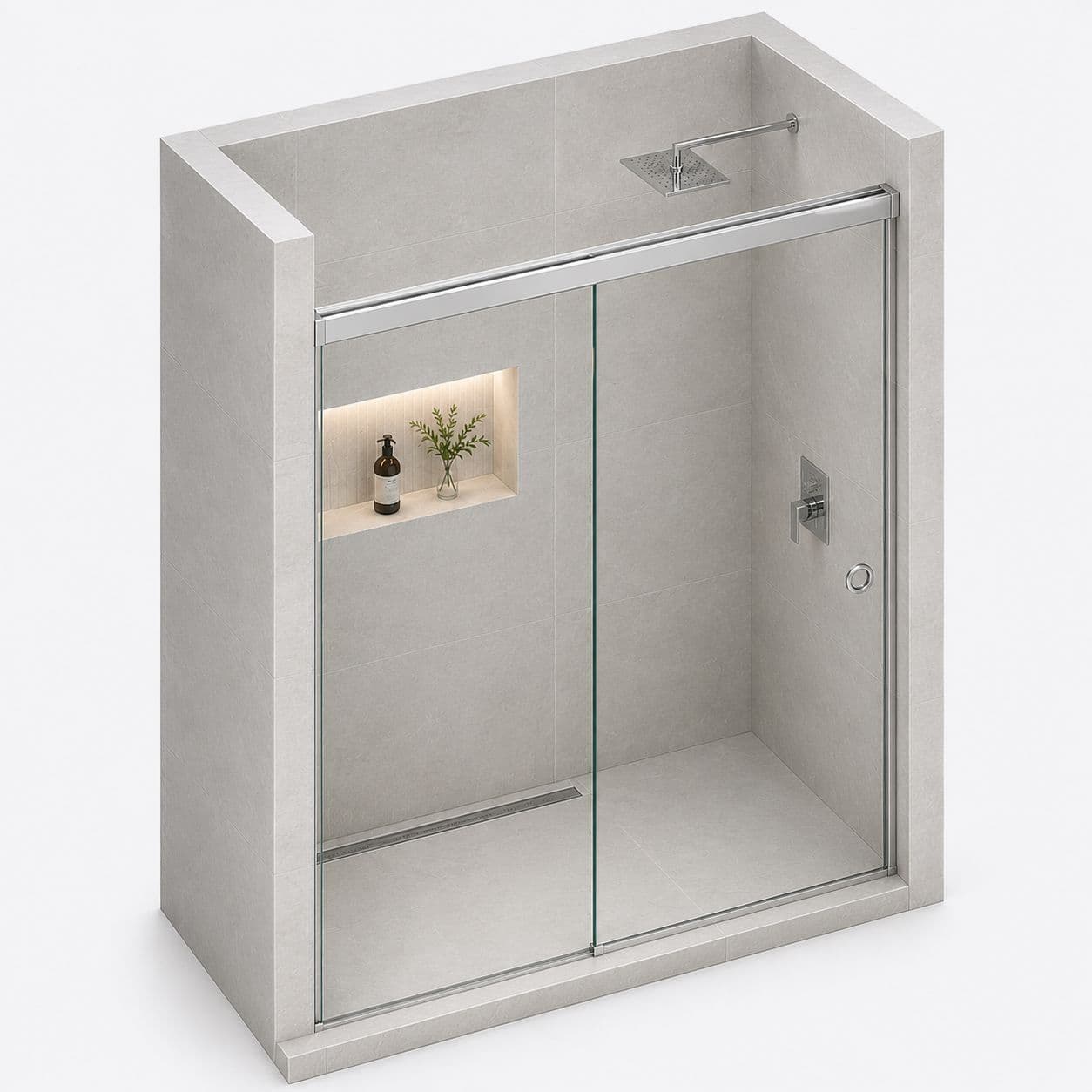
That is why our frameless partition with door, frameless sliding partition, corner enclosures and fixed shower screen all list 10mm Saint-Gobain toughened glass.
When would 12mm make sense, and why not in most bathrooms?
12mm earns its place on large fixed panels, very wide walk-in screens and commercial washrooms. In offices we use 12mm as standard, for example in a frameless glass cabin, because those doors run on a floor spring designed for the load.
In a home bathroom, a 12mm hinged door asks more of the hinges and the wall. Tiles over hollow or patched plaster, which are common in older Gurugram houses, may not hold the extra load for years. If someone offers 12mm as an upgrade for a hinged shower door, ask which hinge it hangs on and what it is rated for. Thicker is not automatically better.
Does thickness change the price?
Thicker glass costs more to make and to handle, so yes, but on our rate card the thickness is fixed for each style, so you compare layouts rather than thicknesses. Bathroom styles start from ₹370 per sq ft for a fixed screen and ₹500 per sq ft for a frameless door. A 35 sq ft partition with a door would start around ₹17,500. The frameless glass partition price guide shows how the rate is built.
How do you check the thickness on a quote or after installation?
- The quote should name the thickness and the glass maker. Ours states 10mm Saint-Gobain toughened glass for bathroom work.
- Toughened glass usually carries a small etched stamp in a corner. Look for it once the panel is installed.
- Measure an exposed edge with a steel ruler or vernier. 10mm glass measures very close to 10mm.
- Ask what the hinges and clamps are rated for, in kg per door. The answer should comfortably exceed the door weight.
What else matters as much as thickness?
- The fittings. SS304 holds up in a wet bathroom; lower grades can show rust spots at screw heads. Our SS304 vs SS202 explainer covers why.
- The fixing into the wall. Hinges must go into solid masonry, not just tile.
- Edge work. Polished edges are safer to handle and look cleaner.
- Measurement accuracy. Toughened glass cannot be cut afterwards, so a wrong size means a new panel and another 7 to 10 days of production.
How does a FabWise shower job run?
Book a visit for ₹99, usually arranged within 24 to 48 hours in Gurgaon, Noida and Delhi. We measure, check the walls, and send a written quote, usually within about 2 hours, valid 3 days. Production starts after a 50% advance and the balance is due on completion. Our bathroom styles carry a 1 year functional warranty on hardware; the glass itself is not under warranty. If your existing door has started to drop, read shower door sagging first; it is often the hinge, not the glass.
Common questions
Which glass thickness is best for a shower partition?
For a frameless shower partition, 10mm toughened glass is usually best. It is stiff enough to stand without a frame and light enough for standard shower hinges. 8mm suits framed cubicles and small fixed panels, and 12mm is mostly used for large fixed panels and office doors on floor springs. FabWise uses 10mm Saint-Gobain toughened glass for all bathroom styles.
Is 12mm glass better than 10mm for a shower door?
Not usually. A 12mm door weighs about 20% more than a 10mm one, and most shower hinges are designed around 8 to 10mm glass. The extra weight strains hinges and wall fixings, especially on older tiled walls. 12mm makes sense for big fixed panels; for a hinged home shower door, 10mm on good SS304 hinges is the better match.
How heavy is a 10mm glass shower door?
10mm glass weighs about 2.3 kg per sq ft, so a typical 2 ft by 6.5 ft door of 13 sq ft weighs around 30 kg. An 8mm door of the same size is about 24 kg and a 12mm door about 36 kg. Hinges should be rated comfortably above the door's weight.
Shower ke liye 8mm glass theek hai ya 10mm lena chahiye?
8mm toughened glass is safe and works well in a framed cubicle or a small fixed panel. For a frameless shower with a door, 10mm is the better choice because it flexes less and stays firm on its hinges over the years. All FabWise bathroom partitions use 10mm Saint-Gobain toughened glass.
Does thicker glass stop shower leaks?
No. Leaks come from gaps at the bottom edge, around the door and at worn seals, not from the glass itself. A correct floor slope, good seal strips and properly set hinges stop leaks. Thickness affects stiffness, weight and feel, not water-tightness.
Can toughened shower glass be cut to fit after it arrives?
No. Toughened glass is cut, drilled and edged before it is heat-treated, and cutting it afterwards shatters it. That is why accurate site measurement matters: a panel made to the wrong size has to be remade, which means another production cycle of around 7 to 10 days.
What this page is about
Read next
- Shower Partition Designs for Small Bathrooms in Gurgaon HomesFive glass shower layouts that actually fit a compact bathroom, how much floor each one needs, and how to choose between them before anyone measures.
- Frameless vs Framed Shower Partition: Which Suits Your Bathroom?Frameless glass or a slim black frame? What each one does well, why the framed option costs more on our rate card, and the bathrooms where each makes sense.
- How to Clean Hard Water off Shower Glass in Gurgaon and NoidaA routine that keeps shower glass clear with Gurugram's hard water: what to use daily, weekly and monthly, what damages SS fittings and seals, and how to tell a stain from etching.