

Glossary · Railings & fittings · Gurgaon & Noida
SS304 vs SS202: which stainless steel grade is which?
SS304 is the stainless steel grade with about 18% chromium and 8% nickel; SS202 keeps similar chromium but replaces roughly half the nickel with manganese. Both look identical when new, but 304 holds up far better on balconies, terraces and bathrooms, while 202 is best kept to dry indoor use.
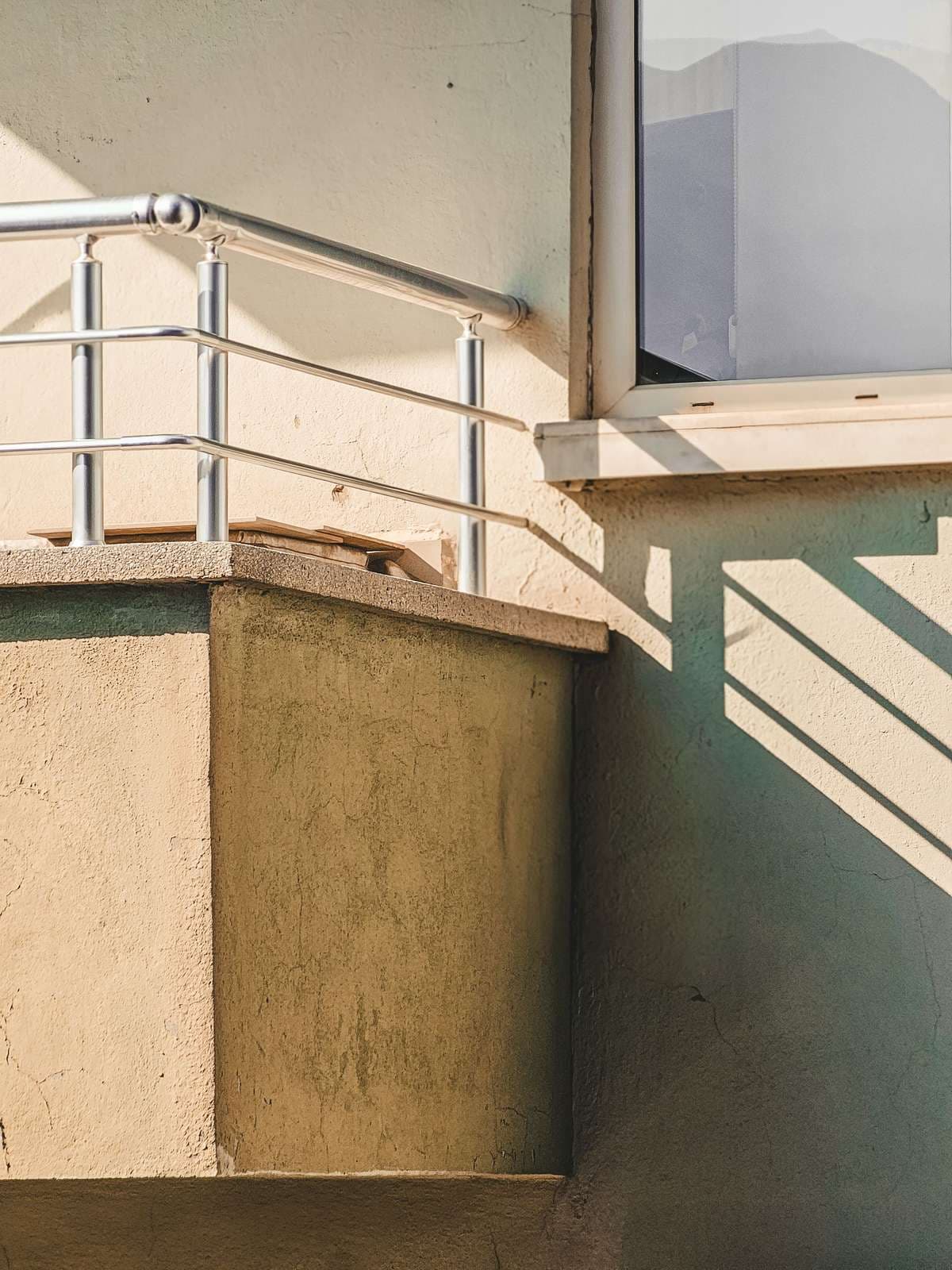
If you are pricing a stainless steel railing, a shower hinge or a gate handle in Gurugram or Noida, you will be offered two grades with almost the same name: SS304 and SS202. The difference between them is chemistry you cannot see on the day of installation and can clearly see two monsoons later. This page explains what each grade is, where each belongs, and how to check which one you are actually getting.
What makes SS304 and SS202 different?
Both are austenitic stainless steels, the family that is tough, weldable and takes a mirror or satin polish. What makes any stainless steel stainless is chromium: above roughly 10.5% it forms a thin, self-healing oxide film on the surface. Nickel keeps the steel's structure stable and helps that film resist pitting. SS202 keeps chromium at a broadly similar level but cuts nickel to around 4–6% and adds about 7.5–10% manganese (plus some nitrogen) to make up for it. Nickel is the expensive ingredient, so 202 is cheaper. The trade-off is a weaker passive film, especially where chlorides, sweat, hard water or acidic cleaners sit on the surface.
| Property | SS304 | SS202 |
|---|---|---|
| Chromium | Typically about 18–20% | Typically about 17–19% |
| Nickel | Typically about 8–10.5% | Typically about 4–6% |
| Manganese | Up to about 2% | Typically about 7.5–10% |
| Rust resistance outdoors | Good; stays bright with cleaning | Fair; tea-coloured staining is common |
| Cost | Higher | Lower |
| Best use | Balconies, terraces, bathrooms, kitchens | Dry interiors, decorative trims |
Where should you use 304, and where is 202 acceptable?
Use SS304 anywhere the metal meets water, sweat, sun or cleaning chemicals: balcony and terrace railings, staircase handrails that get touched daily, bathroom glass fittings, shower hinges, and anything near a kitchen. Delhi NCR adds its own load: heavy dust that holds moisture, hard borewell water in many societies, and pollution that settles on outdoor metal. A stainless steel balcony railing in 202 on an open Gurgaon balcony is the classic case of brown spots appearing within a year or two.
SS202 can be fine for indoor, dry, low-touch items: a decorative trim inside an air-conditioned office, an internal staircase that never gets wet, furniture legs. For the outdoor and wet cases, the small saving rarely survives the first round of stains. For the full grade comparison including SS316 for very harsh spots, read our guide to SS railing grades 304, 202 and 316.
How do you tell SS304 from SS202?
The popular magnet test is not reliable. Both grades are essentially non-magnetic when annealed, and both can become slightly magnetic where they have been bent, cold-worked or welded. A magnet that sticks a little does not prove 202, and one that does not stick does not prove 304. Better checks:
- Mill test certificate: the supplier's certificate for the pipe or sheet lists the heat number and chemistry. Ask for it before the order is placed.
- Markings: many tubes and sheets carry an ink or laser marking with the grade. Look before it is polished away.
- Spot test kits and analysers: a chemical spot test for molybdenum or nickel, or a handheld XRF analyser, gives a quick reading on site.
- Written grade on the quote: whatever the test, make sure the quotation names the grade, so there is no argument later.
Common confusions
SS304 vs SS316: 316 adds molybdenum for better chloride resistance; it is the coastal or pool grade, rarely needed inland. Stainless vs mild steel: mild steel needs paint or powder coating to survive outdoors, stainless does not. And a 304 railing can still show light surface rust if iron particles from cutting tools are left on it; that is contamination, not a grade problem, and it wipes off early. Our problem page on rust spots on an SS railing covers how to tell the two apart.
How do you care for stainless steel?
- Wipe with a damp cloth and mild soap; rinse and dry, especially in hard-water areas.
- Never use bleach, acid toilet cleaners or steel wool on it. They attack the passive film.
- Wipe along the polish grain, not across it.
- Treat early tea-staining with a stainless steel cleaner before it pits.
Where FabWise uses it
Every FabWise glass installation lists SS304 fittings: the frameless shower partition with door, the frameless glass office partition with door and the toughened glass shop front. For railings, the grade is agreed in the written quote after the site visit. See all railing options or our SS railing price guide for what changes the cost, then book a visit so the grade, the tube sizes and the finish are written down before anything is cut.
Common questions
Is SS202 good for a balcony railing in Gurgaon?
Usually not. SS202 has less nickel and more manganese than SS304, so its protective film is weaker. On an open balcony exposed to rain, dust and pollution it commonly develops brown tea-staining and rust spots within a year or two. SS304 costs more but stays presentable with occasional cleaning. Keep 202 for dry indoor uses where it never gets wet.
Can I check SS304 with a magnet?
Not reliably. Both SS304 and SS202 are essentially non-magnetic when annealed, and both can pick up slight magnetism where bent, cold-worked or welded. A magnet can catch an obvious mild-steel fake, but it cannot tell 304 from 202. Ask for the mill test certificate, look for grade markings on the tube, or use a chemical spot test or XRF analyser.
Why is my SS304 railing showing rust spots?
Often it is surface contamination rather than the steel failing: iron particles from grinding or cutting tools, construction dust, or bleach and acid cleaners. These cause light orange spots that usually clean off with a stainless steel cleaner. If spots return in the same place or pit the surface, the grade or the weld finishing may be the issue and is worth inspecting.
SS 304 aur 202 mein kya fark hai?
The difference is nickel and manganese. SS304 has roughly 8% nickel and about 2% manganese at most; SS202 has around 4–6% nickel and much more manganese. That makes 202 cheaper but less rust-resistant. For anything outdoors, in a bathroom or near a kitchen, choose 304. For dry indoor decoration, 202 can be acceptable.
Do I need SS316 instead of SS304 in Delhi NCR?
Rarely. SS316 adds molybdenum for better resistance to chlorides, which matters most near the sea, around swimming pools or where strong chemicals are used. For typical balconies, staircases and bathrooms in Gurugram or Noida, SS304 is usually sufficient if it is cleaned now and then and kept away from bleach and acid cleaners.
Services on this page
Related terms
- Glass railing spigotsGlass railing spigots are short, heavy stainless steel posts, bolted to the floor or core-drilled into it, that clamp the bottom of each glass panel at two or more points so a railing looks almost frameless without a continuous base channel.
- Glass railing U-channelA glass railing U-channel (base shoe) is a continuous aluminium or steel channel fixed to the floor or slab edge that clamps the bottom of the glass panels, letting a balcony or stair railing stand without posts.
- Laminated glassLaminated glass is two or more glass panes permanently bonded with a plastic interlayer, usually PVB, so that the glass stays held together and in place when it breaks.
- ACP fire-retardant (FR) coreAn FR-core ACP is an aluminium composite panel whose core between the two aluminium skins is heavily filled with mineral fire retardants instead of plain polyethylene, so it resists ignition and flame spread far better than a standard PE-core panel.
- Aluminium sectionsAluminium sections are extruded aluminium alloy profiles, most often alloy 6063 in a T5 or T6 temper, that form the frames of windows, sliding doors, partitions, louvres and facades, finished by anodising or powder coating.
- Back-painted glassBack-painted (lacquered) glass is glass with an opaque coloured coating applied to its rear face, so the colour is seen through a glossy glass surface; it is used for wall cladding, splashbacks and writing boards.