

Glossary · Facades & ACP cladding · Gurgaon & Noida
ACP fire-retardant core: FR vs PE panels explained
Aluminium composite panel (ACP) is two thin aluminium skins bonded to a core. A PE core is plain polyethylene, which burns readily. An FR (fire-retardant) core is loaded with mineral fire retardants, so it resists flame spread far better. FR is safer, but it is not the same as non-combustible.
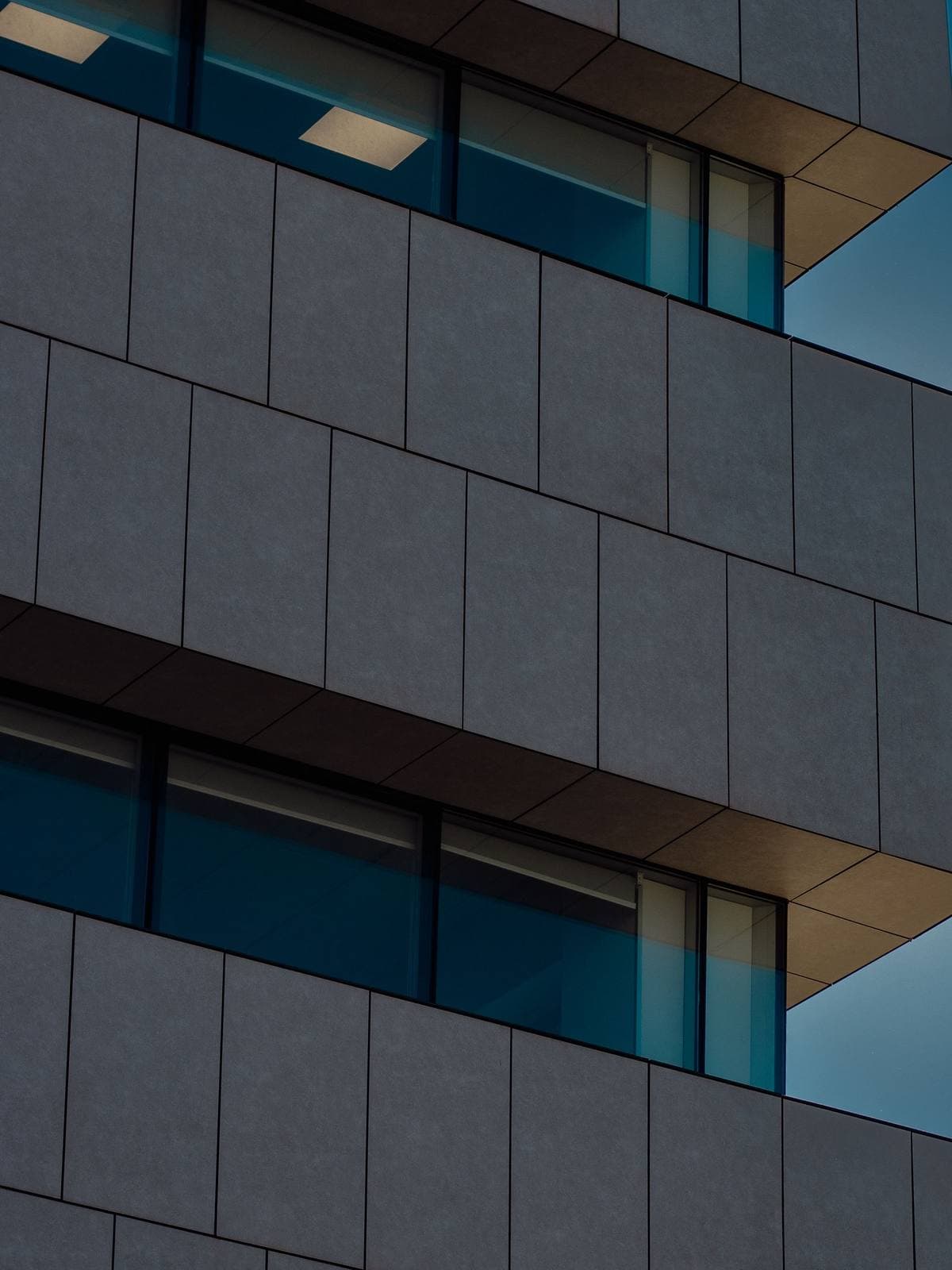
Walk down any market road in Gurugram, from Sohna Road to MG Road, and half the shopfronts and office facades are clad in ACP. It is flat, light, comes in any colour and cuts easily. What you cannot see from the road is the core, and that is where the fire safety question lives. Since high-profile facade fires around the world, the difference between PE-core and FR-core panels has become the first thing to ask about.
How is an ACP panel built?
A typical ACP is about 3–4mm thick: two aluminium skins, each commonly around 0.2–0.5mm, bonded to a core. The outer skin carries the coating, commonly PVDF for exterior grade or polyester for interior or budget grade. The panel's stiffness comes from that sandwich, which is why it stays flat over large areas. Fabricators route a groove in the back, fold the edges into trays, and hang them on an aluminium or steel sub-frame.
What is the difference between PE and FR cores?
| PE core | FR core | A2 / mineral core | |
|---|---|---|---|
| Core material | Low-density polyethylene | Polyethylene heavily filled with mineral fire retardants | Mostly inorganic mineral, little polymer |
| Typical mineral content | None | Varies widely by product; often around 60–70% in many FR grades | Over about 90% |
| Fire behaviour | Burns and drips; can spread flame up a facade | Much slower ignition and flame spread | Practically non-combustible |
| Typical rating | Not rated for facades of tall buildings | Often tested to Class B (EN 13501-1) | Class A2 |
| Cost | Lowest | Higher | Highest |
| Typical use | Signage, interiors, low-risk single storey | Shopfronts and facades | High-rise and high-risk buildings |
Where should FR-core ACP be used?
- Building facades, especially multi-storey offices, hospitals, schools, malls and hotels.
- Shopfronts in market rows where a fire could spread from one shop to the next.
- Anywhere ACP sits near a kitchen exhaust, generator, electrical panel or signage lighting.
Local bye-laws and fire NOC requirements vary by building height and use, so for larger buildings the architect or fire consultant should confirm the core grade before ordering. PE-core panels remain common for indoor signage and display, where the fire risk profile is different.
How do you verify an FR panel?
- Ask for the test certificate for the exact product and thickness, showing the standard (for example EN 13501-1 or an Indian test) and the classification.
- Check the panel edge: a PE core looks like a uniform, slightly glossy plastic; an FR core usually looks chalkier, greyer and more granular. This is a hint, not proof.
- Check the back of the panel and packaging for printed product codes that match the certificate.
- Get the core type written in the quote, alongside the brand, thickness and skin coating.
Common confusions
- FR is not non-combustible. It still contains polymer; only A2-class mineral cores approach non-combustibility.
- Skin thickness matters too. A thin-skinned panel dents and "oil-cans" more readily, and the skins also shield the core from flame.
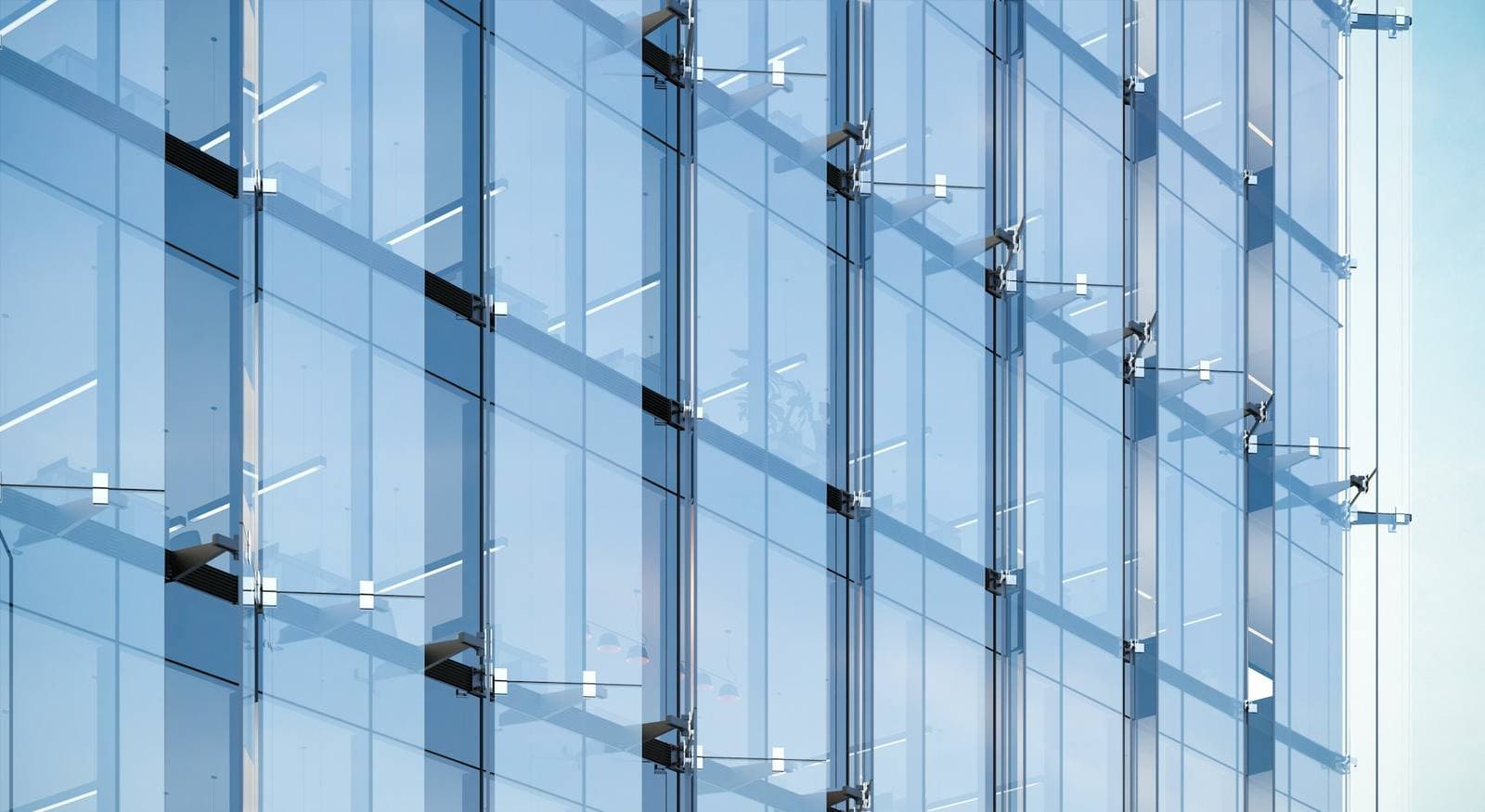
- ACP vs structural glazing: ACP is opaque cladding; glass facades are a different system, compared in structural glazing vs ACP.
- Colour fading is a coating issue, not a core issue; see ACP colour fading.
What else makes an ACP facade last?
A straight, well-anchored sub-frame; panels hung with room for thermal movement; open or sealed joints done consistently; and fixings that do not rust behind the panel. Loose or bulging panels usually point to the frame or fixings, covered in ACP panel loose. Behind the panels, gaps between floors should be fire-stopped, which is often overlooked.
Care
Wash with water and mild detergent once or twice a year to remove Delhi NCR dust, which otherwise etches into the coating. Avoid solvent cleaners and pressure jets aimed into joints.
Where FabWise uses it
ACP cladding is part of our facades and shutters range and is quoted after a site visit, with the panel brand, core type and thickness stated in writing. For planning a shopfront, read the ACP cladding shop front guide and see ACP cladding price for what changes the cost.
Common questions
Is FR-core ACP fireproof?
No. FR-core ACP is fire-retardant, not fireproof or non-combustible. Its mineral-filled core resists ignition and slows flame spread far better than a polyethylene core, and many products are tested to around Class B. Only A2-class mineral-core panels approach non-combustibility. Always check the test report for the exact panel.
How can I tell if an ACP panel has an FR core?
Ask for the product's fire test certificate and match its product code to the markings on the panel back or packaging. Looking at a cut edge helps: an FR core usually looks greyer and chalkier than a glossy plastic PE core. The edge check is only a hint; the certificate and a written quote naming the core are what count.
Is PE-core ACP allowed on a shop front?
Rules depend on the building's height, use and local fire regulations, so check with the building management, architect or local fire authority. For facades and shopfronts in market rows, FR-core panels are the safer and increasingly expected choice. PE-core panels are generally kept to interiors, signage and low-risk uses.
Does the FR core change how ACP looks?
No. The core is hidden between the aluminium skins, so FR and PE panels look the same from outside. Colour, gloss and durability come from the outer coating, usually PVDF for exterior grade. The FR panel is slightly heavier and costs more, but it is cut, routed and folded the same way.
Services on this page
Related terms
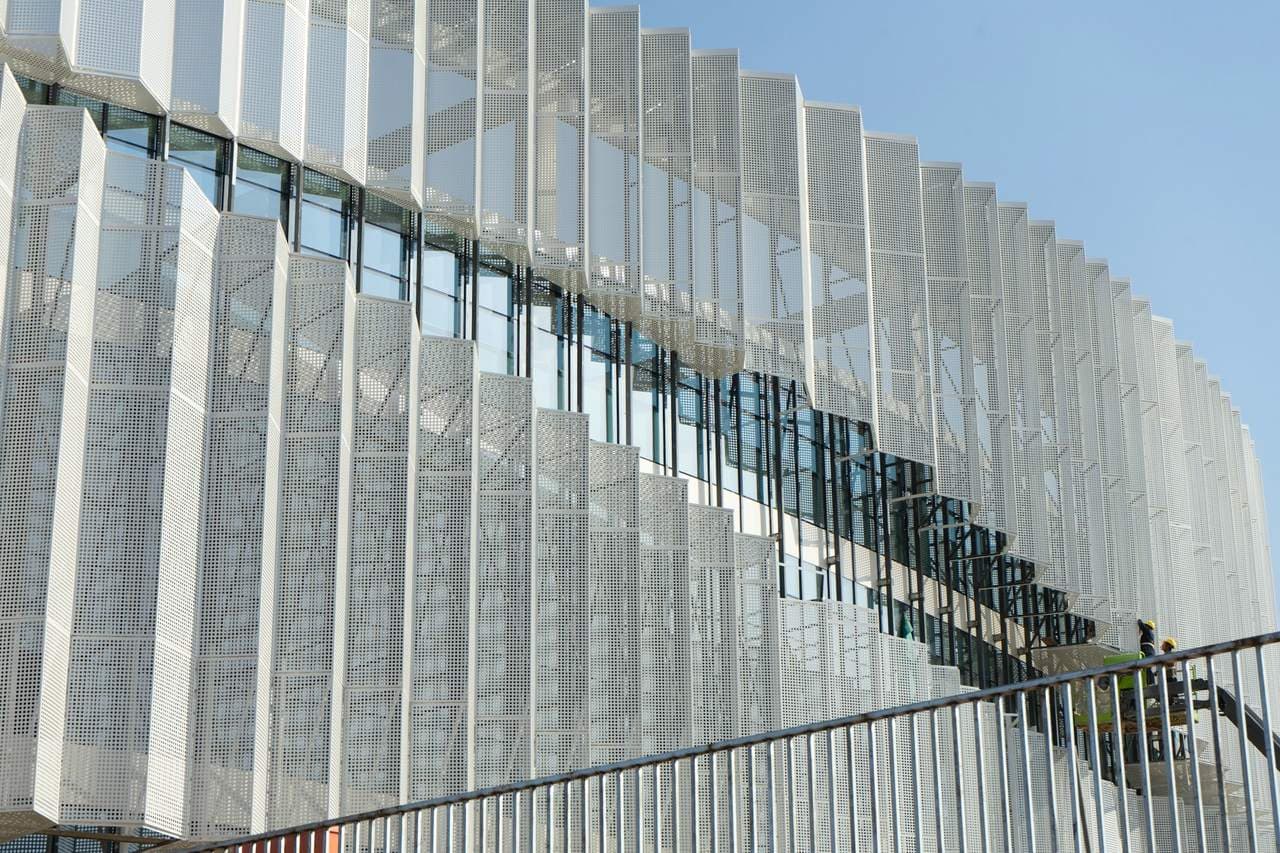
- LouvresLouvres are a series of angled horizontal or vertical slats, usually in aluminium, fixed or adjustable, that let air and filtered light through a facade, window, vent or pergola while blocking direct sun, rain and views.
- Spider fittingsSpider fittings are stainless steel brackets with one to four arms that hold glass panels at their corners through drilled holes, creating frameless point-fixed glass facades, canopies and walls.
- Structural siliconeStructural silicone is a high-strength silicone sealant engineered to bond glass to a supporting frame and carry wind and weight loads, used in structural glazing facades.
- Tinted glassTinted glass is glass coloured throughout its body, typically grey, bronze, green or blue, so that it cuts glare and absorbs part of the sun's heat.
- Aluminium sectionsAluminium sections are extruded aluminium alloy profiles, most often alloy 6063 in a T5 or T6 temper, that form the frames of windows, sliding doors, partitions, louvres and facades, finished by anodising or powder coating.
- Back-painted glassBack-painted (lacquered) glass is glass with an opaque coloured coating applied to its rear face, so the colour is seen through a glossy glass surface; it is used for wall cladding, splashbacks and writing boards.
Where it is used
- ACP Cladding, Facades & ShuttersACP cladding, structural glazing, aluminium louvres and rolling shutters for shops and buildings.
- Rolling shutter is stuck halfway, jammed or too heavy to lift
- ACP cladding panel is loose, bulging or coming off the wall
- ACP cladding has faded, chalked or turned patchy in colour