

Materials glossary · Gurgaon & Noida
What is structural silicone?
Structural silicone is a specially formulated silicone that bonds glass to a metal frame strongly enough to carry wind load and, in some designs, the glass's weight. It holds the glass in structural glazing, where no frame shows outside. It is not the weatherseal in the joints, nor shower silicone.

How does structural silicone glazing work?
In a structural glazing facade, the glass (often a double-glazed unit) is bonded on its back face to an aluminium frame, the subframe or cassette. A bead of structural silicone runs around the edge between glass and frame. Wind pushing or sucking on the glass is transferred through that silicone into the frame and then into the building's mullions. From outside you see only glass and the weatherseal joints between panels.
Bite and thickness: the two numbers that matter
The joint is sized, not guessed. Bite is the width of silicone in contact with both glass and frame; it carries the load. Thickness (the glue-line) is the gap between glass and frame, which lets the joint absorb movement between glass and aluminium as they expand at different rates in heat. Bite is calculated from the wind load, the panel size and the silicone's design strength, and thickness from expected movement. Silicone makers publish design guidance, and their technical teams usually check a project's joint sizes and test adhesion on the actual glass and frame samples.
One-part vs two-part
| One-part | Two-part | |
|---|---|---|
| How it cures | Moisture from the air, from the outside in | Two components mixed; cures through the whole depth |
| Where it's used | Site glazing and smaller jobs | Factory glazing of facade cassettes |
| Cure time | Slower in deep joints | Faster and more consistent |
| Watch out for | Deep, wide joints cure slowly | Mixing ratio must be checked batch by batch |
Two-part silicone, applied in a controlled workshop to frames lying flat, is the common approach for unitised and cassette facades because cure and adhesion can be checked before panels leave the shop.
Structural vs weatherseal vs ordinary silicone
| Sealant | Job | Where you see it |
|---|---|---|
| Structural silicone | Carries load: holds the glass to the frame | Hidden behind the glass edge in a facade |
| Weatherseal silicone | Keeps water and air out of joints between panels; takes movement | The visible joints between facade panels |
| Sanitary / general silicone | Seals gaps in bathrooms and kitchens; often anti-fungal | Around shower partitions, basins and worktops |
Weatherseal and structural silicone are separate jobs, and the structural bead should not double as the waterproofing. Bathroom silicone is a different product again: it seals a shower partition channel or wall joint but is never used to hold facade glass. Its typical failure is mould, covered in partition silicone black mould.
Where is it used?
- Structural glazing facades on offices, showrooms and commercial towers: structural glazing.
- Four-sided and two-sided structural glazing, where two edges are bonded and two are held by a visible cap.
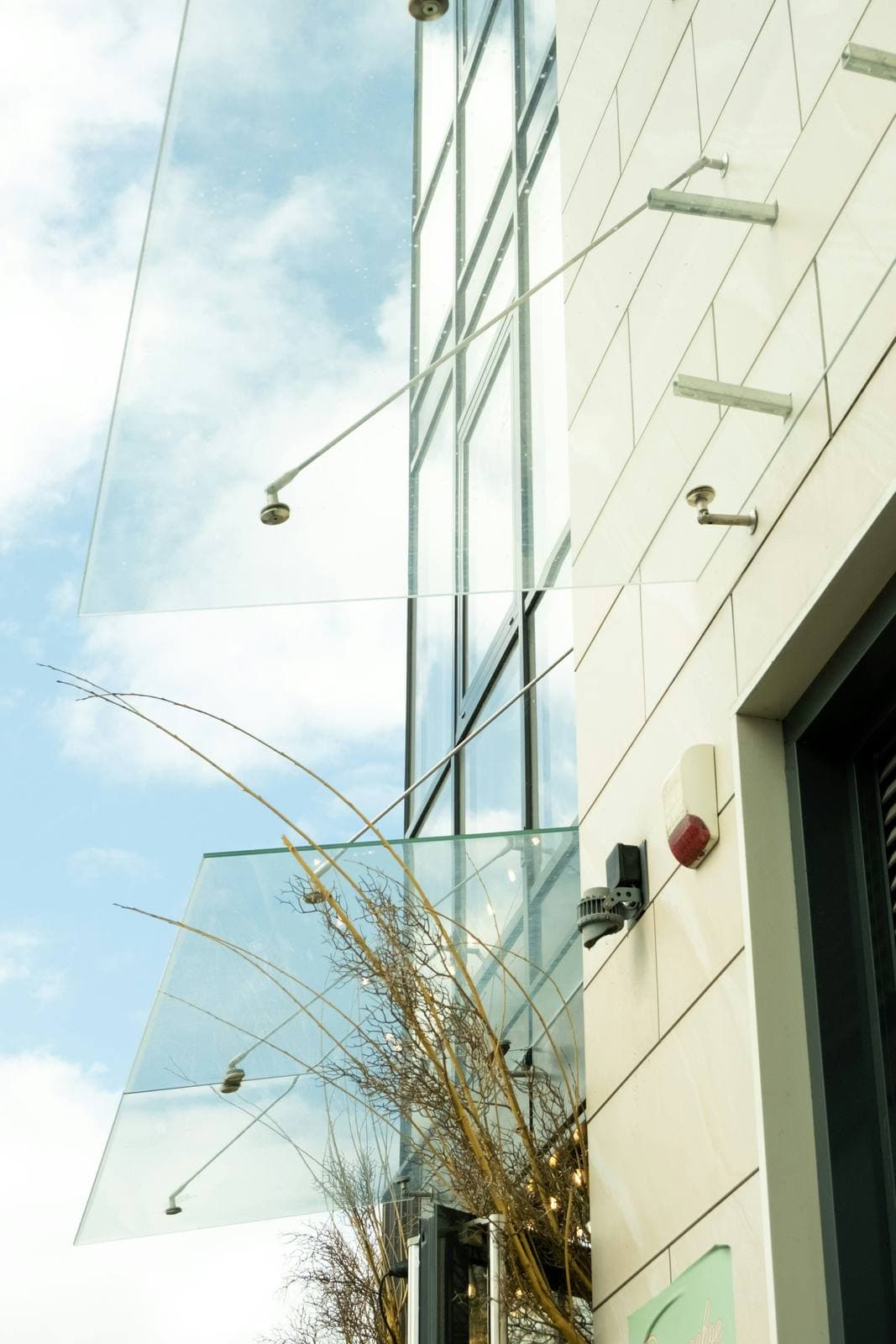
- Glass fins, canopies and some balustrades, as engineered.
Why do structural silicone joints fail?
- Poor surface preparation: dust, oil or the wrong primer on the frame.
- Incompatible materials touching the silicone, such as certain gaskets, spacer tapes or EPDM gaskets not approved for contact, which can discolour or weaken it.
- Undersized bite or applying on site in conditions the product wasn't meant for.
- Failed weatherseal letting water stand on the structural joint for years. Leaks show up first: structural glazing leak.
How do you identify it on a building?
You usually can't see structural silicone at all; that's the point. A facade with no visible frame on the outside, only flush glass and dark joints, is very likely structurally glazed. The visible joints are the weatherseal. Looking from inside at the panel edge, you may see the black bead between the glass and the aluminium cassette.
Care and inspection
Building owners should have facade joints inspected periodically, especially after strong storms or if leaks appear. Re-sealing weatherseal joints is routine maintenance; any sign of a panel moving, bowing or separating from its frame is a safety matter for a facade specialist. Clean the glass with neutral cleaners and avoid solvents on the joints.
Structural silicone and FabWise
Structural glazing and ACP cladding are part of the facades and shutters family that FabWise offers in Gurugram and Noida, quoted after a site visit. To choose between a glass face and cladding, read structural glazing vs ACP, and see spider fittings for the bolted alternative.
Common questions
What is the difference between structural silicone and weatherseal silicone?
Structural silicone is engineered to carry load: it bonds the glass to its frame and transfers wind pressure to the building. Weatherseal silicone fills the visible joints between panels to keep out water and air while accommodating movement. Both are specialist facade sealants, but they are designed and specified separately, and the structural bead should not be relied on as the waterproofing.
Can ordinary silicone be used for structural glazing?
No. Hardware-shop or sanitary silicone is made for sealing gaps, not for carrying loads, and has no published structural design strength. Structural glazing uses silicones designed and tested for that purpose, applied to clean, primed surfaces with joint sizes calculated from wind load and panel size, usually with the manufacturer's adhesion and compatibility checks.
How long does structural silicone last?
Properly designed and applied structural silicone is expected to last for decades, because silicone resists UV and temperature swings well. The weatherseal joints usually need attention first. Poor surface preparation, incompatible materials or water standing on the joint shorten its life, which is why periodic facade inspection matters.
Structural glazing mein paani leak kyun hota hai?
Most leaks come from the weatherseal joints between panels, not the structural silicone itself: the sealant has cracked, pulled away from one face, or was applied thin. Blocked drainage in the frame and damaged gaskets also cause leaks. A specialist checks the joints, removes failed sealant and reseals, and confirms the structural bond is sound.
Services on this page

Related terms
- ACP fire-retardant (FR) coreAn FR-core ACP is an aluminium composite panel whose core between the two aluminium skins is heavily filled with mineral fire retardants instead of plain polyethylene, so it resists ignition and flame spread far better than a standard PE-core panel.
- LouvresLouvres are a series of angled horizontal or vertical slats, usually in aluminium, fixed or adjustable, that let air and filtered light through a facade, window, vent or pergola while blocking direct sun, rain and views.
- Spider fittingsSpider fittings are stainless steel brackets with one to four arms that hold glass panels at their corners through drilled holes, creating frameless point-fixed glass facades, canopies and walls.
- Tinted glassTinted glass is glass coloured throughout its body, typically grey, bronze, green or blue, so that it cuts glare and absorbs part of the sun's heat.
- Aluminium sectionsAluminium sections are extruded aluminium alloy profiles, most often alloy 6063 in a T5 or T6 temper, that form the frames of windows, sliding doors, partitions, louvres and facades, finished by anodising or powder coating.
- Back-painted glassBack-painted (lacquered) glass is glass with an opaque coloured coating applied to its rear face, so the colour is seen through a glossy glass surface; it is used for wall cladding, splashbacks and writing boards.
Where it is used
- ACP Cladding, Facades & ShuttersACP cladding, structural glazing, aluminium louvres and rolling shutters for shops and buildings.
- Rolling shutter is stuck halfway, jammed or too heavy to lift
- ACP cladding panel is loose, bulging or coming off the wall
- ACP cladding has faded, chalked or turned patchy in colour