

Glass glossary · Gurgaon & Noida
What is a double-glazed unit (DGU)?
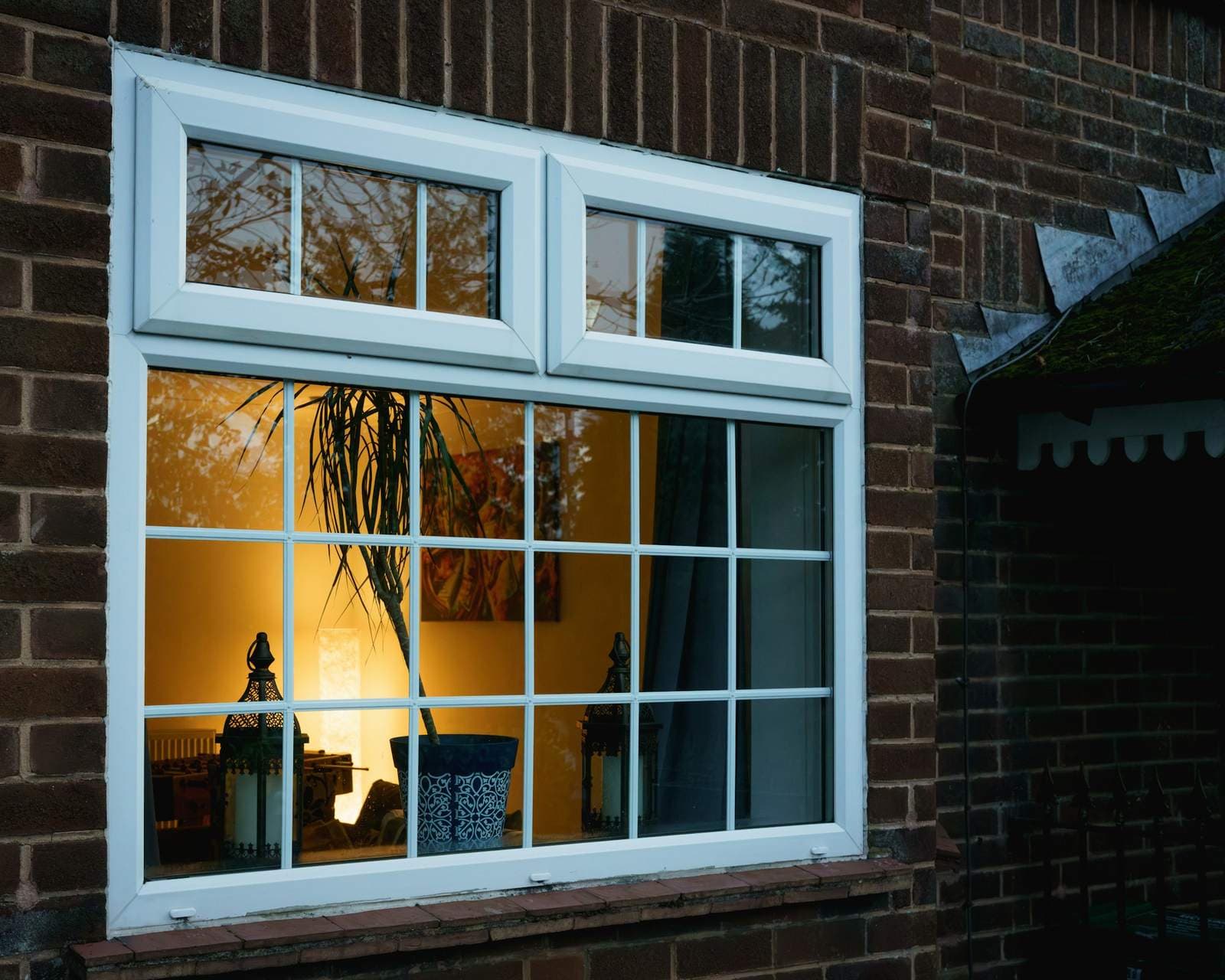
A double-glazed unit (DGU) is two panes of glass held apart by a spacer bar and sealed at the edges, trapping dry air or argon between them. That sealed gap slows heat flow far more than a single pane, and with the right glass it also cuts traffic noise. DGUs are standard in uPVC and better aluminium windows.
What is inside a DGU?
- Two glass panes, which can be clear, tinted, low-E coated, toughened or laminated, in any mix.
- A spacer bar around the perimeter, traditionally hollow aluminium, or a "warm-edge" plastic or composite spacer that conducts less heat.
- Desiccant inside the spacer: beads that soak up any moisture trapped during assembly, so the cavity stays dry.
- A primary seal of butyl between spacer and glass, which keeps moisture out.
- A secondary seal, usually silicone or polysulphide, around the outside edge, which holds the unit together.
- The cavity gas, dry air or argon. Argon conducts heat a little less than air.
The unit is assembled in a factory under controlled conditions and arrives on site as one sealed piece. It cannot be opened or re-gassed; if the seal fails, the whole unit is replaced.
What does "6-12-6" mean?
DGUs are described outer pane, cavity, inner pane, in millimetres. 6-12-6 is a 6mm pane, a 12mm gap and another 6mm pane, a total of 24mm and a build-up widely used in Indian windows. A 5-12-5 is a lighter version; an acoustic build might be 6-12-6.38 laminated, or use panes of different thicknesses so they don't resonate together. The window frame must have a glazing pocket deep enough to take the total thickness, which is one reason uPVC and system aluminium windows handle DGUs better than basic sliding sections. uPVC profiles and aluminium sections explain the frames.
How much difference does it make?
| Glazing | Heat through glass | Noise | Condensation on inside face |
|---|---|---|---|
| Single 5–6mm clear | Highest | Least reduction | Most likely on cold mornings or with AC |
| DGU clear 6-12-6 | Roughly halved compared with single | Better, especially with good seals | Much less likely |
| DGU with low-E coating | Lower again; solar-control coatings also cut sun heat | Similar to clear DGU | Least likely |
| DGU with one laminated pane | Similar to clear DGU | Best of these for traffic noise | Much less likely |
Figures vary widely with build-up and frame, so treat the table as direction, not a promise. Noise in particular leaks around the frame: a DGU in a sliding window with worn brushes will disappoint, which is why soundproof windows in Delhi NCR is mostly a story about sealing and window type, with EPDM gaskets doing as much as the glass.
Where is it used, and where is it not worth it?
DGUs make sense for bedrooms on main roads, west-facing living rooms that cook in the afternoon, air-conditioned offices and any room where condensation forms on the glass. They are heavier than single glazing, add cost per sq ft, and need a frame designed for them. In a utility balcony, a store room or a window that is usually open, single glazing is often enough.
How do you identify a DGU?
- Look at the edge of the glass inside the frame: you'll see the metal or plastic spacer strip running around the perimeter.
- Hold a lighter flame or torch near the glass at night: a DGU shows four reflections (two per pane); single glazing shows two.
- Check the frame's glazing bead depth; a DGU is typically well over 20mm thick in total.
Common problems and confusions
- Fogging inside the unit: mist or water droplets between the panes mean the edge seal has failed and the desiccant is saturated. It can't be wiped; the unit is replaced. See double-glazed window fogged.
- Condensation on the room-side face: that is room humidity, not a faulty DGU. See window condensation.
- DGU vs laminated glass: laminated panes are bonded with no gap; a DGU has a sealed gap.
- DGU vs double windows: two separate windows a few inches apart are secondary glazing, not a DGU.
Care
Clean both outer faces normally. Don't pressure-wash the edge seals, don't apply dark film to only part of a DGU in strong sun (it can overheat one pane), and keep the frame's drainage slots (weep holes) clear so water doesn't sit against the seal.
DGUs at FabWise
FabWise supplies uPVC windows and aluminium windows and doors in Gurugram and Noida as part of the windows and doors family, quoted after a site visit; the glass build-up is chosen at the visit for the room's exposure and noise. For a head-to-head on frames, read uPVC vs aluminium windows.
Common questions
Is double glazing worth it in Delhi NCR's climate?
For air-conditioned rooms, west-facing walls and bedrooms on busy roads, usually yes. A DGU slows heat gain through the glass and, in a well-sealed frame, reduces traffic noise. For a store room, utility balcony or a window kept open most of the year, the extra cost and weight rarely pay back. A solar-control low-E pane improves summer performance further.
Can a fogged double-glazed unit be repaired?
Not properly. Mist between the panes means the edge seal has failed and moisture has saturated the desiccant. The unit is factory-sealed and can't be re-dried or re-gassed on site; the fix is a new DGU made to the same size and build-up, fitted into the existing frame if the frame is sound.
What is the best DGU thickness for windows?
A 6-12-6 build-up (6mm glass, 12mm cavity, 6mm glass) is common in Indian windows and suits most homes and offices. For more noise reduction, one pane is often laminated or the two panes are of different thickness. The total thickness must fit the frame's glazing pocket, so the frame system decides what is possible.
DGU glass se AC ka bill kam hota hai kya?
It helps, especially on large or sun-facing windows. A double-glazed unit lets through noticeably less heat than a single pane, and a solar-control low-E coating reduces the sun's heat further. How much the bill drops depends on window area, orientation, shading and how well the frame seals, so treat claims of a fixed percentage with caution.
Services on this page
Related terms
- Aluminium sectionsAluminium sections are extruded aluminium alloy profiles, most often alloy 6063 in a T5 or T6 temper, that form the frames of windows, sliding doors, partitions, louvres and facades, finished by anodising or powder coating.
- EPDM gasketsEPDM gaskets are flexible synthetic-rubber seals, made from ethylene propylene diene monomer, used in windows, doors, facades and glass systems because they stay elastic and resist sun, ozone and weather far longer than PVC seals.
- Hydraulic door closerA hydraulic door closer is a spring-and-oil device, usually mounted at the top of a door, that pulls the door shut after it is opened and uses oil flow to control the closing speed.
- Low-E glassLow-E (low-emissivity) glass carries a microscopically thin metallic coating that reflects heat radiation while letting most visible light through, improving a window's insulation.
- Pleated mosquito meshA pleated mosquito mesh is an insect screen whose mesh is folded like an accordion and slides sideways in a slim aluminium frame, so it folds away when open and stays in place wherever it is left, without springs or a roller.
- uPVC profilesuPVC profiles are the hollow, multi-chambered frame sections of unplasticised polyvinyl chloride, stiffened inside with galvanised steel, that window and door frames are built from; they insulate well, need no painting and seal tightly.