

Glass glossary · Gurgaon & Noida
What is laminated glass?
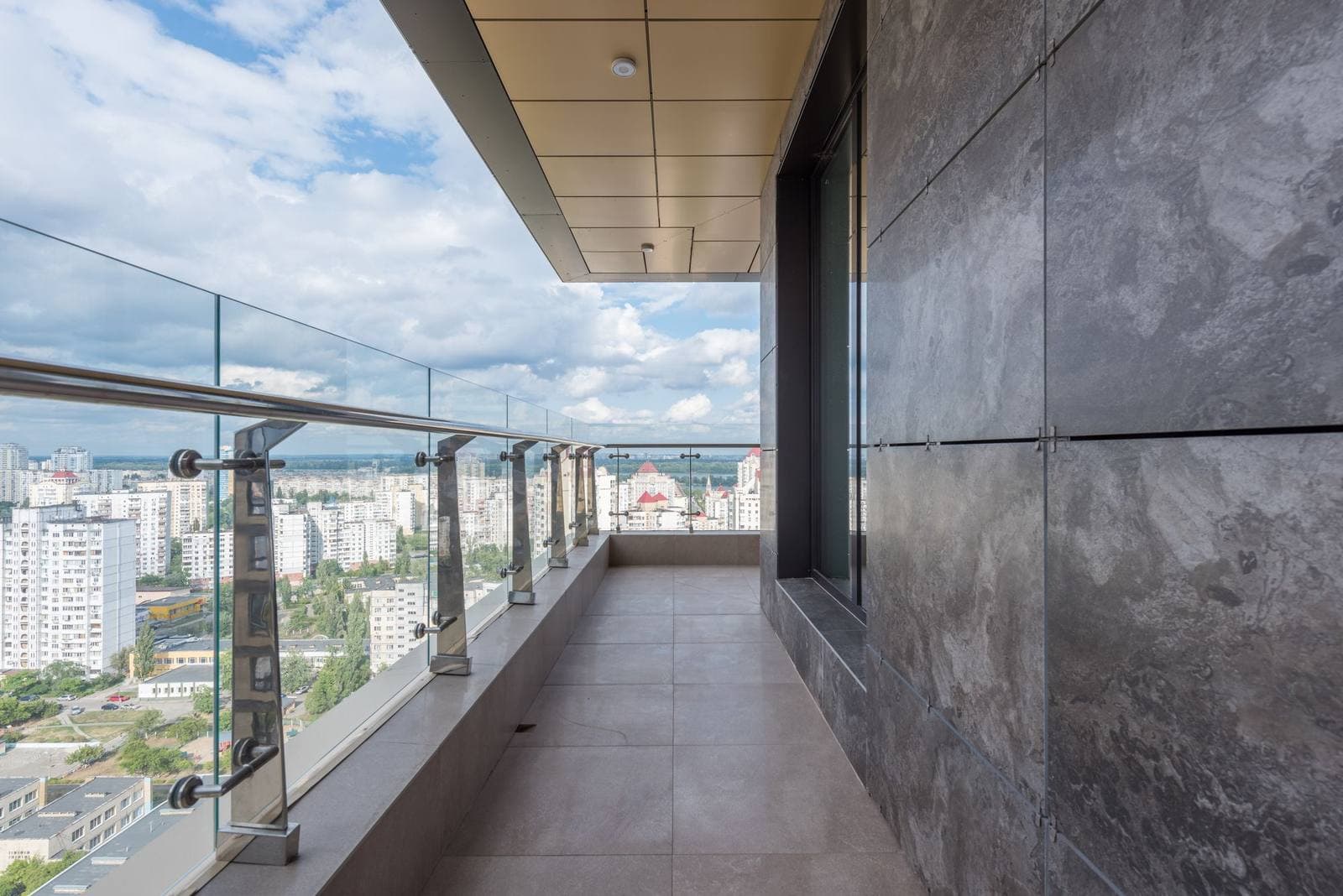
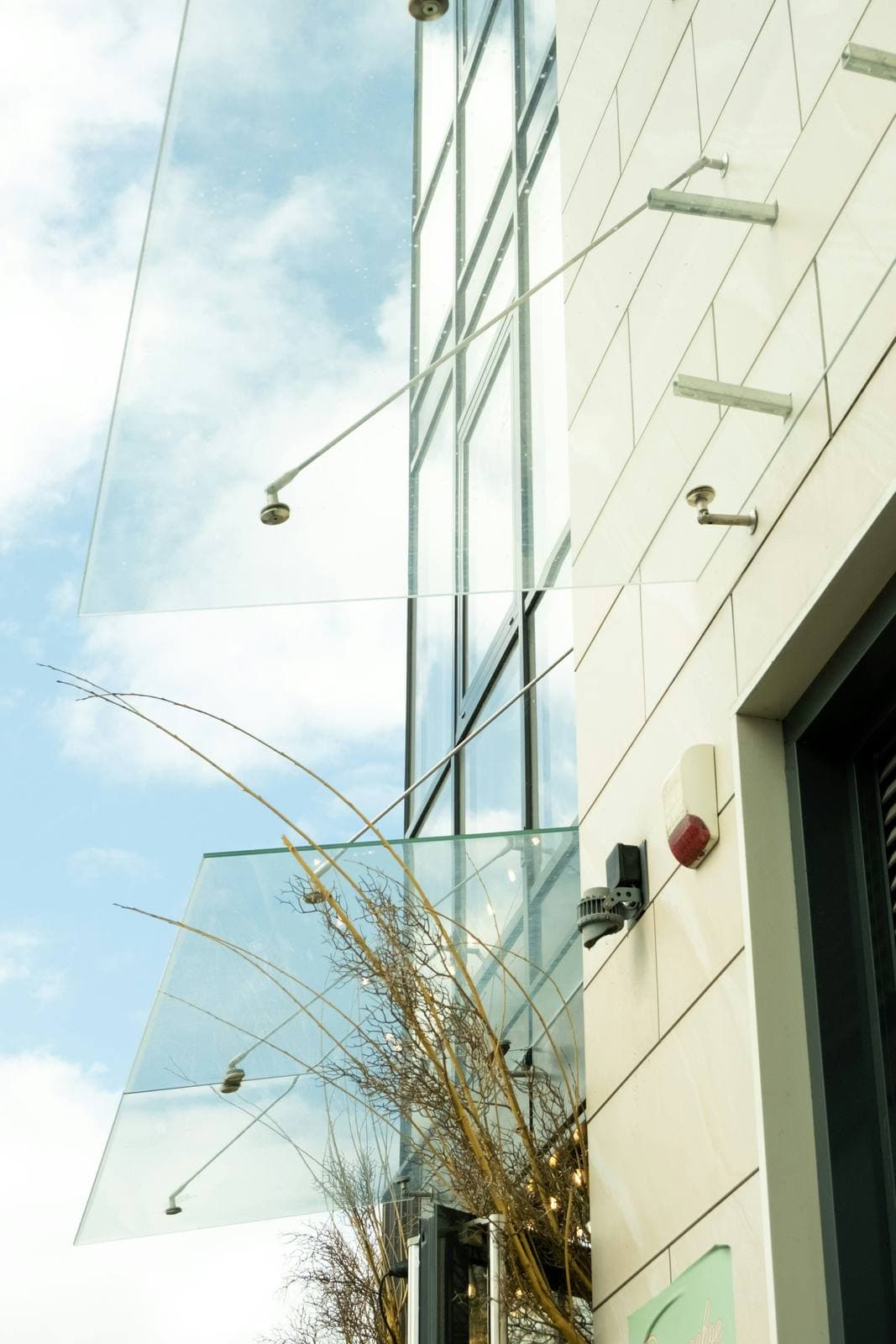
Laminated glass is two or more glass panes bonded with a tough plastic interlayer, usually PVB. If it breaks, the cracks spread like a web but the fragments stay stuck to the interlayer, so the pane stays in its frame instead of falling out. That is why balcony railings, canopies and skylights use it.
How is laminated glass made?
Two (or more) panes are washed, a sheet of interlayer is laid between them, and the stack is pressed and heated to squeeze out the air. It then goes into an autoclave, a pressure oven, where heat and pressure bond the interlayer to both panes and turn it from milky to clear. The result behaves as one panel but contains a soft, sticky core.
Laminated glass is described by its build-up. A label like 6+6+1.52 means two 6mm panes with a 1.52mm interlayer, roughly 13.5mm in total. The panes themselves can be annealed, heat-strengthened or toughened; for railings and anything structural they are normally toughened, a combination often called toughened laminated glass.
Which interlayer: PVB, SGP or EVA?
| Interlayer | What it is | Typical use | Watch out for |
|---|---|---|---|
| PVB (polyvinyl butyral) | The standard, softer interlayer | Windows, shopfronts, partitions, most indoor glazing | Exposed edges can cloud or delaminate in persistent wet conditions |
| SGP / ionoplast | A much stiffer, stronger interlayer | Frameless balcony railings, glass floors, canopies | Costs more; specified by the glass supplier for load-bearing use |
| EVA | A flexible interlayer, often used with decorative inserts | Decorative glass with fabric, mesh or prints inside | Less common for structural work |
What does laminating actually buy you?
- Post-breakage safety. Broken laminated glass usually stays in place and keeps a barrier, which is exactly what a glass balcony railing or overhead glass canopy needs.
- Security. A burglar can crack the outer pane but has to cut or tear through the interlayer as well, which takes time and noise. That is why jewellers and banks favour it for shopfronts.
- Noise reduction. The interlayer damps vibration, so laminated glass usually cuts traffic noise better than a single pane of the same weight.
- UV filtering. Standard PVB blocks most ultraviolet light, which slows fading of floors, furniture and goods in a showroom window.
Where is it used, and where is it overkill?
Building practice points to laminated glass wherever falling glass would hurt someone: overhead glazing, sloped roofs, skylights, canopies and balustrades where a person leans against the glass. The Indian code of practice on glass and human impact, IS 16231 (Part 4), deals with these locations, and safety glass itself, toughened or laminated, is specified under IS 2553 (Part 1):2018. For a typical shower screen or office cabin at floor level, toughened glass alone is the usual choice: it is lighter, cheaper and breaks into small blunt pieces.
Laminated glass is also used inside double-glazed units when a window needs both thermal and acoustic performance, for example a bedroom facing a busy road.
How do you identify laminated glass?
- Look at the exposed edge. You will usually see a thin line between the layers where the interlayer sits.
- Check the stamp in a corner; laminated glass is often marked with its build-up or type.
- If it is cracked, laminated glass shows a web of cracks with all the pieces still in place, while toughened glass falls out as granules.
- Tap gently: laminated glass gives a duller, deader sound than a single pane.
Common confusions
- Laminated vs toughened: toughening strengthens one pane; lamination holds broken panes together. Neither replaces the other, and many railings use both.
- Laminated vs double glazed: a double-glazed unit has an air or gas gap between panes for insulation; laminated glass has no gap.
- Laminated vs safety film: a film stuck on the surface holds some shards together but is not the same as a bonded interlayer, and it scratches and peels with age.
- Laminated vs acoustic glass: acoustic glass is usually laminated glass with a special sound-damping PVB.
Care and limits
Clean it as you would any glass. Keep the edges dry where you can, and make sure the frame or channel has drainage so water doesn't sit against the interlayer; in a railing channel this is part of the detailing of the glass railing U-channel. Laminated glass made from annealed panes can be cut by a glass cutter on both faces; toughened laminated glass cannot be cut or drilled after manufacture, just like a single toughened pane.
Where FabWise uses laminated glass
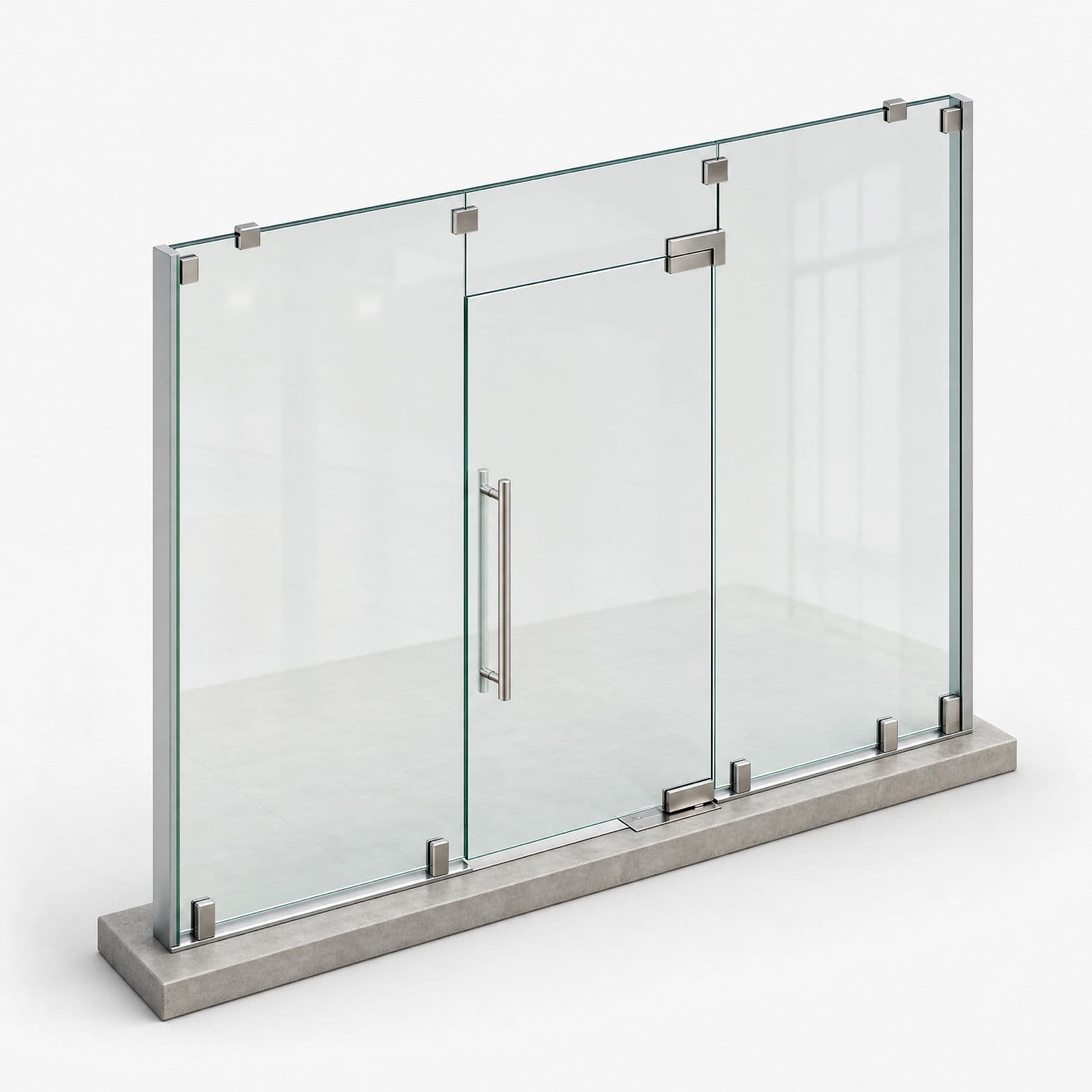
FabWise's published glass styles (bathroom partitions, office cabins and shopfronts) use Saint-Gobain toughened glass. Laminated glass comes into railings, canopies and some facade work, which are quoted after a site visit in Gurugram and Noida; the build-up is decided with the glass supplier for the height, span and fixing. The glass balcony railing guide explains the choices, and you can see the railings range for the options we fabricate.
Common questions
Is laminated glass stronger than toughened glass?
Not usually, pane for pane. Toughened glass resists impact and bending far better than annealed glass. Laminated glass is about what happens after breakage: the interlayer holds the pieces together and keeps the pane in its frame. For railings and canopies both qualities matter, so the panes inside the laminate are normally toughened first and then laminated together.
Do glass balcony railings need laminated glass?
For a frameless glass balustrade where people lean on the glass and a fall is possible, laminated toughened glass is the widely recommended choice, because a broken panel stays in the channel instead of leaving an open edge. The exact build-up depends on height, span and fixing method and should come from the glass supplier or a structural engineer.
What does 6+6+1.52 laminated glass mean?
It is the build-up: two 6mm glass panes bonded with a 1.52mm interlayer, roughly 13.5mm overall. The first numbers are the glass thicknesses and the last is the interlayer thickness. Thicker interlayers, or stiffer SGP interlayers, are used where the glass carries more load, such as frameless railings and glass floors.
Laminated glass shower mein laga sakte hain kya?
It can be done, but it is rarely needed. A shower screen at floor level is normally single toughened glass, which is lighter and breaks into blunt pieces. Laminated glass in a constantly wet bathroom also needs its edges protected, because water sitting on a PVB edge can cause clouding over time. Most frameless showers use 10mm toughened glass.
Does laminated glass reduce noise?
Yes, usually noticeably. The interlayer damps vibration, so laminated glass of the same weight generally cuts more road and traffic noise than a single pane. Acoustic PVB improves this further. For bedrooms on main roads, a double-glazed unit with one laminated pane, in a well-sealed frame, is a common combination.
Services on this page
Related terms
- Glass railing spigotsGlass railing spigots are short, heavy stainless steel posts, bolted to the floor or core-drilled into it, that clamp the bottom of each glass panel at two or more points so a railing looks almost frameless without a continuous base channel.
- Glass railing U-channelA glass railing U-channel (base shoe) is a continuous aluminium or steel channel fixed to the floor or slab edge that clamps the bottom of the glass panels, letting a balcony or stair railing stand without posts.
- SS304 vs SS202SS304 and SS202 are two austenitic stainless steel grades: SS304 carries about 18% chromium and 8% nickel and resists rust well outdoors, while SS202 swaps much of the nickel for manganese, costs less and stains sooner in damp or polluted air.
- ACP fire-retardant (FR) coreAn FR-core ACP is an aluminium composite panel whose core between the two aluminium skins is heavily filled with mineral fire retardants instead of plain polyethylene, so it resists ignition and flame spread far better than a standard PE-core panel.
- Aluminium sectionsAluminium sections are extruded aluminium alloy profiles, most often alloy 6063 in a T5 or T6 temper, that form the frames of windows, sliding doors, partitions, louvres and facades, finished by anodising or powder coating.
- Back-painted glassBack-painted (lacquered) glass is glass with an opaque coloured coating applied to its rear face, so the colour is seen through a glossy glass surface; it is used for wall cladding, splashbacks and writing boards.