

Railings
Glass Balcony Railings: Glass Type, Fixing and Safety
Which glass, which fixing and which handrail make a glass balcony railing safe on a high floor in Gurugram or Noida, and how to keep it clean in a dusty city.
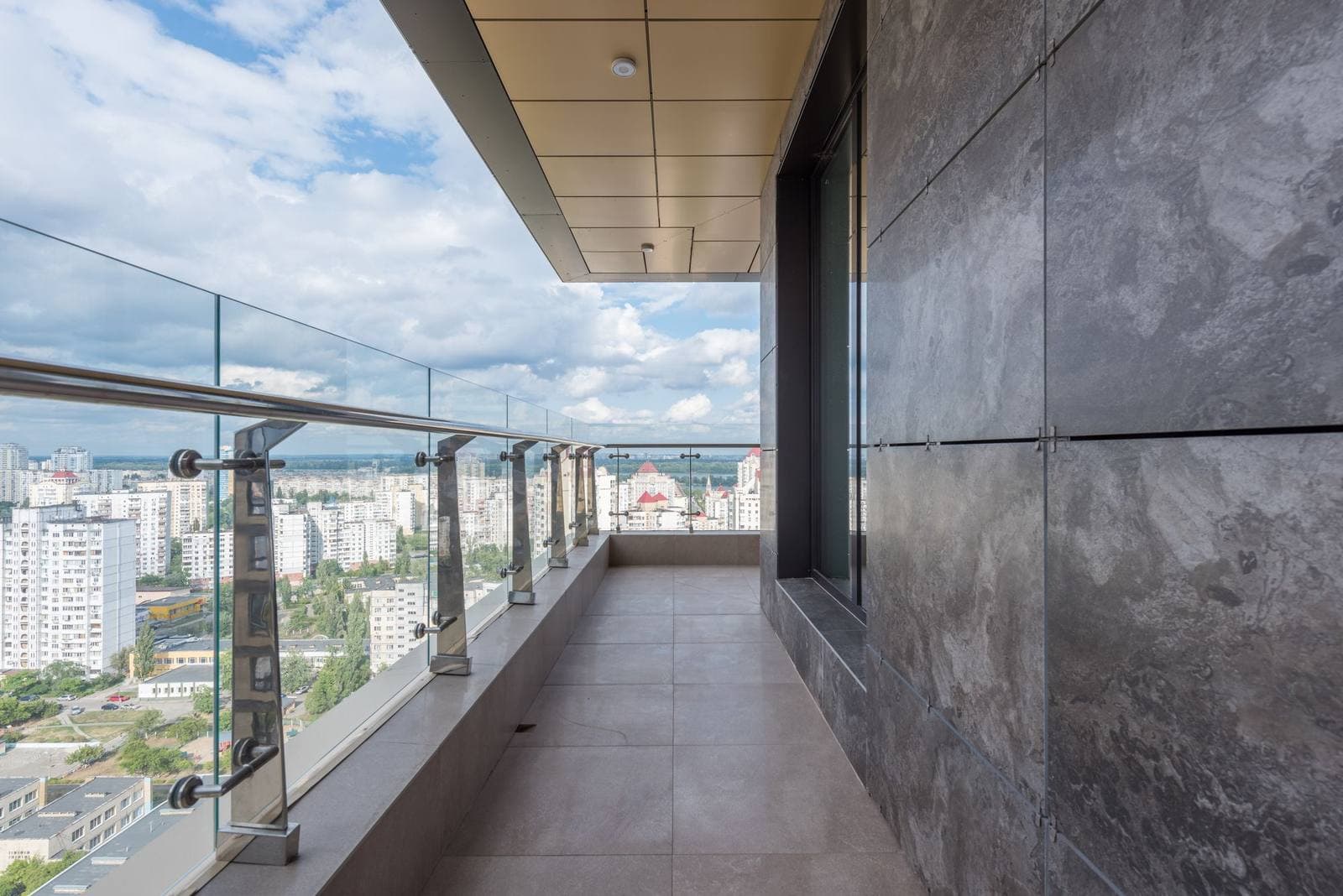
A safe glass balcony railing uses toughened laminated glass (for example two 10 mm toughened sheets bonded together, written 10+10) held in a properly anchored U-channel or spigot system, with a top handrail that ties the panels together. Single 12 mm toughened glass is also used, but if it breaks it falls out completely, so on a high floor laminated glass is the safer choice.
A glass balcony railing gives an apartment in Gurugram or Noida an uninterrupted view, and it is increasingly common in new towers along Golf Course Road and around Sector 150, Noida. Here is what to choose, and why.
Toughened or laminated: which glass should a balcony railing use?
Toughened (tempered) glass is heat-treated to be several times stronger than ordinary glass. When it breaks, it crumbles into small, blunt granules rather than long shards. That is good for injuries, but it means the whole panel empties out of its fixing and leaves an open edge.
Laminated glass is two or more sheets bonded with a plastic interlayer (commonly PVB, or a stiffer structural interlayer). If one sheet breaks, the pieces stick to the interlayer and the panel stays in place. Toughened laminated glass combines both: two toughened sheets with an interlayer between.
| Glass build-up | If it breaks | Where it suits |
|---|---|---|
| 12 mm toughened (single sheet) | Crumbles and falls out of the fixing | Ground floor, low drops, internal stairs with a handrail |
| Toughened laminated, e.g. 8+8 or 10+10 | Broken sheet stays bonded; panel stays in place | Upper-floor balconies, terraces, anywhere with a drop |
| Ordinary (annealed) glass | Breaks into sharp shards | Not suitable for railings |
Thickness: 12 mm or 10+10?
Thickness depends on panel height, panel width, the fixing system and wind exposure on the floor. As a rough pattern, single toughened panels in railings are commonly 12 mm, and laminated build-ups commonly 8+8 or 10+10 on balconies and terraces. Taller panels, wider panels and exposed upper floors need more. Treat any quote that uses thin single glass on a high balcony with caution.
Spigot, U-channel or standoff: how should the glass be fixed?
Spigots
Spigots are short stainless steel posts fixed into the floor, each clamping the bottom of a panel at two or more points. They look light and minimal, and water drains freely under the glass. The spigot's base fixing into the slab carries a lot of load, so the slab edge must be sound. Ask for SS304 or better.
U-channel (base shoe)
A continuous aluminium channel is fixed to the slab, and the glass is held in it with gaskets, wedges or grout. It gives the cleanest frameless look, with nothing but glass above the floor line, and spreads the load along the length. The channel needs drainage so balcony water does not sit against the glass and the waterproofing.
Standoffs (side-mounted point fixings)
Round stainless discs bolt through holes in the glass into the face of the slab, so the glass hangs in front of the balcony edge and frees up floor space. The holes must be drilled before the glass is toughened, which means measurement has to be exact. They suit balconies with a solid slab edge.
| Fixing | Look | Good for | Watch out for |
|---|---|---|---|
| Spigots | Minimal posts at the base | Most balconies, easy drainage | Slab edge strength, spigot grade |
| U-channel | Fully frameless | Long runs, terraces | Drainage in the channel, slab depth |
| Standoffs | Glass floats in front of the slab | Narrow balconies | Exact hole positions, slab face condition |
| SS posts with glass infill | Framed; glass held by clamps between posts | Budget-conscious or retrofit | Clamp quality; more metal in view |
The last row is the hybrid most homes actually end up with: an SS balcony railing frame with glass infill. Our MS vs SS railing guide covers the metal side of that choice.
Does a glass railing need a handrail?
We recommend one on balconies with a drop. A top rail, usually a stainless steel or aluminium cap over the top edge of the glass, does three jobs: it gives a hand-hold, it stiffens the run so panels don't move independently, and it keeps a continuous barrier if one panel ever breaks. Purely frameless edges look cleaner but rely entirely on the glass and the base fixing.
Is a glass railing safe for children?
Glass is actually one of the safer infills for small children, because there is nothing to climb and no gaps to squeeze through. A few checks make it safer still:
- Railing height commonly around 1 metre or more from the finished floor; on upper floors many people choose higher.
- No horizontal rails or ledges low down that work as a foothold.
- Small gaps between panels and at the floor; ask for them to be kept tight.
- Keep chairs, planters and storage boxes away from the glass so they can't be used to climb.
- Some people add a frosted band or a subtle pattern at eye level so children and pets see the glass is there.
A glass panel that moves when you push it needs attention before anything else. See railing wobbling; if a panel has already broken, our page on toughened glass that has shattered explains what to do next.
How do you keep a glass railing clean in Gurugram and Noida?
Honestly, this is the biggest everyday trade-off. Dust settles on glass within days, rain leaves spotting, and the outer face of a high-floor railing is hard to reach.
- Wipe the inner face weekly with a damp microfibre cloth and a squeegee; it takes a few minutes.
- For hard-water marks, use a mild glass cleaner or diluted vinegar, never abrasive powder or steel wool.
- Clean the outer face from inside with a long-handled two-sided squeegee, or ask the building's facade cleaning team.
- Keep the U-channel or spigot bases clear of dust and leaves so water can drain.
- Tinted or lightly frosted glass hides dust better than clear, at the cost of some view.
Can you install a glass railing in a society flat?
Usually, but the outside of the building is often controlled by the RWA or the builder's maintenance agency, and some want a specific design. Check with your RWA/society and the building's terms before ordering, especially as toughened glass cannot be cut or drilled after it is made and is produced to your exact measurements. Toughened glass production generally takes around 7–10 days after the order.
What changes the price of a glass railing?
Glass railings are priced per running ft. The glass build-up (single toughened vs laminated), panel height, the fixing system, the handrail, the stainless grade and access to the balcony all move the figure. We quote this work after a site visit; see the glass railing price guide for how each part adds up, browse all railings, or read how railing jobs run in Gurgaon and Noida. Glass is also used for staircase railings indoors.
FabWise measures the balcony and checks the slab edge at a ₹99 site visit, adjusted against your bill if you go ahead, and then sends a written, all-inclusive quote that names the glass, fixing and handrail.
Common questions
Which glass is best for a balcony railing?
Toughened laminated glass, such as 8+8 or 10+10, is the safest choice for balconies above ground level, because a broken sheet stays bonded to the interlayer and the panel stays in place. Single 12 mm toughened glass is common and strong, but if it breaks it falls out of the fixing completely.
Is 12 mm toughened glass enough for a balcony railing?
It can be on a low balcony with a top handrail and a sound fixing, and it is widely used. On upper floors many designers prefer toughened laminated glass, because 12 mm single glass leaves an open edge if it breaks. The right thickness depends on panel height, width, fixing and wind exposure.
Spigot or U-channel: which glass railing fixing is better?
Both are good when installed properly. A U-channel gives a fully frameless look and spreads the load along the slab, but it needs drainage. Spigots look minimal and drain freely, but each one concentrates load into the slab. The slab edge you have often decides which works.
Do glass railings need a handrail?
We recommend a top handrail on any balcony with a drop. It gives a hand-hold, ties the panels together so they don't move separately, and keeps a continuous barrier if a panel breaks. Fully frameless edges look cleaner but rely entirely on the glass and the base fixing.
Glass railing saaf kaise karein, dust bahut aati hai?
Wipe the inner face weekly with a damp microfibre cloth and a squeegee. For hard-water spots, use a mild glass cleaner or diluted vinegar, never abrasive powder. Clean the outer face with a two-sided long-handled squeegee from inside, and keep the base channel clear so water drains.
Is a glass balcony railing safe for kids?
Generally yes, because glass has no gaps to squeeze through and nothing to climb. Keep the railing at a sensible height, avoid low horizontal rails, keep furniture away from it, and use laminated glass on upper floors. A frosted band at eye level helps children and pets notice the glass.
How long does a glass railing take to install?
Toughened glass is made to your exact measurements and generally takes around 7–10 days to produce once the order is placed after the 50% advance. Laminated or drilled panels may need longer. We confirm the timeline for your railing in the written quote after the site visit.
What this page is about
Read next
- MS vs SS Railing: Which to Choose for a Gurgaon BalconyMild steel or stainless steel for a balcony railing in Gurugram? How each one handles rust, dust and monsoon, what it needs over the years, and when each is the right call.
- Balcony Railing Height and Safety: A Practical Check for Indian HomesMost balcony accidents involve a railing that was tall enough on paper and climbable in practice. How to check height, gaps, footholds and fixing on your balcony, and how to fix the common problems.
- SS 304 vs 202 vs 316: Which Stainless Steel Grade for Your Railing?Stainless steel railings look identical on day one. Twelve months later, grade decides which ones stay bright. What 304, 202 and 316 actually are, where each belongs, and how to make sure you get the grade you paid for.