

Glass glossary · Gurgaon & Noida
What is toughened glass?
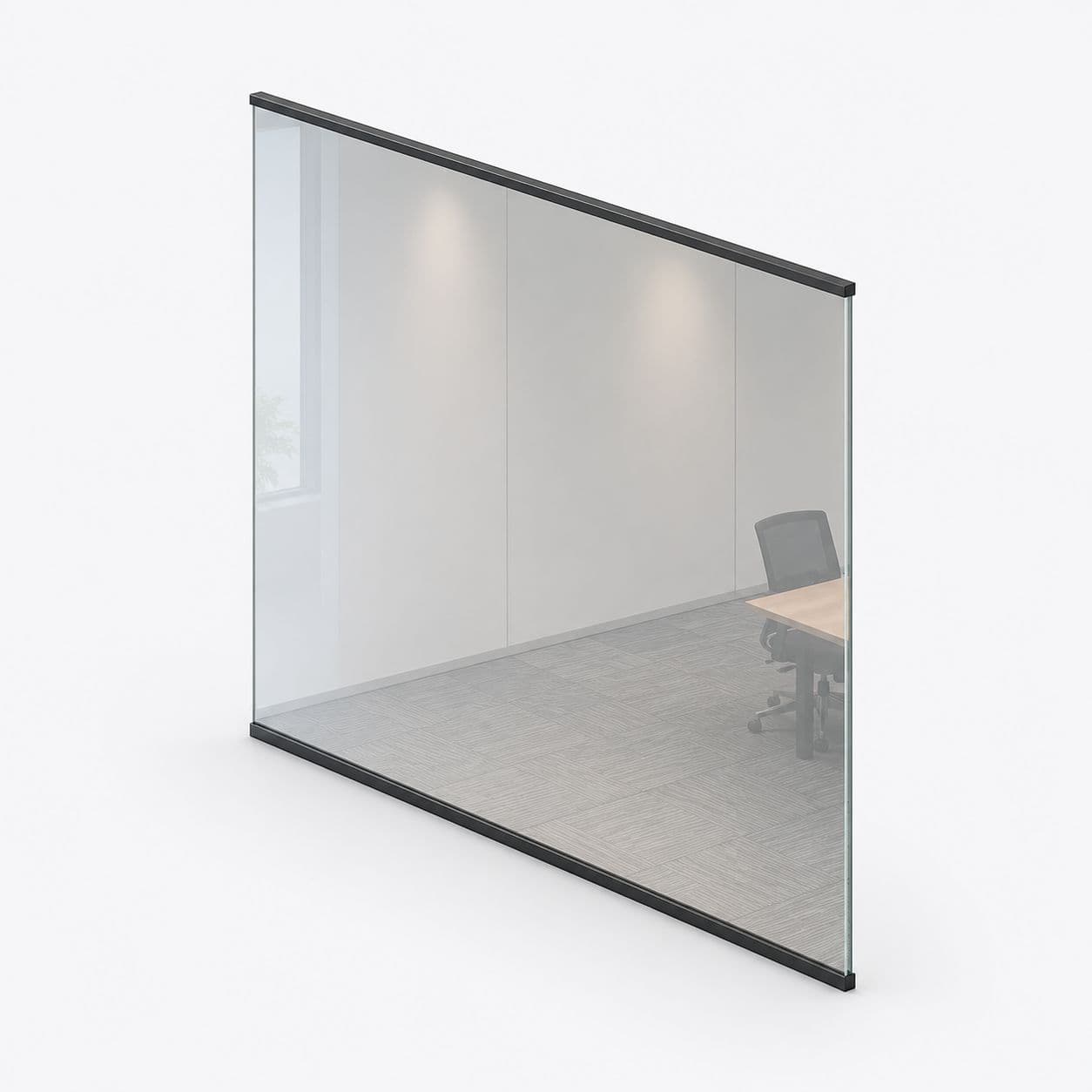
Toughened glass, also called tempered glass, is float glass heated to around 600°C and cooled fast with air jets. That locks its surfaces in compression, so it is typically about four to five times stronger than ordinary glass of the same thickness, and when it breaks it crumbles into small, blunt pieces.
How is toughened glass made?
Toughening starts with annealed float glass, the plain glass in an old window. It is cut to final size, edges ground, and every hole and notch for hinges or handles drilled. It is then heated to roughly 600–650°C and hit on both faces with jets of cold air. The skin sets while the core is still hot; when the core cools and shrinks, it pulls on the skin, leaving the surfaces in permanent compression. A crack has to overcome that compression before it can grow.
What are its properties?
| Property | Annealed (plain) glass | Toughened glass |
|---|---|---|
| Bending strength | Baseline | Typically about 4–5× higher at the same thickness |
| How it breaks | Long, sharp, dagger-like shards | Small, roughly cube-shaped pieces with blunt edges |
| Temperature difference it tolerates across a pane | Commonly quoted at about 40°C | Commonly quoted at about 200°C |
| Can it be cut or drilled afterwards? | Yes | No: it shatters if you try |
| Weak point | Anywhere | The edges and corners |
Two catches come with the strength. It cannot be altered after toughening: cutting, grinding or drilling disturbs the stress balance and the pane bursts, so a panel a few millimetres too big has to be remade. And it is comparatively vulnerable at its edges, so a sharp knock on an exposed corner can shatter a pane that would shrug off a blow to the middle.
Why does toughened glass sometimes break on its own?
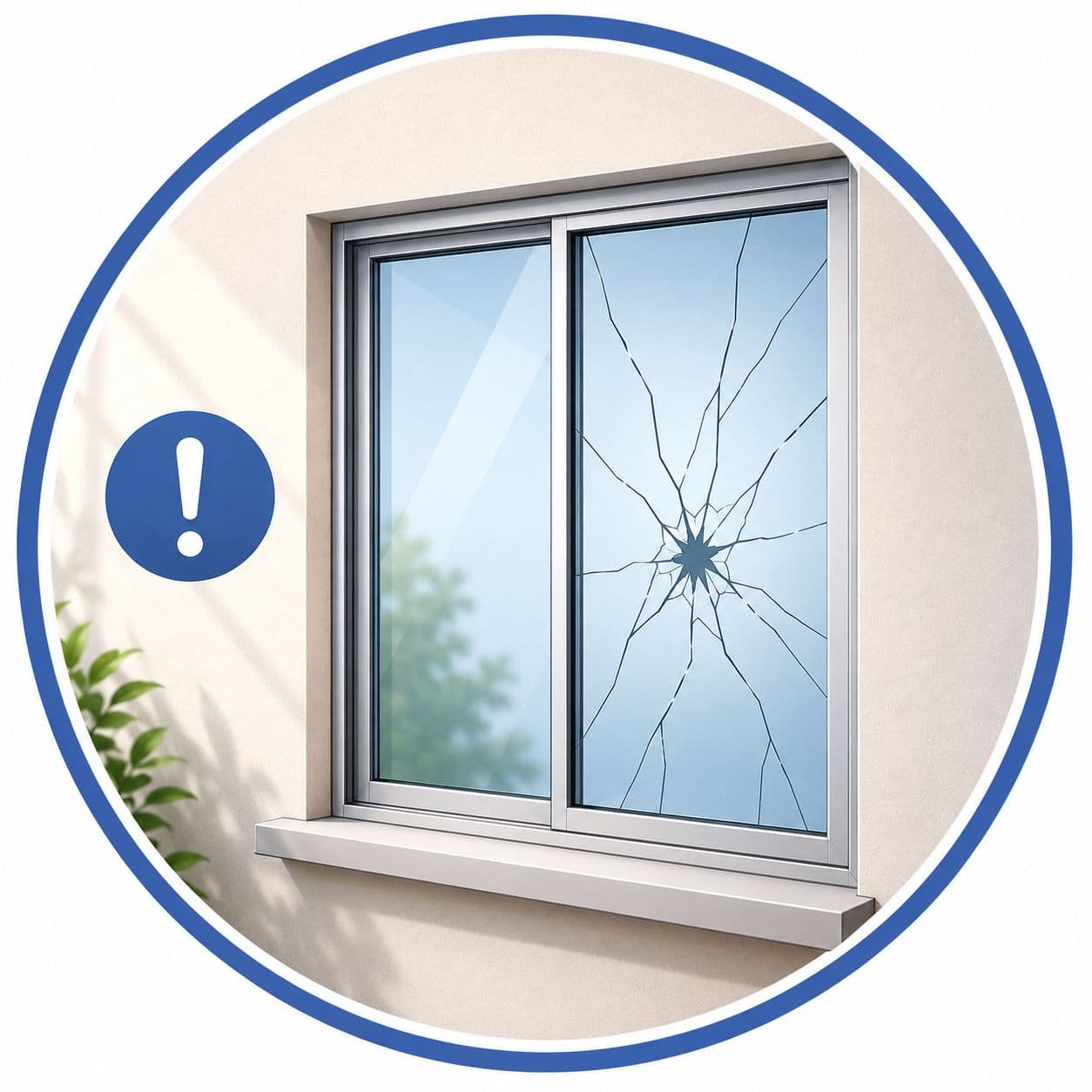
Occasionally a pane breaks with nobody near it. Usual causes: an old edge chip, a fitting clamped too hard, a door rubbing its neighbour, or, more rarely, a nickel sulphide inclusion, a tiny impurity that slowly expands. For overhead or facade glass, heat-soak testing (reheating panes to around 290°C) weeds out most affected panes; it reduces the risk without removing it. Our explainer on why toughened glass breaks goes deeper, and toughened glass shattered covers what to do on the day.
In India, toughened glass for building use must carry the BIS Standard Mark under IS 2553 (Part 1). How to find the mark and check its licence number is in ISI-marked toughened glass and IS 2553.
Where is it used, and where isn't it enough?
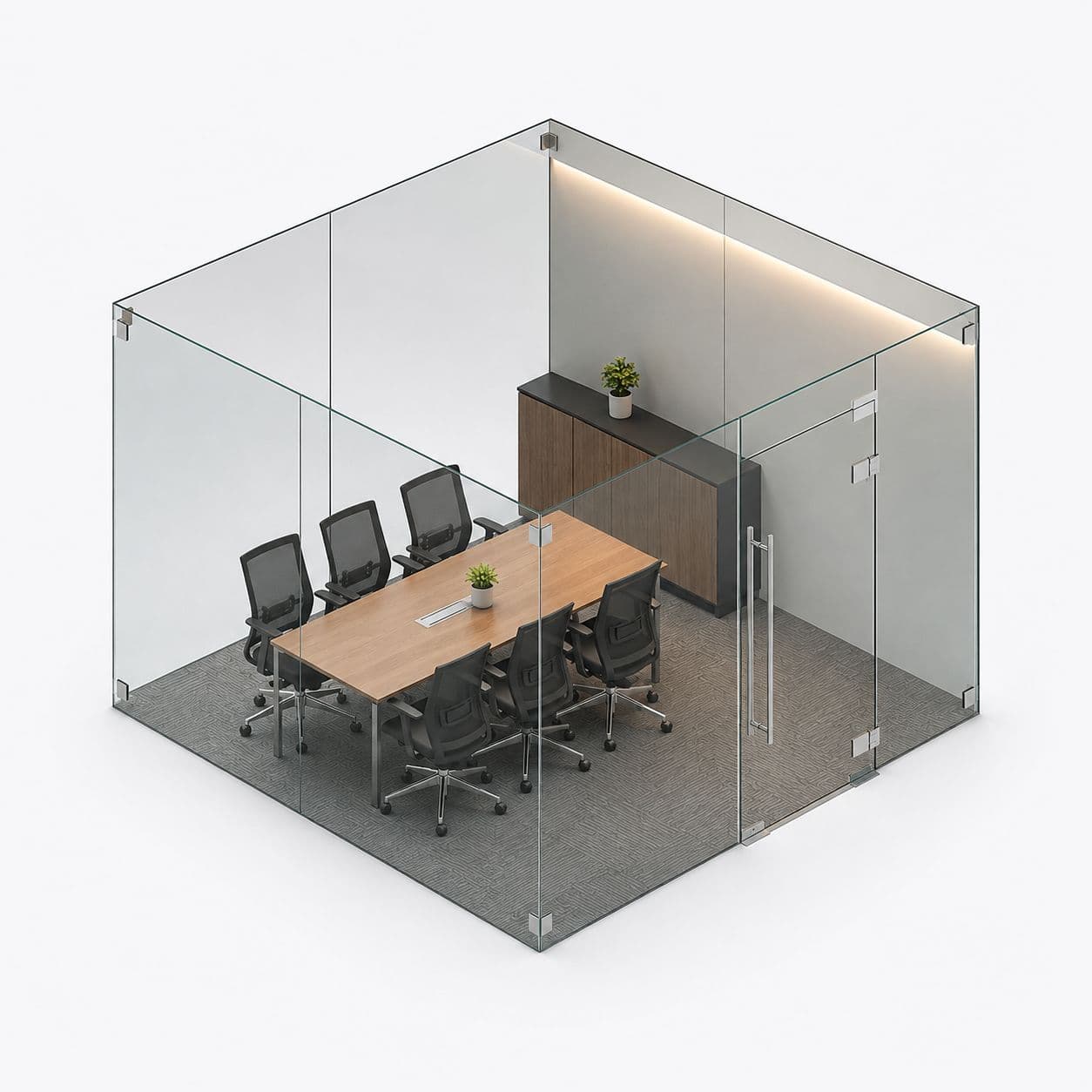
- Frameless doors and cabins, such as a frameless glass office partition with door.
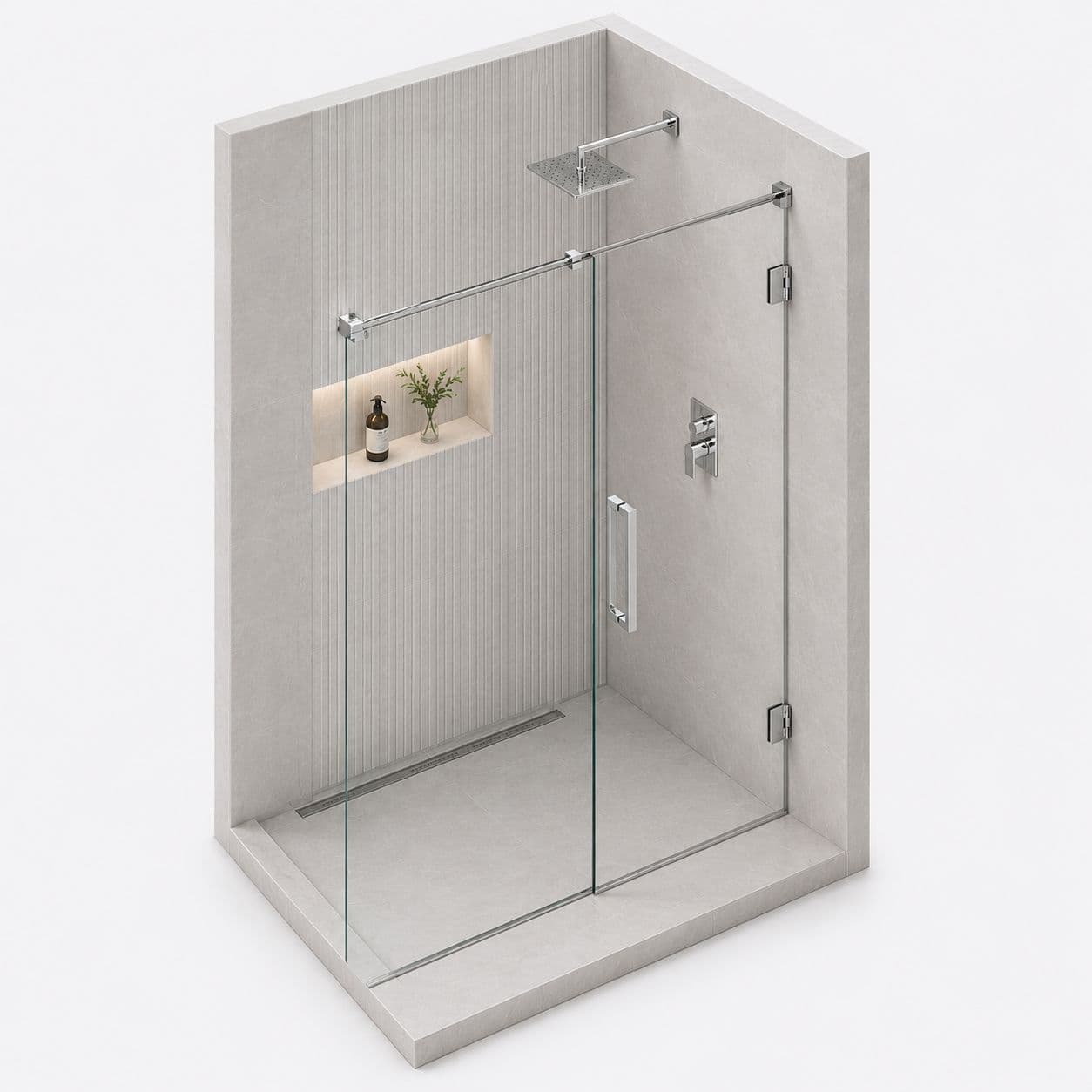
- Shower screens and enclosures, where wet floors and bare feet make breakage behaviour matter.
- Shopfronts, table tops, shelves and glass that sits near a heat source.
On its own it is not the right answer where the glass must stay in place after it breaks: balcony balustrades, overhead canopies and skylights. Once toughened glass breaks, the whole pane falls out. Those jobs call for laminated glass, usually made from toughened layers, so the broken pane still hangs together.
How do you identify toughened glass?
- Look in a corner for a small etched or sandblasted stamp. Most processors mark each pane with their name and the standard it was made to. A missing stamp is not proof either way, but a genuine stamp is a good sign.
- Look through it wearing polarised sunglasses, or at a low angle in daylight. Toughened glass often shows faint dark spots or stripes, the quench pattern left by the air jets.
- Check the edges. Toughened panes leave the factory with smooth, ground edges; raw cut edges suggest annealed glass.
- If it has broken, the pieces tell you: small granules mean toughened, long shards mean annealed.
What standards apply in India?
Safety glass, both toughened and laminated, is specified under IS 2553 (Part 1):2018, the Bureau of Indian Standards specification for safety glass in architectural and building use. Where glass goes in a building relative to human impact is dealt with in IS 16231 (Part 4), the code of practice on glass safety related to human impact. Ask a supplier which standard their toughened glass is tested to; a confident, specific answer is a good filter.
Common confusions
- Toughened vs tempered: the same thing. Tempered is the American term; toughened is common in India and the UK.
- Toughened vs heat-strengthened: heat-strengthened glass is cooled more gently, ends up roughly twice as strong as annealed and breaks into larger pieces. It is not a safety glass on its own.
- Toughened vs laminated: toughening makes one pane stronger; laminating bonds panes together so they hold after breaking. Many railings use both.
- Toughened vs thick: thickness is a separate choice. See the glass thickness guide.
How do you look after it?
Clean it like any glass but protect the edges from mops, buckets and furniture, and keep floor springs adjusted so a door never swings into fixed glass. Use a mild descaler, not a scraper blade, on hard-water marks. Fix a rubbing or dropping door early.
Where FabWise uses toughened glass
Every glass installation FabWise does in Gurugram and Noida uses Saint-Gobain toughened glass: 10mm for bathroom partitions and 12mm for office cabins and shopfronts, held with SS304 fittings. Production takes 7–10 days after the advance because each pane is cut, drilled and toughened to the measured size. If you have a broken pane, broken toughened glass replacement starts from a photo on WhatsApp; for new work, book a site visit and we measure before anything is made.
Common questions
Is toughened glass the same as tempered glass?
Yes. Toughened and tempered describe the same product: float glass heated to around 600°C and cooled quickly with air so its surfaces sit in compression. Tempered is the usual American word; toughened is what most Indian glass processors and invoices use. Heat-strengthened glass is different: it is cooled more slowly, is roughly half as strong as toughened and does not break into small safe pieces.
Can toughened glass be cut or drilled after it is made?
No. Cutting, drilling or even grinding the edge of toughened glass releases the locked-in stress and the whole pane shatters into granules. All holes for hinges, handles and patch fittings, and the final size, have to be fixed before toughening. If a toughened panel turns out too big, the only fix is a new panel made to the corrected size.
Toughened glass apne aap kyun toot jata hai?
Toughened glass breaking 'by itself' usually traces back to edge damage from an earlier knock, a fitting or frame pressing on the glass, a door rubbing against fixed glass, or, less often, a nickel sulphide impurity that expands over time. It tends to happen without warning because the stress is stored in the pane. Keeping doors aligned and edges protected cuts the most common risks.
How can I check if my glass is toughened?
Look for a stamp etched into one corner, which most processors apply. Then look through the glass with polarised sunglasses; toughened glass often shows a faint pattern of dark spots or bands. Smooth, polished edges also point to toughened glass. If you still can't tell, a glass installer can usually confirm it from a close photo of the corner and edge.
What thickness of toughened glass is used for a shower or an office cabin?
For frameless shower partitions 10mm toughened glass is common, and that is what FabWise fits in bathrooms. Office cabins, full-height partitions and shopfront doors usually use 12mm because the panels are taller and see more traffic; FabWise uses 12mm there. Framed screens and windows can use thinner glass because the frame supports the edges.
Services on this page
Related terms
- Back-painted glassBack-painted (lacquered) glass is glass with an opaque coloured coating applied to its rear face, so the colour is seen through a glossy glass surface; it is used for wall cladding, splashbacks and writing boards.
- Floor springA floor spring (floor machine, floor hinge) is a hydraulic door closer set into the floor beneath a door, which carries the door's weight on a spindle and closes it at a controlled speed.
- ACP fire-retardant (FR) coreAn FR-core ACP is an aluminium composite panel whose core between the two aluminium skins is heavily filled with mineral fire retardants instead of plain polyethylene, so it resists ignition and flame spread far better than a standard PE-core panel.
- Aluminium sectionsAluminium sections are extruded aluminium alloy profiles, most often alloy 6063 in a T5 or T6 temper, that form the frames of windows, sliding doors, partitions, louvres and facades, finished by anodising or powder coating.
- CNC laser-cut jaaliA CNC laser-cut jaali is a decorative perforated screen cut from metal sheet, usually mild steel, stainless steel or aluminium, by a computer-controlled laser that follows a digital pattern, used in gates, partitions, grills, facades and railings.
- Double-glazed unit (DGU)A double-glazed unit (DGU, or insulated glass unit) is two panes of glass held apart by a spacer and sealed around the edge, with dry air or gas trapped between them to cut heat and noise.