

Commercial Glass Work
ISI-Marked Toughened Glass: What IS 2553 Means for Partitions, Showers and Railings
Since September 2020, toughened and laminated glass for buildings in India has to carry the BIS Standard Mark. What that means for an office cabin, a shower screen or a railing, and how to check the mark on site.
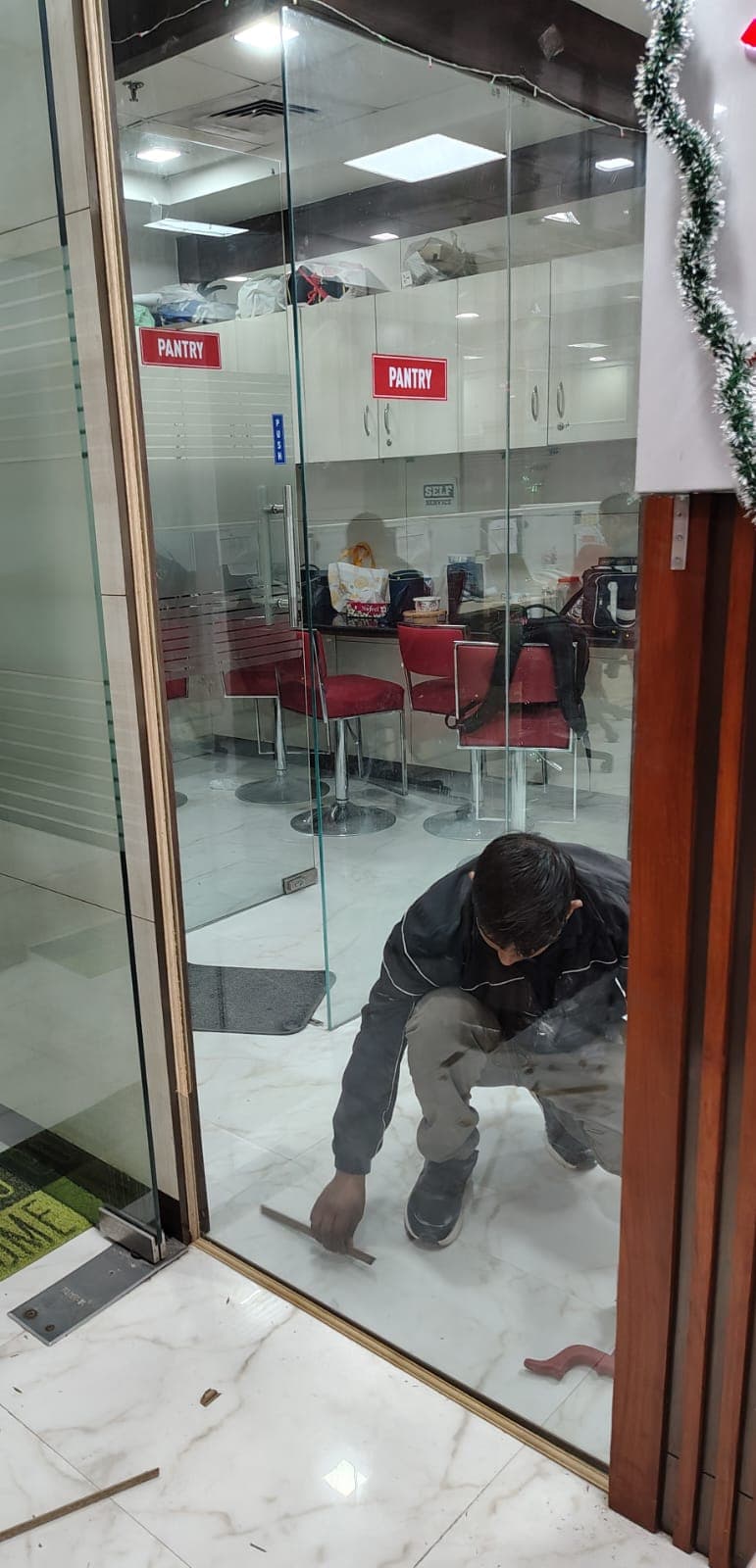
In India, toughened and laminated safety glass for buildings must conform to IS 2553 (Part 1):2018 and carry the BIS Standard Mark (the ISI mark) under a licence from the Bureau of Indian Standards. This has been compulsory since 16 September 2020, when the Safety Glass (Quality Control) Order, 2020 came into force. If you are buying a glass partition, a shower enclosure, a shopfront or a glass railing, the pane that arrives on site should carry that mark.
This guide is for the person who signs off the work: a facility manager, a fit-out lead, an architect or an RWA committee. It covers what the standard and the order say, how to check a pane, and what to put in a specification so every vendor quotes the same glass.
What is IS 2553 (Part 1)?
IS 2553 (Part 1):2018, *Safety Glass – Specification, Part 1: Architectural, Building and General Uses*, is the Indian Standard for safety glass used in buildings. It covers toughened glass and laminated glass, and sets the tests a pane must pass, including dimensions and thickness, flatness and, for toughened glass, the fragmentation test that checks it breaks into small blunt pieces rather than long shards. Part 2 of the same standard covers glass for road vehicles and is not relevant to building work.
Is the ISI mark on toughened glass compulsory?
Yes. The Safety Glass (Quality Control) Order, 2020, issued by the Ministry of Commerce and Industry on 14 March 2020 and in force from 16 September 2020, says safety glass covered by IS 2553 (Part 1) must conform to the standard and bear the Standard Mark under a BIS licence. BIS is the certifying and enforcing authority. In January 2025 BIS also issued guidelines for Amendment No. 2 to IS 2553 (Part 1), so the standard itself is still being updated; a processor holding a current licence works to the current version.
How do you check the mark on a pane?
- Find the mark. It is usually etched or printed in one corner of each toughened pane: the ISI mark, the standard number (IS 2553 Part 1) and a licence number, normally written CM/L- followed by digits. On laminated glass it is on one of the plies.
- Read the licence number. It identifies the processor that toughened the glass, which is often not the brand of the raw float glass. A pane can be made from a well-known float brand and toughened by a local processor; the licence number tells you who did the toughening.
- Verify it. The BIS Care app and the BIS online licence search let you look up a licence number and see the holder, the product and whether the licence is in force.
- Check it before fitting, not after. Once a pane is in a channel or behind a patch fitting the corner may be hidden. Ask for the mark to be shown on site before installation, or on a sample pane at the time of order.
Which glass goes where: toughened, laminated or heat-soaked?
The choice depends on what happens if the pane breaks. Toughened glass breaks into small blunt pieces and the whole pane comes out of its frame. Laminated glass cracks but stays in place, held by its interlayer. IS 16231 (Part 4), the Indian code of practice on glass in buildings and safety related to human impact, deals with where each is appropriate; your architect or structural consultant should apply it to the specific drawing. As a general picture of common practice:
| Location | Common choice | Why |
|---|---|---|
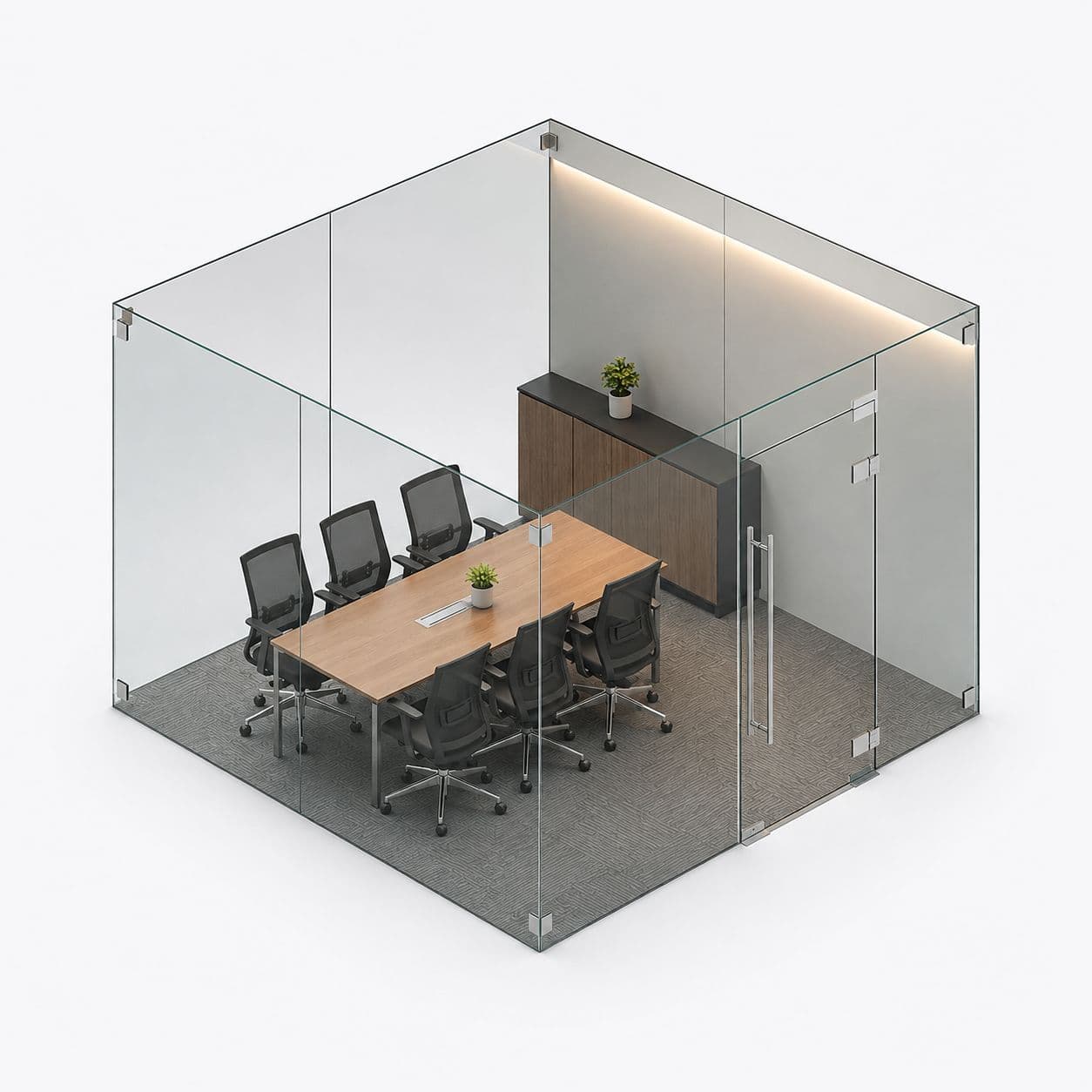
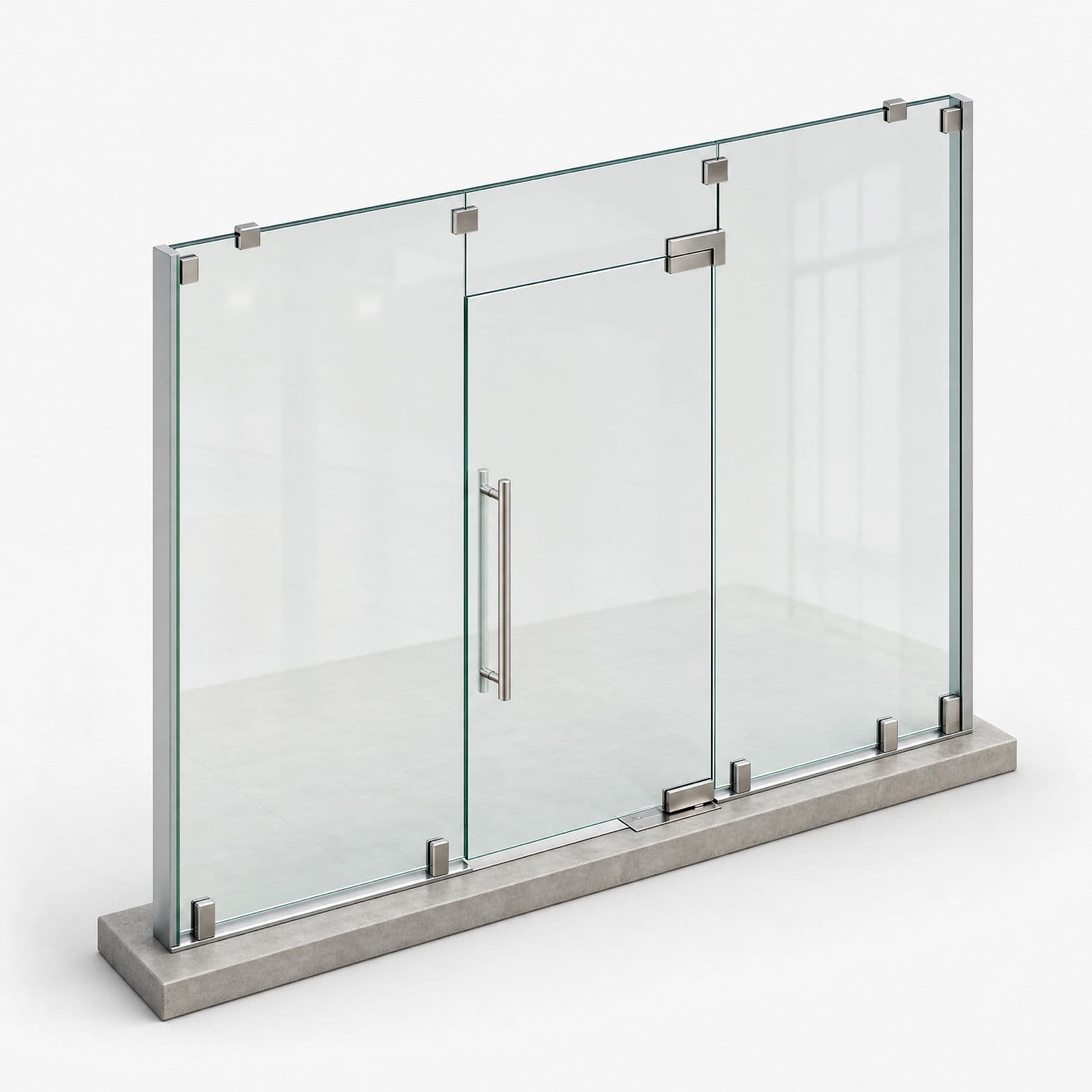
| Office cabin, fixed glass wall | 12mm toughened | At floor level a broken pane falls as blunt pieces; strong enough for a door on a floor spring |
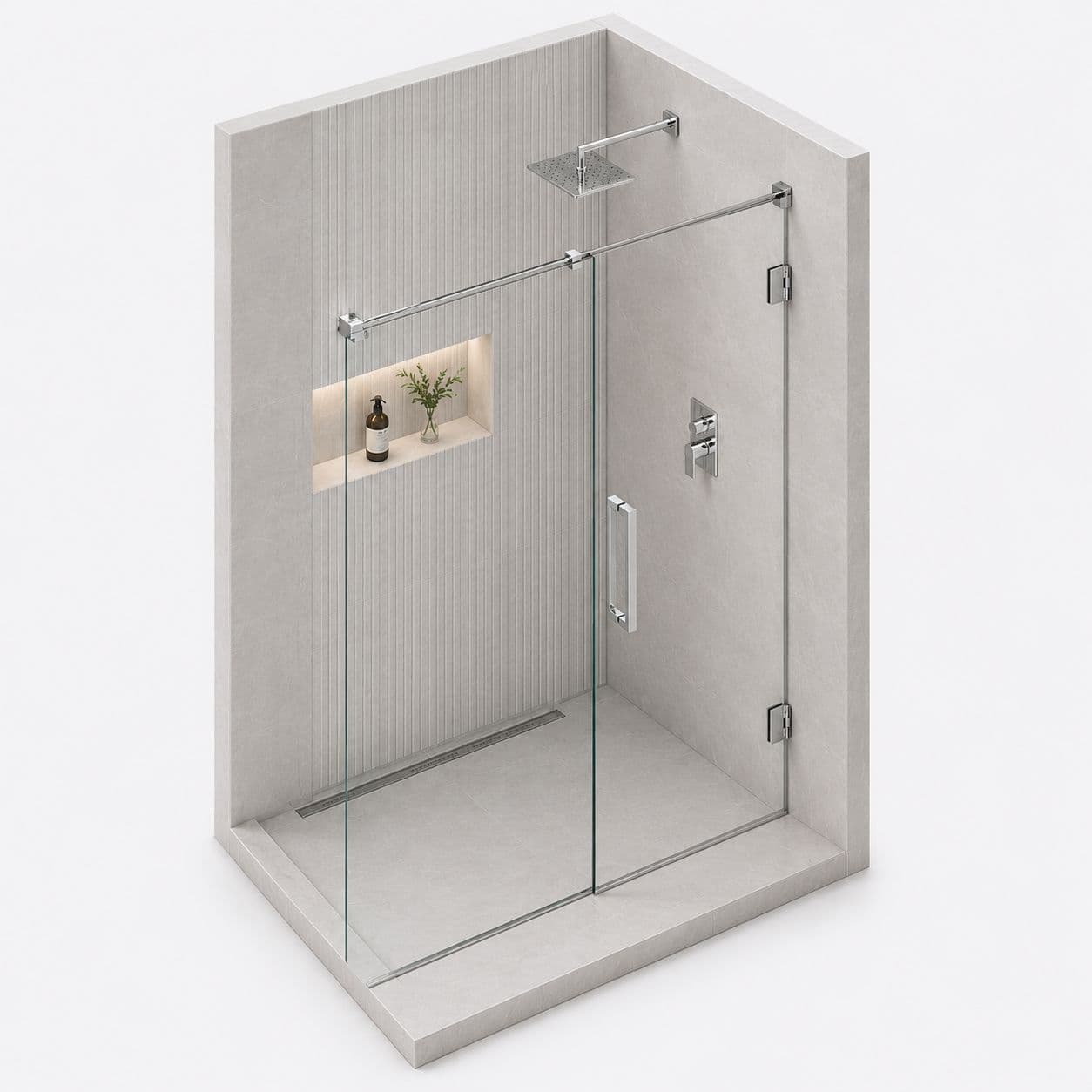
| Shower screen or enclosure | 8–12mm toughened | Wet, heavy daily use, people moving close to the glass |
| Shopfront and entrance door | 12mm toughened | Impact from people and trolleys, door hardware drilled before toughening |
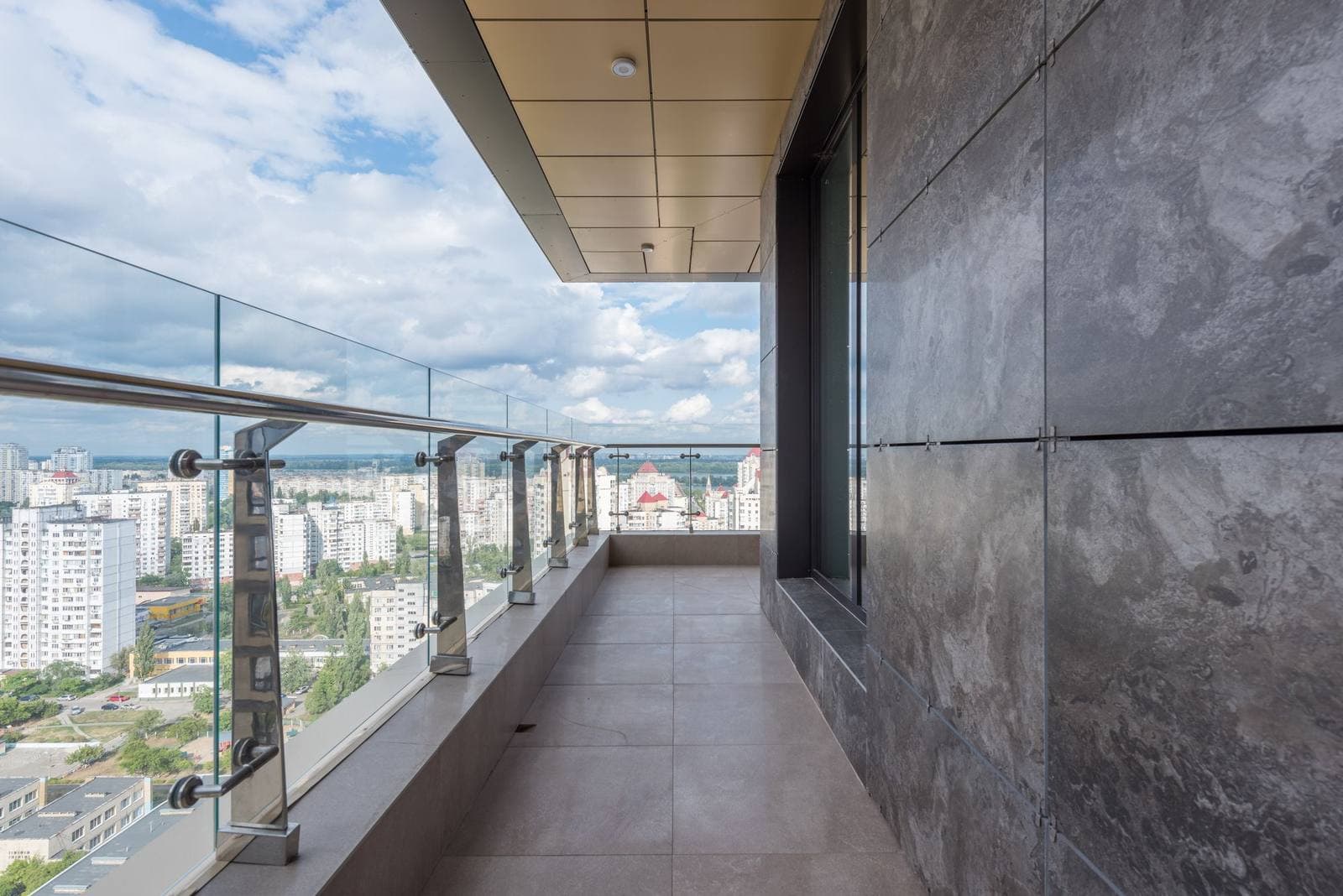
| Balcony or stair railing over a drop | Laminated, usually toughened laminated | The pane must stay in place after it breaks so nobody falls through |
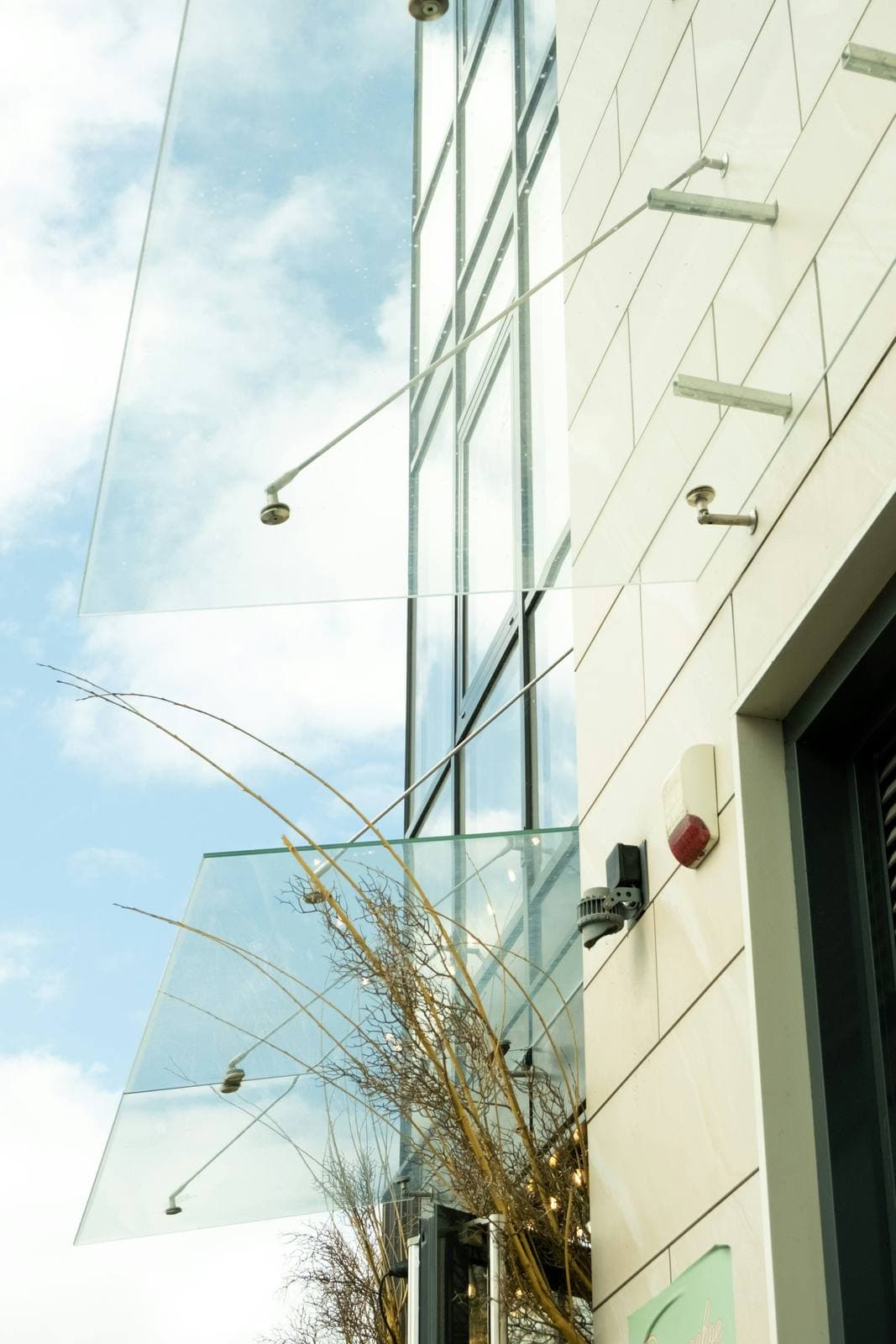
| Canopy, skylight, sloped or overhead glass | Laminated; heat-soaked toughened plies for large panes | Glass falling from above is the hazard; heat-soak testing reduces the risk of spontaneous breakage |
For a deeper look at the two glass types, see laminated vs toughened glass, the glass thickness guide and why toughened glass breaks. For railings, balcony railing height and safety and the glass balcony railing guide cover the detailing.
What should a glass specification say?
If you are comparing quotes for a commercial job, write the glass line the same way for every vendor. Otherwise one quotes 12mm ISI-marked toughened glass with polished edges and another quotes "12mm glass". A complete line reads like this:
- Type and thickness: 12mm clear toughened, or 6.38/8.38/10.38mm laminated, or toughened laminated with the ply thicknesses.
- Standard and mark: conforming to IS 2553 (Part 1), each pane to carry the BIS Standard Mark with a valid licence number.
- Float glass make: the brand of the base float, if you have a preference.
- Edgework: flat polished edges, arrised at minimum; all holes and notches cut before toughening.
- Heat-soak: whether panes for overhead or facade use must be heat-soak tested.
- Hardware: floor spring, patch fittings, hinges or channels by brand and grade, for example SS304.
Our guide to comparing fabrication quotes covers the rest of the quote, line by line.
How does FabWise specify glass?
FabWise's office and shower styles are built on 12mm Saint-Gobain toughened glass with SS304 fittings, as listed on each style page, for example the frameless glass cabin with door at ₹400 per sq ft and the frameless shower partition with door at ₹500 per sq ft. Whoever you hire, us included, ask to see the BIS mark and licence number on the panes before they are fitted. A good vendor will be glad to show it.
Holes, notches and sizes are fixed before the glass is toughened, because toughened glass cannot be cut or drilled afterwards. That is why every job starts with a site visit and our own measurement, see how it works, and why toughened glass takes about 7–10 days to produce after the order.
For commercial work across Delhi NCR, see glass for offices, for builders and developers and for architects and interior designers.
Common questions
Is ISI mark compulsory for toughened glass in India?
Yes. Under the Safety Glass (Quality Control) Order, 2020, in force since 16 September 2020, toughened and laminated safety glass for building use must conform to IS 2553 (Part 1) and carry the BIS Standard Mark under a valid BIS licence. BIS is the certifying and enforcing authority.
Where is the ISI mark on toughened glass?
It is usually etched or printed in one corner of each pane, showing the ISI mark, IS 2553 (Part 1) and a licence number starting CM/L. Check it before the pane goes into a channel or behind a fitting, because the corner may be hidden once it is installed.
How do I verify a BIS licence number on glass?
Enter the CM/L licence number in the BIS Care app or the BIS online licence search. It shows who holds the licence, which product it covers and whether it is in force. The holder is the processor that toughened the glass, which may differ from the float glass brand.
Should a glass railing use toughened or laminated glass?
Where the railing guards a drop, laminated glass, usually made from toughened plies, is the common choice, because it stays in place after it breaks. IS 16231 (Part 4) is the Indian code of practice on glass and human impact; the architect or consultant should apply it to the specific design.
Kya bina ISI mark wala toughened glass lagana theek hai?
No. Since September 2020 toughened and laminated glass for buildings must carry the BIS Standard Mark under IS 2553 (Part 1). Ask your fabricator to show the mark and the CM/L licence number on the pane before it is fitted, and check the licence in the BIS Care app.
Where the outside figures came from
Prices quoted above for other companies are their own published figures on the date shown. They change, and they are not ours to guarantee — check them before you rely on them.
- Safety Glass (Quality Control) Order, 2020 (gazette text)Order dated 14 March 2020, in force 16 September 2020. Checked 10 October 2026.
- BIS circular on Amendment No. 2 to IS 2553 (Part 1):2018Implementation guidelines, January 2025. Checked 10 October 2026.
- BIS standard listing: IS 16231 (Part 4):2019Use of Glass in Buildings, Code of Practice, Part 4: Safety Related to Human Impact. Catalogue entry; reviewed 2024. Checked 10 October 2026.
What this page is about
Read next
- Managed Fabrication vs a Local Fabricator vs a Directory Vendor: Which Suits Your Project?There are three common ways to get glass or metal work done in Delhi NCR. Each suits a different job. A plain comparison of who measures, who answers for the result and where the risk sits.
- Glass Cabin vs Drywall Partition: Which Is Right for Your Office?Glass or gypsum board for an office cabin? Light, sound, speed, dust, lease exit and cost compared, and the hybrid that many offices end up with.
- Office Glass Partition Sound Privacy: Where Noise Leaks and How to Fix ItMost noise leaves a glass cabin through gaps, not through the glass. The five leak paths, the fix for each, and when laminated or double-glazed panels are worth asking about.