

Commercial Glass Work
Office Glass Partition Sound Privacy: Where Noise Leaks and How to Fix It
Most noise leaves a glass cabin through gaps, not through the glass. The five leak paths, the fix for each, and when laminated or double-glazed panels are worth asking about.
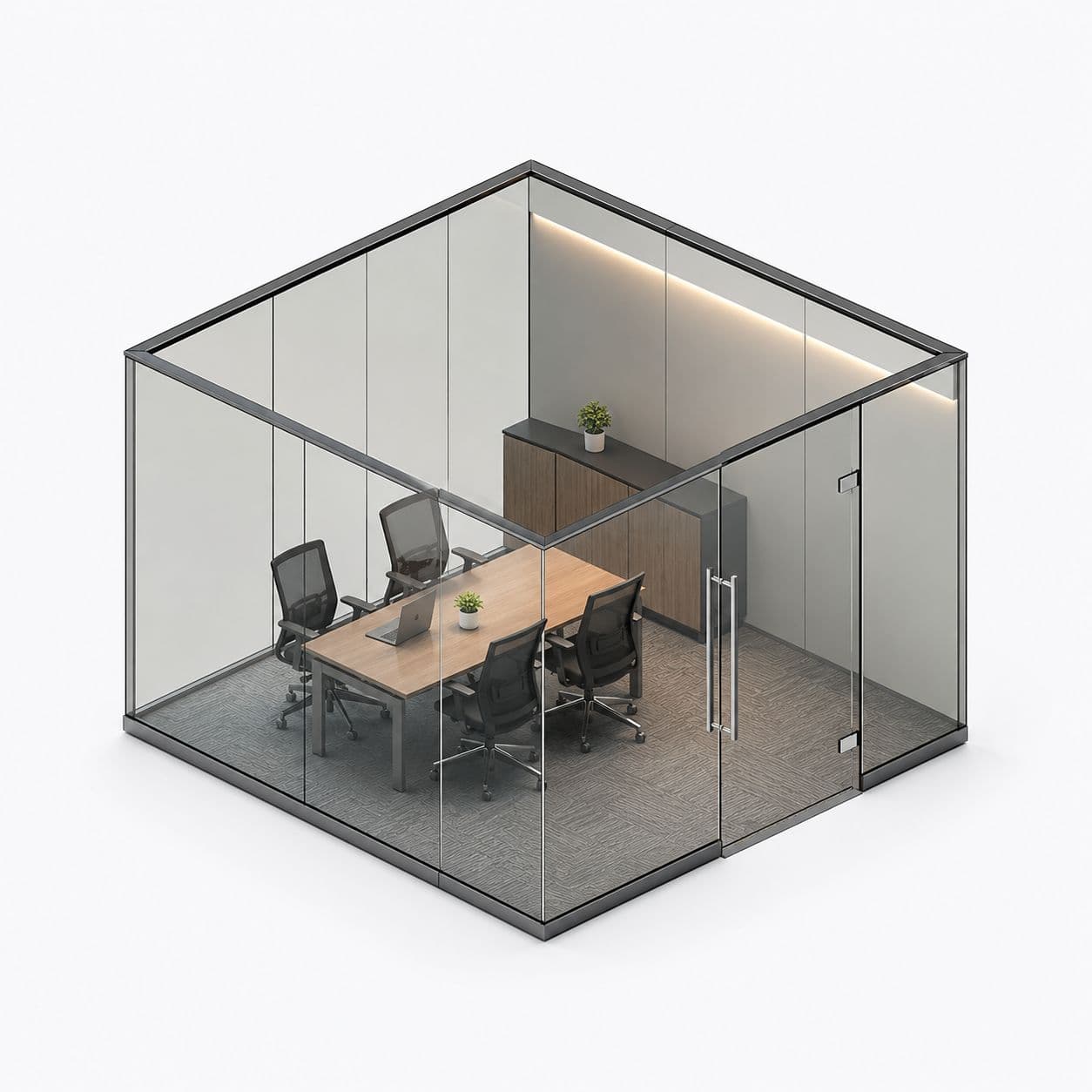
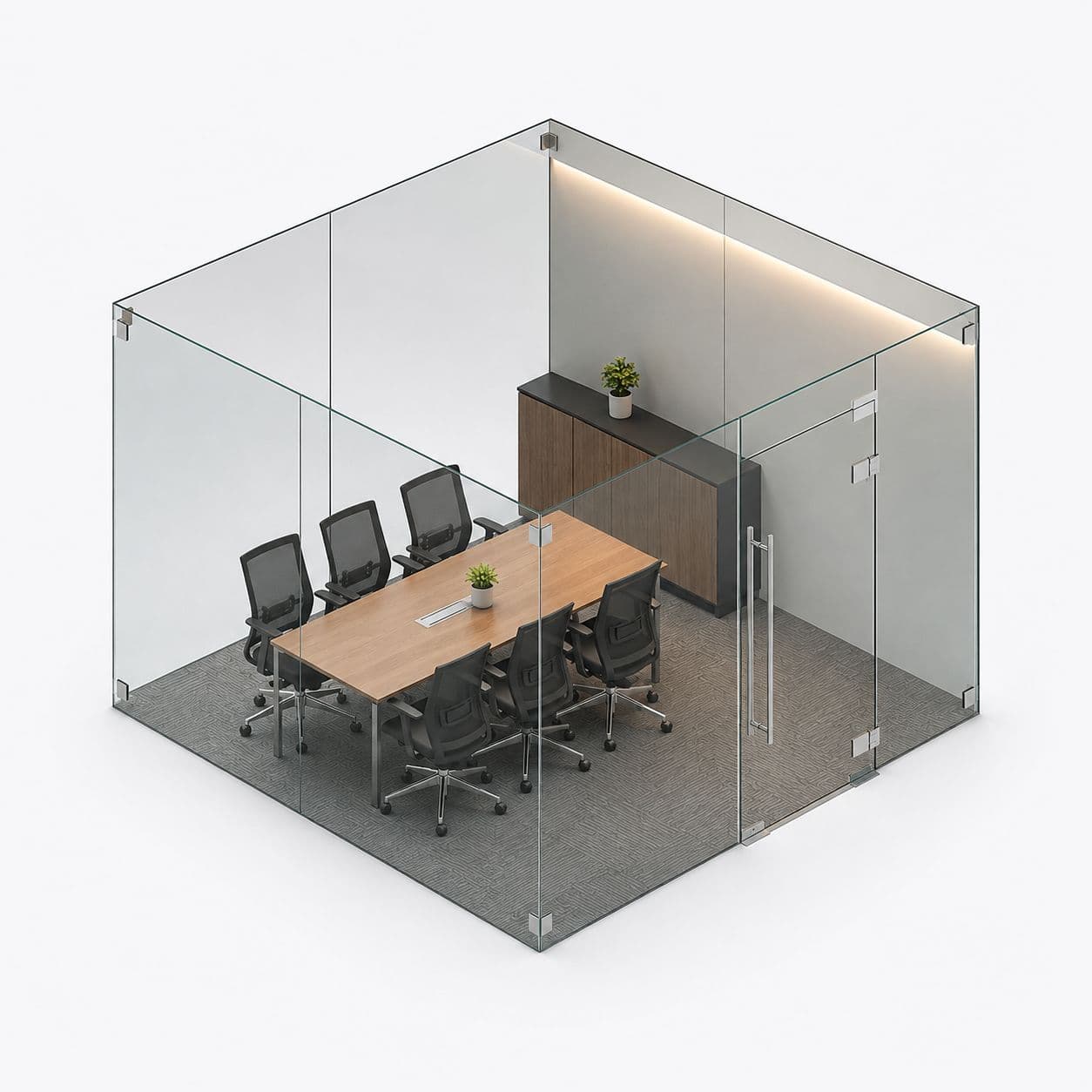
A glass office partition keeps conversations private when the gaps are sealed: under and around the door, above the false ceiling, and at every joint. Single 12mm toughened glass already cuts normal speech to a murmur; most complaints in Gurugram and Noida offices come from sound slipping around the glass, not through it. Fix the gaps first, then consider laminated or double-glazed glass if you still need more.
This is a diagnostic guide. It will not tell you a glass cabin is a recording studio, because it is not. It will tell you where speech escapes, in what order to fix it, and what to ask for in a quote.
Why can you hear people in a glass cabin?
Sound travels like water: it takes the easiest path. A solid 12mm glass panel is a decent barrier. But a typical cabin has a door with a gap under it for the floor spring, a vertical gap at the hinge side, joints between panels, and often an open void above the false ceiling that connects every room on the floor. Each of those is a hole in the barrier, and even a small continuous gap lets through a surprising amount of speech.
Where does sound leak, and what fixes it?
| Leak path | Why it leaks | Usual fix | Effect |
|---|---|---|---|
| Above the false ceiling | Glass stops at the grid; the plenum is open over the wall | Take the partition to the slab, or add a barrier in the void above it | Often the biggest single improvement |
| Under the door | A gap is left for swing over the floor | A drop seal or brush seal at the door bottom | Large for its cost |
| Door edges | Frameless doors close with a small gap all round | Seal strips on the edges; a framed door closes tighter | Noticeable |
| Panel joints | Butt joints between frameless panels | Clear silicone or a polycarbonate joint profile | Moderate |
| Shared walls and ducts | AC ducts and returns run between rooms | Lined ducts or separate returns, by the HVAC contractor | Significant where ducts connect rooms |
Does the glass itself make a difference?
Yes, once the gaps are dealt with. Three options, in rough order of performance:
- 12mm toughened glass, our standard for office work. Heavier glass resists sound better than thin glass; at 12mm it suits most cabins and meeting rooms.
- [Laminated glass](/glossary/laminated-glass), two sheets bonded with an interlayer. The interlayer damps vibration, which helps with speech frequencies. Acoustic interlayers do this better.
- [Double-glazed units](/glossary/double-glazed-units), two panes with an air gap. Very effective, but heavier, thicker and more expensive, and they need a frame.
Laminated and double-glazed panels are not on our standard rate card. If a room needs them, ask at the visit; they are quoted separately and can change lead time.
Frameless or framed: which is quieter?
An aluminium-framed office cabin usually seals better than a frameless one, because the frame and its gaskets close the edges and the door shuts against a rebate. It starts at ₹1,100 per sq ft. A frameless glass cabin with door, from ₹400 per sq ft, looks lighter but has small gaps around a frameless door by design. For a director's cabin or HR room, the frame is often worth the higher rate; for a team huddle space, frameless with good seals is usually enough. EPDM gaskets are the material to ask about for frame seals.
What about visual privacy?
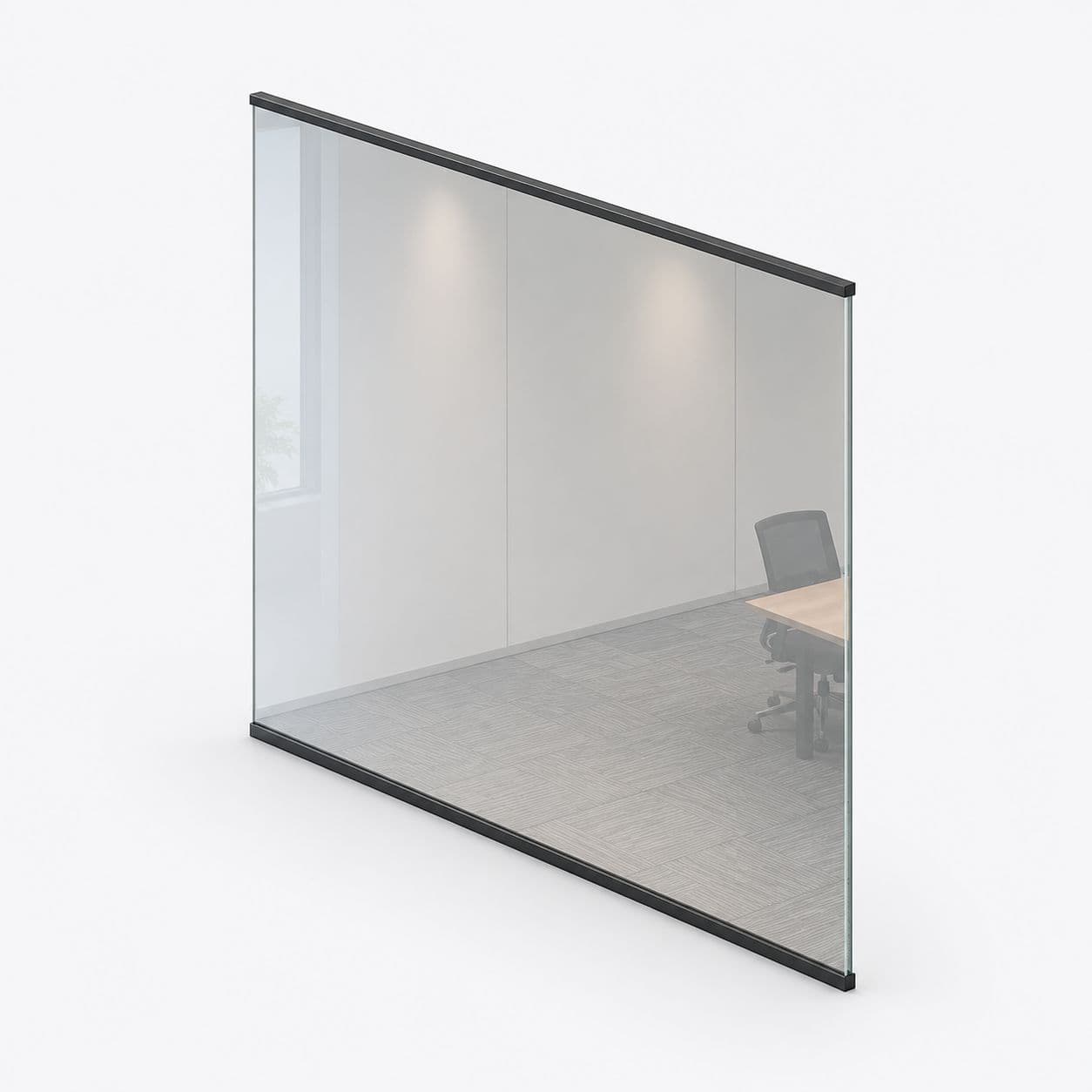
People often say a cabin is not private when they mean they can be seen. Sound and sight are separate problems. A frosted band at seated and standing eye level stops the feeling of being watched without blocking light; full frosting hides the room. Frosted glass has to be decided before toughening, while film can be added later. Our frosted film vs frosted glass guide compares them.
How do you check a cabin you already have?
- Close the door and have someone speak normally inside. Walk around the outside and listen at the door bottom, the hinge edge, the panel joints and the ceiling above.
- Lift a ceiling tile beside the partition. If there is open space over the glass connecting to the next room, that is likely the main leak.
- Check the door gap with a torch from inside in a dark corridor: light through a gap is sound through a gap.
- If the door rattles or the panels buzz, see glass partition rattling; vibration adds noise of its own.
- If the door does not close fully, sealing will not help until it does; see glass door not closing.
Which rooms need the most attention?
- HR and interview rooms: seal everything, consider a framed door and drywall on the shared wall.
- Directors' cabins: framed door, ceiling barrier, frosted band.
- Meeting and conference rooms: video calls raise voices, so the ceiling void matters most; see our conference room glass design guide.
- Phone booths in coworking spaces: small rooms need proper seals because people speak close to the glass. More on coworking spaces.
Does it matter which building you are in?
Yes. Office towers with high slabs and deep ceiling voids, common in DLF Cyber City and along Golf Course Road, make the plenum leak bigger. Older commercial blocks with low slabs, such as parts of Udyog Vihar or Sector 18 in Noida, sometimes allow glass close to the slab. Building management rules on ceiling work also vary, so check before planning a barrier.
How do we approach it at the visit?
Book a site visit for ₹99, usually within 24 to 48 hours in Gurgaon, Noida or Delhi. Tell us which rooms need privacy. We look at the ceiling, floor and door positions and quote the glass and door options in writing, usually within about 2 hours. Office styles use 12mm Saint-Gobain toughened glass with SS304 fittings and a 2 year functional warranty on the floor machine. If you are still weighing glass against solid walls, read glass cabin vs drywall partition first.
Common questions
Are glass office partitions soundproof?
No partition is fully soundproof, and glass is no exception. A well-sealed 12mm glass cabin reduces normal speech to a low murmur outside. Most noise problems come from gaps around the door and above the false ceiling, not from the glass. Sealing those gaps is the first and cheapest improvement.
How can I make my glass cabin more soundproof?
Start with the gaps: add a drop seal under the door, seal strips on the door edges and a barrier in the ceiling void above the partition. Then check AC ducts that connect rooms. Only after that is upgrading to laminated or double-glazed glass worth considering, because new glass with open gaps changes little.
Is laminated glass better than toughened glass for sound?
Usually yes, at similar thickness. The interlayer in laminated glass damps vibration, which helps with speech. Acoustic interlayers help more. Laminated glass is not on our standard rate card, so ask at the site visit if a room needs it; it is quoted separately.
Glass cabin mein awaaz bahar kyun jaati hai?
Sound usually escapes through gaps rather than through the glass: under the door, around the door edges, at panel joints and over the top of the partition above the false ceiling. Sealing these points, especially the ceiling void and the door bottom, cuts most of the leakage.
Is a framed glass cabin quieter than a frameless one?
Generally, yes. An aluminium frame with gaskets closes the edges more tightly, and a framed door shuts against a rebate. A frameless door has small gaps by design. Our aluminium-framed cabin starts at ₹1,100 per sq ft and the frameless cabin at ₹400 per sq ft.
Does frosting the glass improve sound privacy?
No. Frosting or film blocks sight, not sound. It helps with the feeling of being watched, which people often describe as a privacy problem, but it does nothing for speech. For sound, seal gaps and consider the glass type; for sight, add a frosted band or film.
What this page is about
Read next
- ISI-Marked Toughened Glass: What IS 2553 Means for Partitions, Showers and RailingsSince September 2020, toughened and laminated glass for buildings in India has to carry the BIS Standard Mark. What that means for an office cabin, a shower screen or a railing, and how to check the mark on site.
- Managed Fabrication vs a Local Fabricator vs a Directory Vendor: Which Suits Your Project?There are three common ways to get glass or metal work done in Delhi NCR. Each suits a different job. A plain comparison of who measures, who answers for the result and where the risk sits.
- Glass Cabin vs Drywall Partition: Which Is Right for Your Office?Glass or gypsum board for an office cabin? Light, sound, speed, dust, lease exit and cost compared, and the hybrid that many offices end up with.