

Commercial Glass Work
Frosted Film vs Frosted Glass: Which to Choose for Office Partitions
Film goes on after installation and can be changed; frosted glass is made into the panel and lasts. How to choose, band heights that work, and why the decision has to come before toughening.
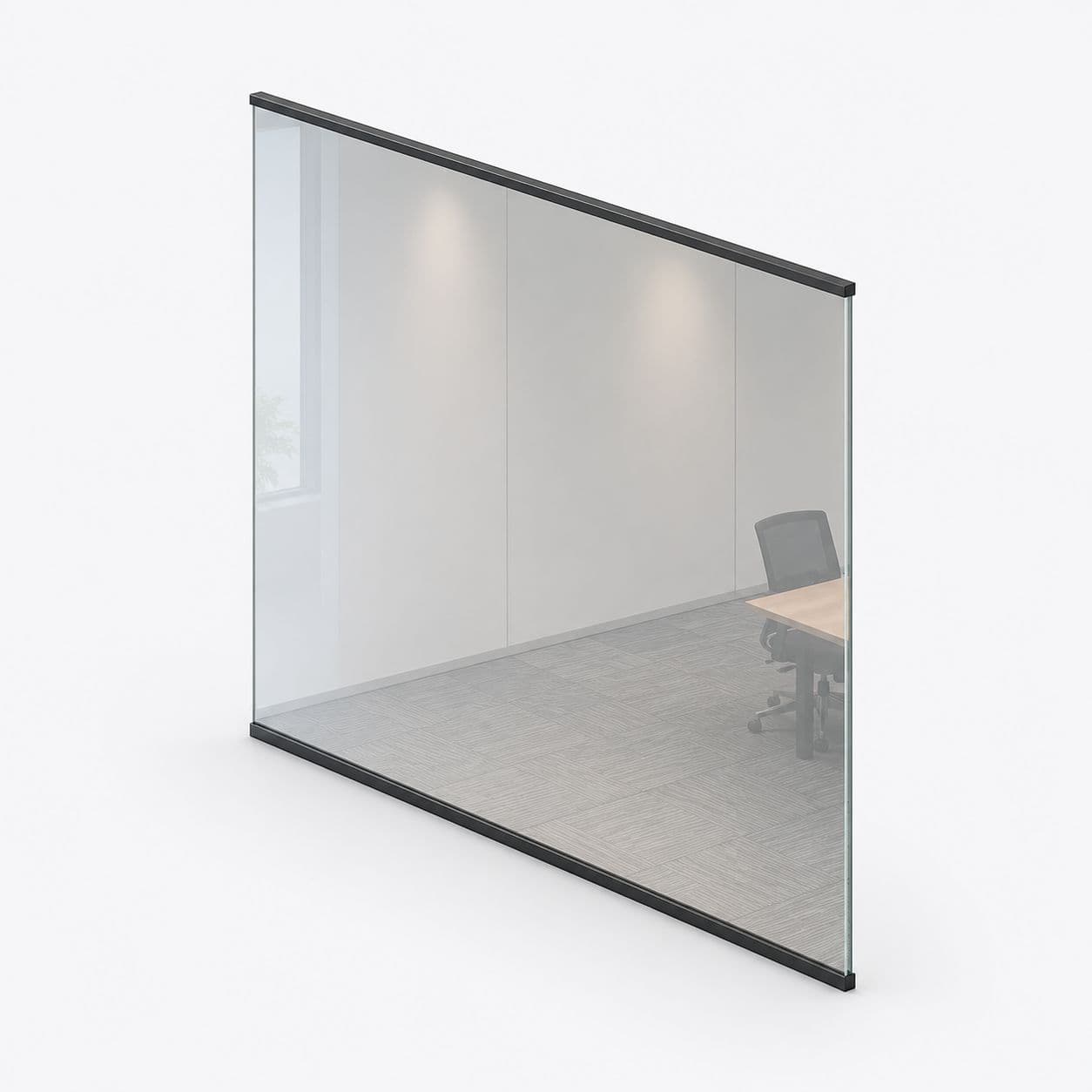
Frosted film is a vinyl applied to clear glass after installation; it is cheaper, quick to change and removable, but it scratches and can peel over time. Frosted glass is glass whose surface is acid-etched or sandblasted before toughening; it costs more and must be decided up front, but it lasts as long as the panel. For offices in Gurgaon and Noida, film suits rented spaces and branding that will change; frosted glass suits permanent privacy in cabins, washrooms and clinics.
Both produce the same soft, milky look from a distance. The difference shows up in a year or two, when one is still perfect and the other has a lifted corner by the door handle.
How do frosted film and frosted glass compare?
| Factor | Frosted film | Frosted (acid-etched) glass |
|---|---|---|
| What it is | Adhesive vinyl on the glass surface | The glass surface itself, etched or sandblasted |
| When it is decided | Any time, even years later | Before the glass is toughened |
| Upfront cost | Lower | Higher |
| Lifespan | Several years indoors; edges can lift sooner near doors | As long as the glass |
| Scratch resistance | Scratches and nicks easily | Durable |
| Changing the design | Peel off and replace | Not possible; new glass needed |
| Logos and patterns | Easy, cut by plotter | Possible, but fixed for life |
| Fingerprints | Few | Shows greasy marks; wipe with glass cleaner |
| Lease exit | Removed cleanly | Stays with the glass |
Why must frosted glass be decided before toughening?
Acid-etching and sandblasting are done to the glass surface before it goes into the furnace. Once glass is toughened, working the surface hard risks weakening or breaking it. So frosted glass is ordered as frosted from the start. If you only realise after installation that a cabin needs privacy, film is the practical answer. More on the material in our frosted glass glossary entry.
What band heights work best?
Most offices do not frost the whole panel. A band hides people at the heights where eyes meet and leaves light above and below.
| Band | Typical height from floor | What it does |
|---|---|---|
| Seated privacy | About 2.5 ft to 5 ft | Hides people at desks; standing visitors still see in |
| Standing privacy | About 3 ft to 6 ft | Hides most people sitting or standing |
| Safety stripe | A narrow strip around 3 ft and 5 ft | Makes glass visible so no one walks into it |
| Full frost | Whole panel | Complete visual privacy; light still passes |
Heights are typical, not rules; check sightlines from the chairs that will be inside. Whatever privacy you choose, full-height clear glass in a walkway should carry some marking at eye level so people see it. A band does that job too.
When is film the better choice?
- Rented or coworking offices, where you may leave in a few years. More on fit-outs for coworking spaces.
- Branding: logos, patterns and room names change with rebrands; film is replaced, glass is not.
- Retrofits on cabins already installed.
- Trial and error: if you are not sure how much privacy a room needs, film lets you test it.
When is frosted glass worth the extra?
- Washrooms, changing rooms and clinic consultation rooms, where privacy is not optional. See our notes on clinics and hospitals.
- High-traffic doors, where film edges near handles get picked and scuffed.
- Owned premises with a long horizon.
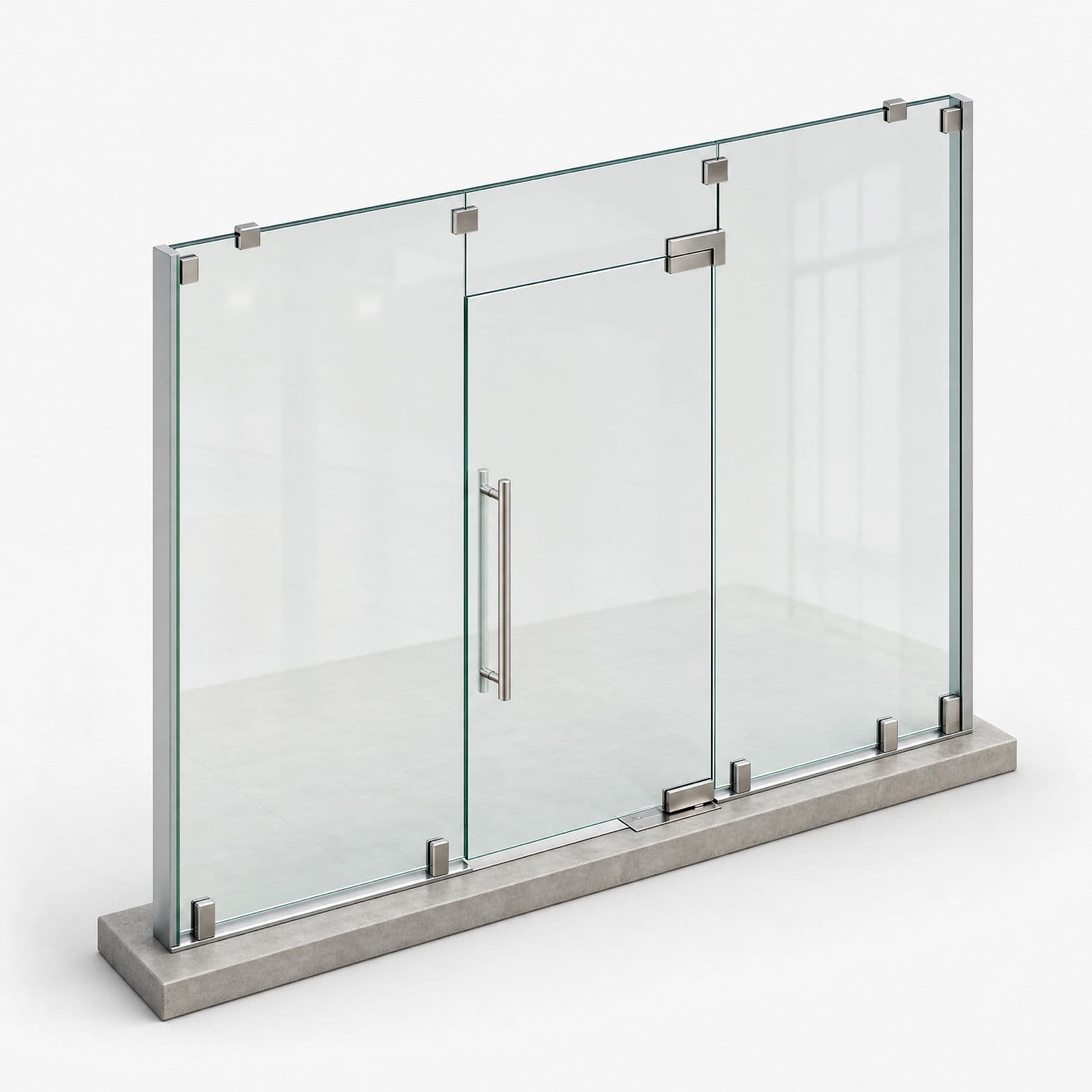
- Shop fronts and back-of-house screens, where a film would be cleaned and scratched daily. See the glass shopfront with door.
What goes wrong with film, and how do you avoid it?
The usual problems are edges lifting, bubbles, and scratches from rings, keys and trolleys. Lifting often starts near door handles and at corners where people touch it. Applying film to properly cleaned glass, keeping it a few millimetres short of fittings and edges, and cleaning with soft cloths rather than scrapers all help. If yours is already lifting, see frosted film peeling.
How does frosting affect cost on our partitions?
Our office partition rates are for clear 12mm Saint-Gobain toughened glass: a fixed frameless glass wall from ₹350 per sq ft and a frameless glass cabin with door from ₹400 per sq ft. Frosted, tinted or patterned glass is a special finish and is not on the standard card, so tell us on WhatsApp what you need and it is included in the written quote. Film is usually a separate signage or interior job applied after installation. The office glass partition cost guide explains the base pricing.
Who maintains film and frosted glass, and how?
Clean frosted glass with a soft cloth and an ordinary glass cleaner; the etched face holds greasy fingerprints more than clear glass, so a microfibre cloth works better than paper. Never use a blade scraper on either finish. Film needs gentler treatment still: no abrasive pads, no ammonia-heavy cleaners that can cloud some films, and no picking at a lifted corner, which only tears it further. In Gurugram's dusty months, wipe dust off first rather than rubbing it across the surface, or fine grit will mark film within a season. Facility teams that clean the floor at night should be told which panels are filmed.
Can frosted and clear glass mix in one cabin?
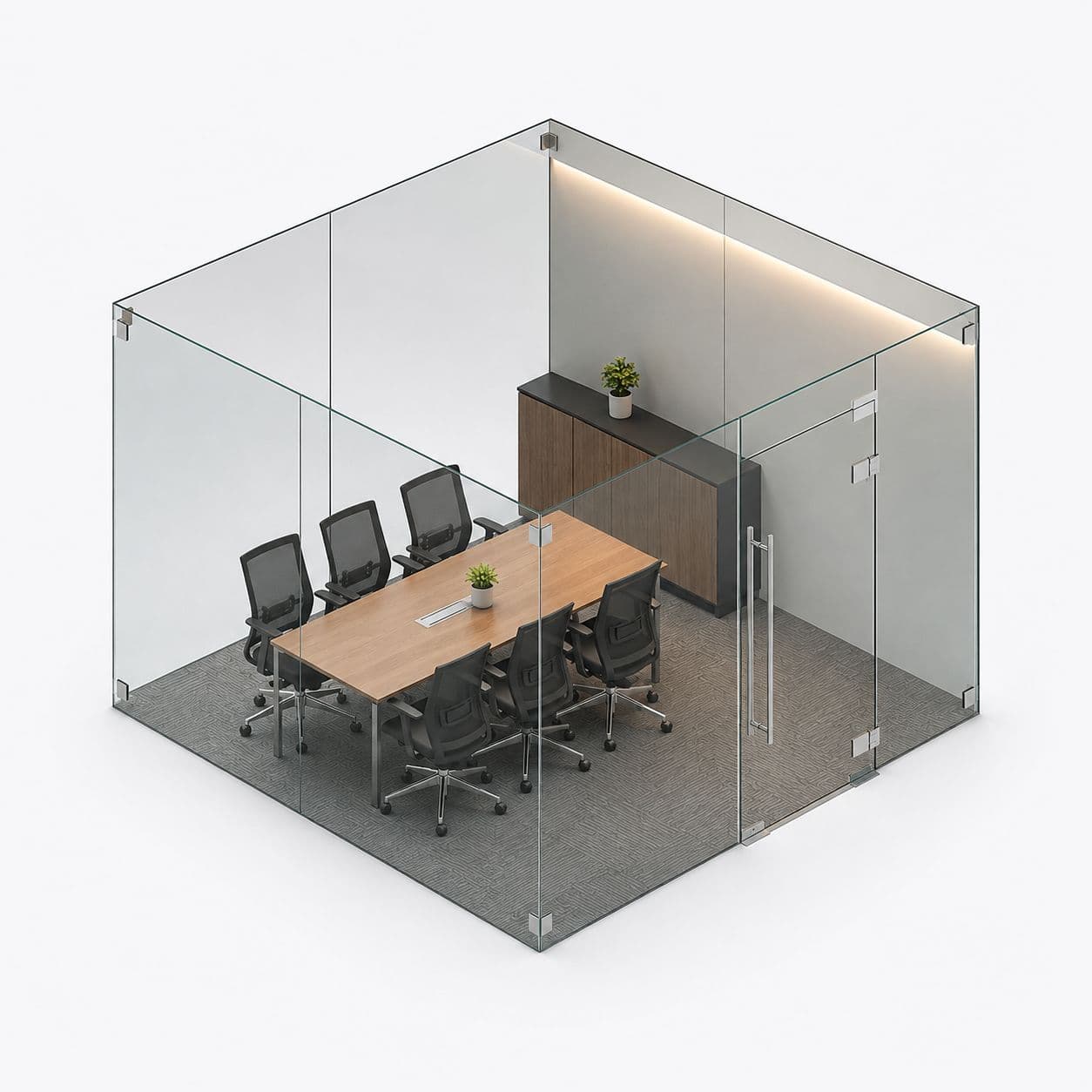
Yes, and it often looks best. A typical arrangement is frosted glass on the side facing the corridor, clear glass on the side facing a window so light passes through, and a clear door with a frosted band. Each panel is ordered separately, so mixing finishes is straightforward if decided at the quote.
What is the next step?
If you are planning new partitions, book a site visit for ₹99; it is usually arranged within 24 to 48 hours in Gurgaon, Noida or Delhi, and the written quote follows within about 2 hours, valid 3 days. Toughened glass production generally takes 7 to 10 days after the 50% advance. For the sound side of privacy, which frosting does not touch, read our office glass partition sound privacy guide.
Common questions
Which is better, frosted film or frosted glass?
Frosted glass lasts longer and does not scratch or peel, so it is better for permanent privacy. Frosted film is cheaper, can be added after installation and can be removed or changed, so it suits rented offices, branding and retrofits. If the glass is new and the need is permanent, frost the glass.
Can existing toughened glass be frosted?
Not reliably by etching or sandblasting, because working the surface of toughened glass after toughening risks weakening or breaking it. For glass that is already installed, frosted film is the practical option. If you are replacing panels anyway, the new ones can be ordered frosted.
How long does frosted film last on office glass?
Good-quality film indoors usually lasts several years, but edges near door handles and corners can lift sooner, and the surface scratches easily. Careful cleaning with soft cloths and keeping the film slightly short of fittings extends its life. Frosted glass, by comparison, lasts as long as the panel itself.
Office cabin ke glass pe frosting kitni height tak karein?
A common band runs from about 2.5 ft to 5 ft from the floor, which hides people sitting at desks while letting light through above and below. For privacy when standing too, take it to around 6 ft. Check sightlines from the actual chairs before fixing the height.
Is frosted glass more expensive than clear glass for partitions?
Yes. Frosted glass is a special finish and costs more than clear. On our rate card, office partitions are priced for clear 12mm toughened glass, from ₹350 per sq ft. Frosted or patterned glass is quoted separately once we know the panels and sizes.
Does frosted glass let light through?
Yes. Frosted glass diffuses light rather than blocking it, so a frosted cabin still gets daylight from the floor around it. It hides detail and shapes but keeps the room bright, which is why it is used instead of drywall where privacy and light both matter.
What this page is about
Read next
- ISI-Marked Toughened Glass: What IS 2553 Means for Partitions, Showers and RailingsSince September 2020, toughened and laminated glass for buildings in India has to carry the BIS Standard Mark. What that means for an office cabin, a shower screen or a railing, and how to check the mark on site.
- Managed Fabrication vs a Local Fabricator vs a Directory Vendor: Which Suits Your Project?There are three common ways to get glass or metal work done in Delhi NCR. Each suits a different job. A plain comparison of who measures, who answers for the result and where the risk sits.
- Glass Cabin vs Drywall Partition: Which Is Right for Your Office?Glass or gypsum board for an office cabin? Light, sound, speed, dust, lease exit and cost compared, and the hybrid that many offices end up with.