

Repair & Replacement
Why Does Toughened Glass Break on Its Own? Causes, Signs and What to Do
Toughened glass is strong, but it isn't unbreakable, and it can shatter with nobody touching it. The real causes, the warning signs, and what to do when a shower door or cabin panel goes.
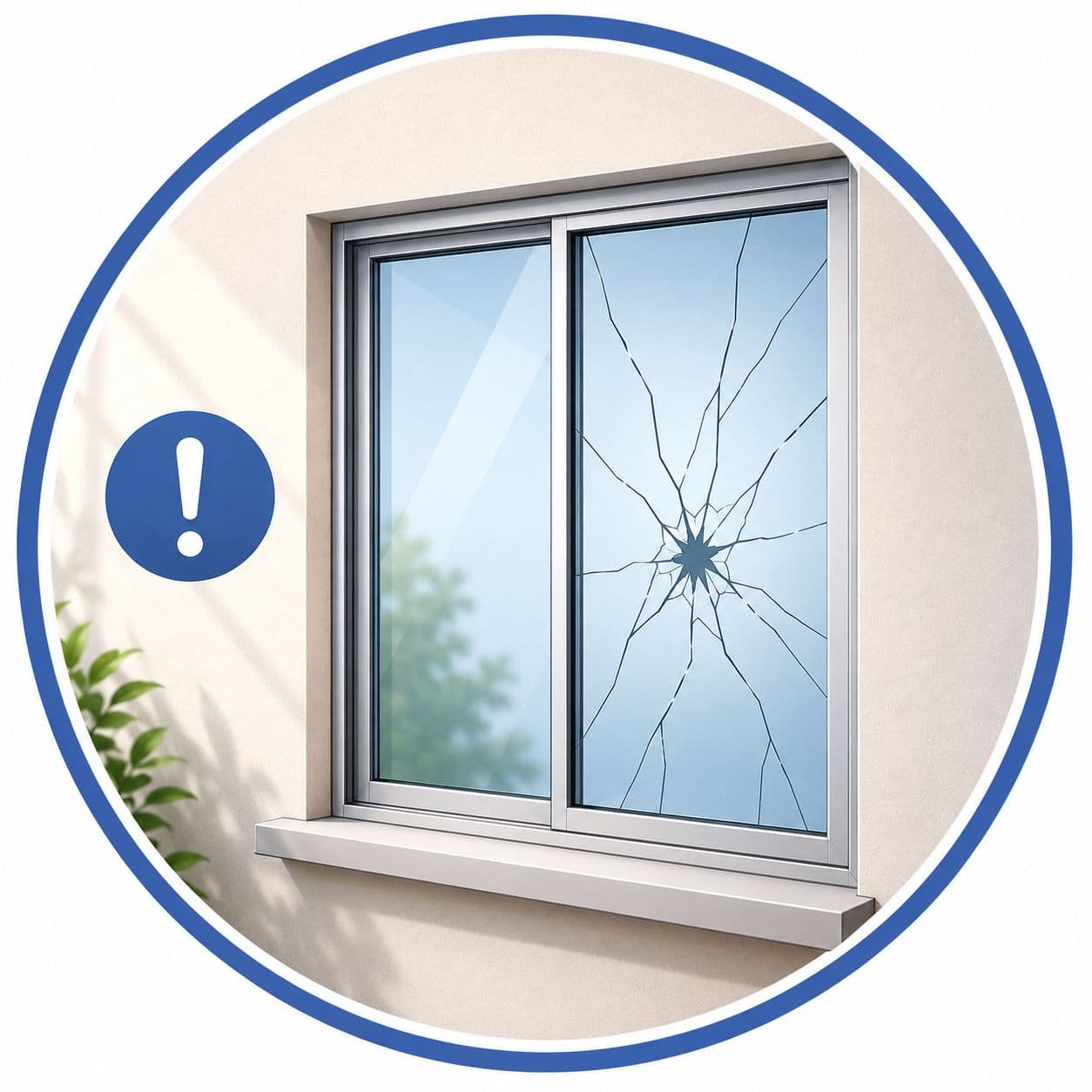
Toughened glass usually breaks for one of four reasons: damage to an edge or corner (often from years earlier), stress from the way it was fixed (glass touching metal, over-tightened clamps, a frame that pinches), a tiny impurity inside the glass such as a nickel sulphide stone that slowly expands, or a hard knock at a weak point. When the cause is an old chip or an impurity, the glass can shatter with nobody near it, which is why a shower door or cabin panel in a Gurugram flat or Noida office sometimes explodes at night.
This guide explains each cause, how to spot the warning signs, and what to do in the first hour after a panel breaks.
What makes toughened glass different from ordinary glass?
Toughened glass, also called tempered glass, is ordinary float glass that has been cut to size, edged, then heated to around its softening point and cooled very quickly with air jets. The outer surfaces cool and set first, so they end up locked in compression while the core is in tension. That built-in stress is what makes the glass several times stronger than the same thickness of ordinary glass.
It is also why toughened glass behaves the way it does when it fails. Once a crack reaches the tension zone in the core, the stored energy releases all at once and the whole panel breaks into small, blunt, cube-like pieces. That is the safety feature: no long daggers. It is also why toughened glass cannot be cut, drilled or notched after toughening. Every hole for a hinge or handle has to be made before it goes into the furnace.
What are the main reasons toughened glass breaks?
| Cause | What happens | Typical sign before it breaks |
|---|---|---|
| Edge or corner damage | A chip or shell on the edge, often from handling or a door hitting a wall, becomes the starting point for a crack | A visible nick on the edge; often none you'd notice |
| Fixing stress | Glass sits hard against metal, a clamp is over-tightened, or a frame twists the panel | Door rubbing, a hinge out of line, a panel that rattles |
| Nickel sulphide inclusion | A microscopic impurity slowly changes shape and grows, pushing on the core until it fails | None; breakage seems spontaneous, often a butterfly-shaped origin |
| Impact | A hard object, a fall, a cricket ball or a trolley hits a weak point | The obvious one |
| Thermal stress | Uneven heating, such as partial shading or a heater close by, stresses the glass | Rare in toughened glass; more of a risk for ordinary glass |
| Building movement | Settling, a sagging lintel or a shifting floor squeezes the glass | New cracks in plaster, doors that suddenly bind |
Edge damage: the most common hidden cause
The middle of a toughened panel is very strong. The edges are its weak point. A shower door that has been swung into a tiled wall a few hundred times, a cabin door that bumps a stopper, or a panel that was knocked while being carried up the stairs can carry a small chip for months before the day it finally runs. Edge chips are worth checking whenever you clean the glass.
Fixing stress: glass should never touch metal
Glass in a clamp, channel or hinge should sit on rubber or EPDM gaskets and setting blocks, not bare metal. When a hinge sags, the door can begin to rub at one corner, and that point load builds day after day. A shower door that is sagging or a partition that rattles is a warning, not just an annoyance.
Nickel sulphide: why it breaks with no one near it
Float glass can contain microscopic particles of nickel sulphide. After toughening, these can slowly change phase and expand, sometimes over months or years, until they crack the stressed core and the panel shatters without any impact. It is rare, but it is a well-known cause of so-called spontaneous breakage. Some manufacturers offer heat soak testing, where toughened glass is held at high temperature to make most affected panels fail in the factory instead of on site; it reduces the risk without removing it.
Is laminated glass safer than toughened?
They solve different problems. Toughened glass is stronger and breaks into small blunt pieces. Laminated glass is two sheets bonded with an interlayer; when it breaks, the pieces stay stuck to the interlayer and the panel stays in place. That is why laminated or toughened-laminated glass is often chosen for overhead glass, glass canopies and some balcony railings, where a falling panel would be dangerous. Our glass balcony railing guide explains that choice for railings.
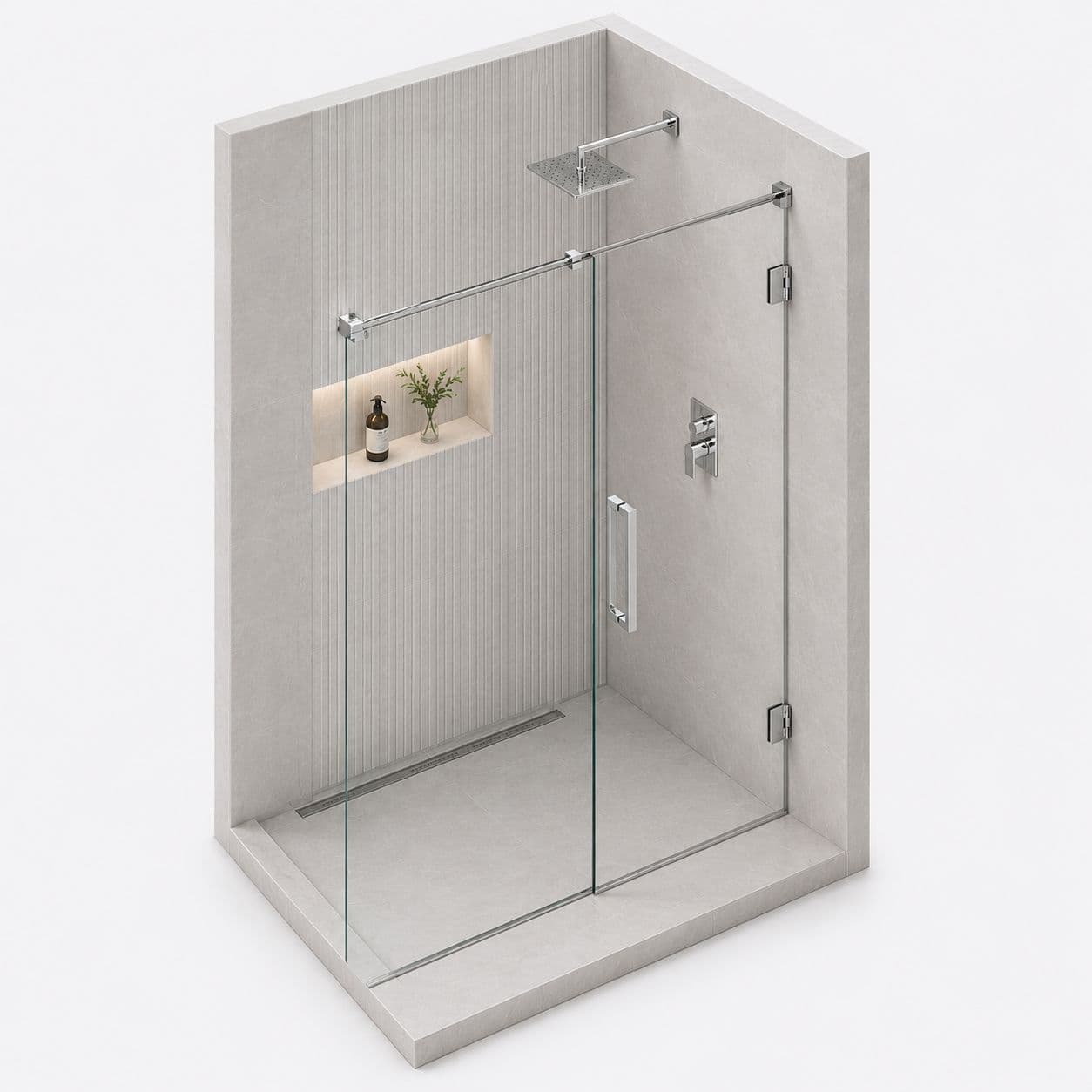
For shower partitions and office cabins at floor level, toughened glass is the normal choice. FabWise uses Saint-Gobain toughened glass: 10mm for bathroom partitions and 12mm for office cabins and shop fronts. Thickness doesn't stop breakage, but the right thickness for the span keeps the glass from flexing. See the glass thickness guide for how thickness is chosen.
What should you do right after a panel breaks?
- Keep everyone, especially children and pets, out of the room. The small pieces travel further than you'd expect.
- Wear shoes and gloves. Sweep the large pieces first, then vacuum; the cubes are blunt but the edges still cut.
- If part of the panel is still in the frame, crazed but standing, don't touch it. It can drop all at once. Tape a sheet of cardboard over it if needed.
- Take photos of the fittings, the frame and the opening before anything is removed, and note the size if you can.
- Check the hinges, clamps and floor machine for damage; a door that broke may have taken its patch fittings with it.
Our toughened glass shattered page covers the same steps for an office panel, and cracked window glass covers ordinary window panes, which crack in lines instead of shattering.
Why does replacement take time?
Because toughened glass can't be cut after toughening, a replacement panel has to be cut, edged and drilled to the exact size first, then toughened. That means measuring the opening, making the glass, and coming back to fit it. Production of toughened glass generally takes around 7–10 days. A broken door can't be patched with a piece cut on site.
Our broken toughened glass replacement service is quoted from photos or videos on WhatsApp, not from a paid site visit, with the final price confirmed for thickness, access and installation complexity. Ordinary window panes are handled under plain glass replacement. If the break started at a sagging hinge or a failing floor spring, fix that at the same time, or the new panel inherits the same stress.
How can you reduce the chance of breakage?
- Fit a door stopper so a hinged shower or cabin door can't swing into the wall.
- Get a sagging or rubbing door adjusted early; see shower door sagging or our glass door maintenance checklist.
- Never tighten a glass clamp until it bites hard; the gasket should be snug, not crushed.
- Keep hard objects, like metal shelves or bathroom stools, from leaning on the glass edge.
- For high-traffic doors, choose the right thickness and hardware for the size; the 8mm vs 10mm vs 12mm shower glass guide explains the trade-offs for bathrooms.
In Gurugram, Noida, Ghaziabad and across Delhi NCR, the repair and replacement family covers broken glass, hinges and floor machines. Start by sending a photo of the broken panel and its fittings on WhatsApp.
Common questions
Why did my toughened glass shatter on its own?
The most common reasons are an old chip on the edge, stress from a fitting that presses on the glass, or a microscopic nickel sulphide impurity that slowly expands inside the glass. All three can cause a panel to break with nobody touching it, sometimes months or years after it was fitted.
Can toughened glass be cut or drilled after it breaks or to fit a new hinge?
No. Toughened glass has to be cut, edged and drilled before it is toughened. Cutting or drilling it afterwards makes it shatter. That is why a replacement panel is made to measure and then fitted, rather than cut on site.
Shower ka glass achanak toot gaya, ab kya karein?
Keep everyone out of the bathroom, wear shoes and gloves, and sweep then vacuum the small pieces. Leave any part still standing in the frame alone, because it can drop. Take photos of the opening and the fittings and send them on WhatsApp; the replacement is quoted from those photos.
Is it safe to keep using the other panels after one breaks?
Usually yes, if they have no chips and the fittings holding them are sound. One panel breaking doesn't mean the others are about to. Check the edges and clamps of the neighbouring panels, and have any rubbing or sagging door adjusted when the broken one is replaced.
How long does it take to replace broken toughened glass?
The new panel has to be made to size and then toughened, and production generally takes around 7–10 days. The overall time also depends on measurement, access and fitting, and the timeline for your panel is confirmed when the replacement is quoted from your photos.
Does the FabWise warranty cover broken glass?
No. Our warranty is on fittings, not on the glass. Styles that list a hardware or floor machine warranty cover those parts as stated; broken glass is replaced as a separate repair job, quoted from photos or a short video sent on WhatsApp, with no paid site visit needed.
What this page is about

Read next
- Floor Spring vs Door Closer: Which One Should Your Glass Door Have?A floor spring hides in the floor and carries a frameless glass door; an overhead closer sits on a framed door. How they differ, which one your door needs, and what goes wrong with each.
- Glass Door Maintenance Checklist: Weekly, Monthly and Yearly CareFive minutes a month keeps a glass door from sagging, slamming or breaking. A checklist for shower doors at home and cabin and shop doors at work, plus the signs that need a repair.
- Glass Door & Partition Repair in Gurugram & NoidaDamaged doors, cracked panes and partition repairs, assessed from a photo and quoted without a paid site visit.