

Glossary · Glass railings · Gurgaon & Noida
Glass railing U-channel: the base shoe that holds frameless glass
A glass railing U-channel, also called a base shoe, is a heavy aluminium or steel channel fixed along the floor or slab edge. The glass panels sit in it and are locked with wedges or grout, so the railing stands with no posts. It gives the cleanest frameless look but needs a strong slab and the right glass.
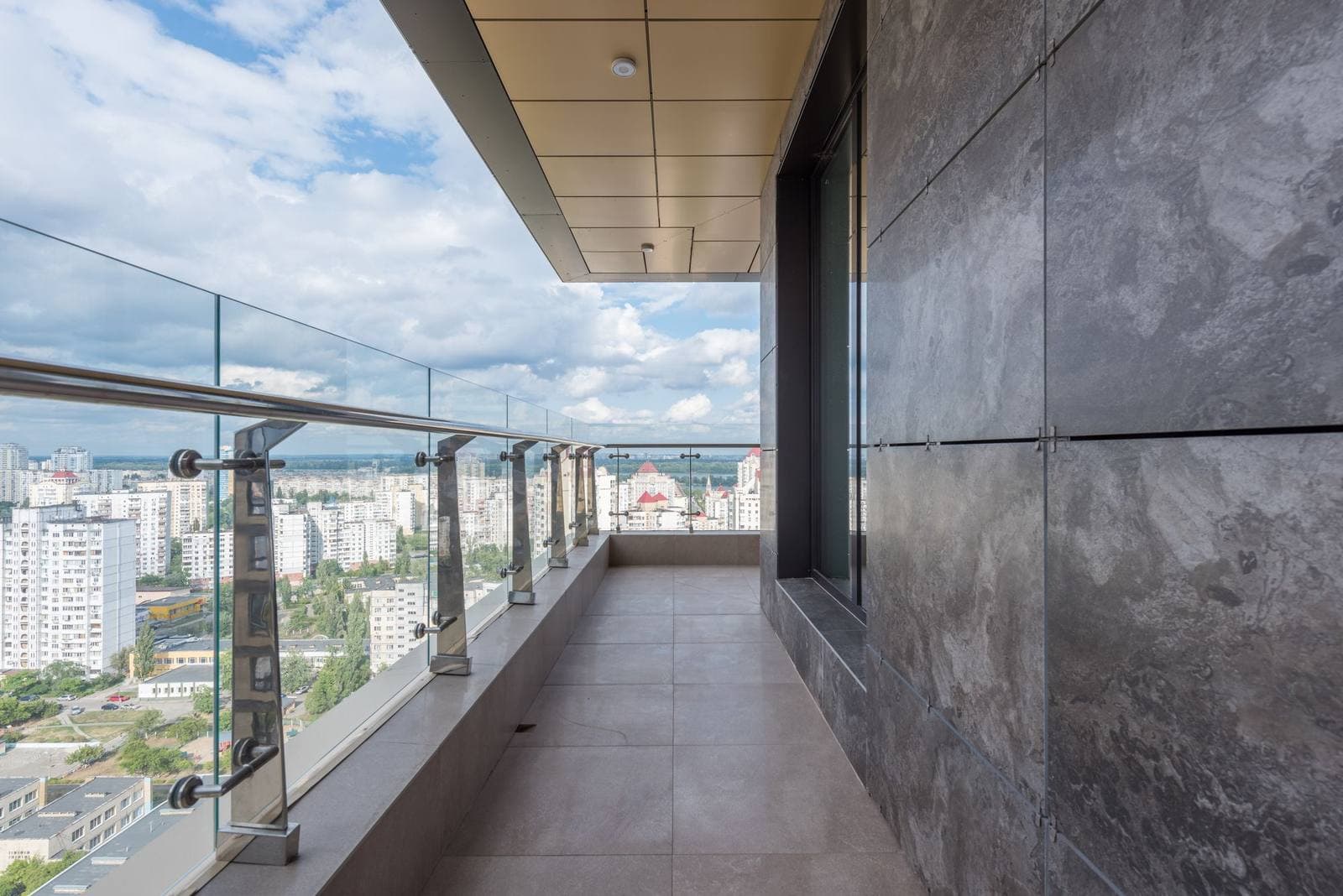
On newer towers along Golf Course Extension Road and the Noida Expressway, many balconies now have glass railings with no visible posts at all. Most of those use a U-channel at the base. It is the system people picture when they say "frameless glass railing", and it is also the one that demands the most from the structure it is fixed to. Here is how it works in Gurugram and Noida buildings.
How does a U-channel hold glass?
The channel is an extruded aluminium (or fabricated steel) section with a deep slot. It is anchored to the slab with heavy anchor bolts, either on top of the floor (top-mounted) or on the slab edge (side- or fascia-mounted). The glass drops into the slot onto setting blocks and is clamped by one of two methods:
- Dry glazing: tapered wedges or adjustable clamp blocks are driven in on both sides of the glass, then capped with a rubber or aluminium trim. Fast, adjustable and the glass can be replaced.
- Wet glazing: the gap around the glass is filled with grout or a structural sealant. Rigid and seamless, but harder to adjust or replace.
A continuous handrail or top cap is commonly added along the top edge, tying the panels together so a broken panel does not leave an open gap.
| U-channel (base shoe) | Spigots | Posts with clamps | |
|---|---|---|---|
| Look | No posts; continuous base | Small posts at each panel | Visible posts and clamps |
| Structural demand on slab | Highest, along the whole edge | Concentrated at each spigot | Lower, spread through posts |
| Glass thickness | Thickest | Thick | Can be thinner |
| Ease of panel replacement | Easy with dry glazing | Easy | Easy |
| Waterproofing | Channel needs drainage | Fewer penetrations | Post base sealing |
See glass railing spigots for the post-like alternative.
What glass goes in a U-channel?
Because there are no posts, each panel cantilevers from its base. That calls for toughened glass, and for many balconies, especially at height, laminated glass made of two toughened sheets with an interlayer, so the panel stays in place if one sheet breaks. The thickness depends on the panel height, the channel system's tested range and the loads the railing must resist; the channel maker's tables set what fits. Our glass thickness guide covers the basics.
Where U-channel works, and where it doesn't
- Good: balconies and terraces with a sound concrete slab edge, mezzanines, internal stair landings, and pool decks.
- Harder: thin or cracked slab edges, old buildings with weak concrete, or where the finished floor level is not yet decided.
- Needs care: waterproofing. A channel sitting on a balcony floor can trap water unless it has drainage slots and the membrane is not punctured carelessly.
How do you check a U-channel installation?
- Ask for the channel system, its tested glass thickness and the anchor type and spacing.
- Confirm the glass specification (toughened or laminated, thickness) in writing.
- Check that the panels are plumb and the gaps between them even.
- Look for the handrail or top cap, and drainage at the channel.
- Press firmly on a panel: there should be no rocking in the channel.
Common problems
A panel that rocks usually has loose wedges or failed grout, covered at glass railing panel loose. A cracked panel needs urgent replacement; see balcony glass cracked. Rust streaks from a steel channel point to poor finishing.
Care
Clean the glass with a non-abrasive cleaner and keep the channel slots free of dust and debris so water drains. Check wedges and caps once a year.
Where FabWise uses it
The glass balcony railing is part of our railings range and is quoted after a site visit, where the slab edge and fixing method are checked. Read the glass balcony railing guide, balcony railing height and safety and the glass railing price page.
Common questions
Is a U-channel glass railing safe for a high-rise balcony?
It can be, when the channel system, anchors, glass and slab are matched to the height and loads. High balconies usually call for laminated toughened glass, a continuous handrail and anchors into sound concrete. The building management may have its own rules for external railings, so check before ordering. A wobbly or under-specified base is the real risk.
What is the difference between dry and wet glazing in a base shoe?
Dry glazing holds the glass with wedges or clamp blocks that can be adjusted and removed, so panels can be aligned and replaced easily. Wet glazing fills the channel with grout or sealant for a rigid, seamless base, but replacement is harder. Many modern systems use dry glazing for maintenance reasons.
Can I install a U-channel railing on an existing balcony?
Often yes, if the slab edge is sound and there is enough depth for the anchors. Side-mounted channels can avoid cutting into the balcony floor. The existing waterproofing, tiles and any parapet must be checked first. In weak or cracked slabs, spigots or posts may be a safer choice.
U-channel railing mein glass kitne mm ka hota hai?
There is no single answer: thickness depends on the panel height, the channel system's tested range and the expected loads. Frameless base-shoe railings use thicker glass than post-supported ones, and laminated toughened glass is common on balconies at height. The channel maker's tables and the site conditions decide the final specification.
Services on this page
Related terms
- Glass railing spigotsGlass railing spigots are short, heavy stainless steel posts, bolted to the floor or core-drilled into it, that clamp the bottom of each glass panel at two or more points so a railing looks almost frameless without a continuous base channel.
- Laminated glassLaminated glass is two or more glass panes permanently bonded with a plastic interlayer, usually PVB, so that the glass stays held together and in place when it breaks.
- SS304 vs SS202SS304 and SS202 are two austenitic stainless steel grades: SS304 carries about 18% chromium and 8% nickel and resists rust well outdoors, while SS202 swaps much of the nickel for manganese, costs less and stains sooner in damp or polluted air.
- ACP fire-retardant (FR) coreAn FR-core ACP is an aluminium composite panel whose core between the two aluminium skins is heavily filled with mineral fire retardants instead of plain polyethylene, so it resists ignition and flame spread far better than a standard PE-core panel.
- Aluminium sectionsAluminium sections are extruded aluminium alloy profiles, most often alloy 6063 in a T5 or T6 temper, that form the frames of windows, sliding doors, partitions, louvres and facades, finished by anodising or powder coating.
- Back-painted glassBack-painted (lacquered) glass is glass with an opaque coloured coating applied to its rear face, so the colour is seen through a glossy glass surface; it is used for wall cladding, splashbacks and writing boards.