

Glossary · Windows & doors · Gurgaon & Noida
uPVC profiles: what is inside a uPVC window frame
uPVC profiles are the rigid plastic frame sections used to make uPVC windows and doors. Each is extruded as a hollow shape divided into several chambers for insulation, with a galvanised steel section inside the main chambers for strength. Good profiles are lead-free and UV-stabilised.
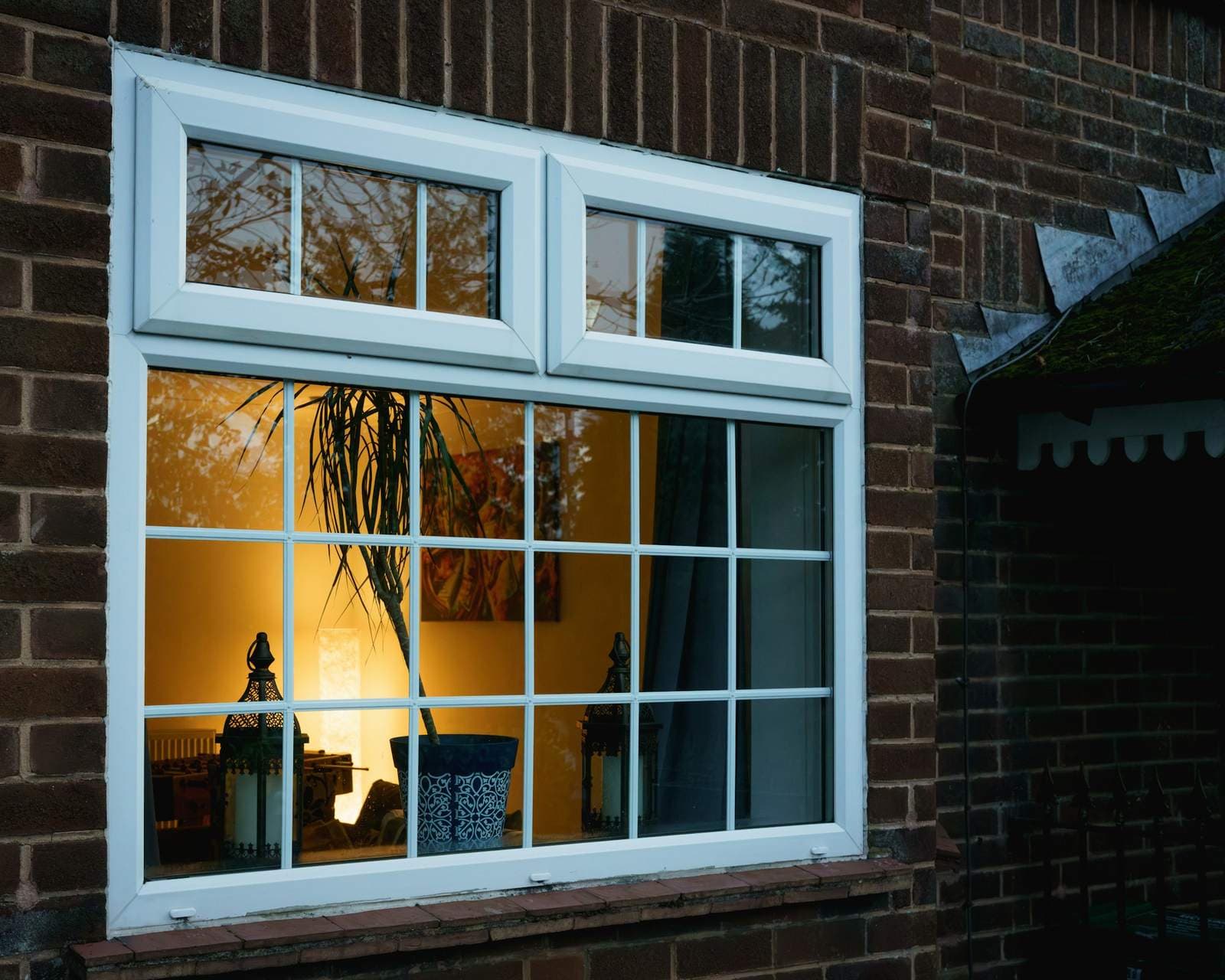
A uPVC window looks simple from outside: a white frame and glass. Cut through the frame, though, and you find a cross-section with several air chambers, a steel box hidden in the middle and grooves for gaskets and hardware. That cross-section, the profile, is what decides how quiet, airtight and long-lived the window will be. Many flats in Gurugram and Noida now choose uPVC precisely for the noise and dust benefits, so knowing what makes a good profile pays off.
What does "uPVC" mean?
uPVC is unplasticised polyvinyl chloride: PVC without the softening plasticisers that make garden hose or cable insulation flexible. It is rigid, does not rot or rust, and insulates heat and sound much better than metal. For windows it is compounded with stabilisers (good makers use calcium-zinc, not lead) and UV-resistant additives such as titanium dioxide, so the white does not chalk or yellow quickly in the sun.
Why are profiles multi-chambered?
Each chamber is a pocket of still air. More chambers mean more barriers to heat and noise passing through the frame. Window profiles typically have about three to six chambers. Specific chambers do specific jobs: one holds the steel reinforcement, one drains water that gets past the outer seal, others simply insulate. Drainage chambers connect to slots in the outer frame (see weep holes).
Why is there steel inside?
uPVC alone is not stiff enough for large sashes, and it expands noticeably more than steel or aluminium in heat. A galvanised steel insert, commonly about 1–2mm thick and more for big doors, is slid into the main chamber and screwed in. It keeps the frame straight, holds hinge and lock screws firmly, and limits sagging and bowing. Ungalvanised steel can rust inside the profile, so ask for galvanised.
| Feature | What good looks like | Why it matters |
|---|---|---|
| Outer wall thickness | Typically around 2.5–3mm on main walls | Stiffness, screw holding, durability |
| Chambers | About 3–6, with a separate drainage chamber | Insulation, controlled drainage |
| Steel reinforcement | Galvanised, sized to the sash and door | Prevents sagging and twisting |
| Compound | Lead-free, UV-stabilised | Health, colour stability in sun |
| Gaskets | Continuous EPDM gaskets | Airtightness and noise |
| Corners | Fusion-welded, cleaned | Watertight, strong joints |
uPVC profiles vs aluminium sections
uPVC insulates better and seals tightly, which is why it is often the choice for noise. Aluminium sections are stronger and slimmer, so they allow larger glass and narrower sightlines, and come in many colours. In very large openings or for slim sliding doors, aluminium usually wins; for bedroom windows facing a busy road, uPVC often does. Our uPVC vs aluminium windows guide compares the two in detail.
How do you check uPVC profile quality?
- Ask for a cut sample of the frame and sash profile: count chambers, look at wall thickness and the steel insert.
- Ask whether the steel is galvanised and how thick it is.
- Ask whether the compound is lead-free and the profile brand or system name.
- Look at the welded corners: smooth, cleaned, no gaps.
- Check hardware: multi-point locks and stainless or coated hinges suit Delhi NCR conditions.
Common confusions
- "PVC window" in the market usually means uPVC, but cheap PVC profiles with thin walls and no steel are also sold.
- uPVC does not need painting, but coloured or wood-grain laminated profiles have a film that needs gentle cleaning.
- A uPVC frame does not make a window soundproof on its own; glass type and gaskets matter as much. See soundproof windows.
Common problems
Handles that stiffen usually need hardware adjustment or lubrication, covered at uPVC window handle stuck. A uPVC door that drops at the lock side often points to inadequate reinforcement or hinge adjustment, covered at uPVC door dropping. Fogging between panes is a double-glazed unit issue, not the profile.
Care
Wipe frames with warm water and mild soap. Avoid solvents, abrasive powders and acid cleaners. Keep drainage slots clear and oil hinges and locking points lightly once or twice a year.
Where FabWise uses it
The uPVC window is part of our windows and doors range; profile system, glass and hardware are confirmed after a site visit and written into the quote. See the uPVC window price guide for what changes the cost.
Common questions
How many chambers should a uPVC window profile have?
Most good window profiles have around three to six chambers. More chambers generally improve insulation, but chamber count alone does not make a good window: wall thickness, galvanised steel reinforcement, gaskets and glass matter as much. Ask for a cut sample so you can see the chambers and steel for yourself.
Does uPVC turn yellow in the sun?
Good-quality uPVC compounded with UV stabilisers such as titanium dioxide resists yellowing for many years even in strong sun. Cheap profiles with weak stabilisation, or those made with recycled material, can chalk and yellow sooner. Asking for a known profile brand and a lead-free, UV-stabilised compound is the best protection.
Is steel reinforcement in uPVC windows necessary?
For almost all opening sashes and doors, yes. uPVC on its own flexes and expands with heat; galvanised steel inside the main chamber keeps the frame straight and gives hinge and lock screws something solid to hold. Small fixed windows may need less. Unreinforced or rusting steel is a common cause of sagging doors.
uPVC ya aluminium window, Gurgaon ke liye kya better hai?
It depends on the opening. uPVC insulates and seals better, so it suits bedrooms facing busy roads and dusty areas. Aluminium is stronger and slimmer, so it suits large sliding doors and wide glass. Many homes use uPVC for windows and aluminium for big balcony sliders. A site visit helps match each opening.
Services on this page
Related terms
- Aluminium sectionsAluminium sections are extruded aluminium alloy profiles, most often alloy 6063 in a T5 or T6 temper, that form the frames of windows, sliding doors, partitions, louvres and facades, finished by anodising or powder coating.
- Double-glazed unit (DGU)A double-glazed unit (DGU, or insulated glass unit) is two panes of glass held apart by a spacer and sealed around the edge, with dry air or gas trapped between them to cut heat and noise.
- EPDM gasketsEPDM gaskets are flexible synthetic-rubber seals, made from ethylene propylene diene monomer, used in windows, doors, facades and glass systems because they stay elastic and resist sun, ozone and weather far longer than PVC seals.
- Hydraulic door closerA hydraulic door closer is a spring-and-oil device, usually mounted at the top of a door, that pulls the door shut after it is opened and uses oil flow to control the closing speed.
- Low-E glassLow-E (low-emissivity) glass carries a microscopically thin metallic coating that reflects heat radiation while letting most visible light through, improving a window's insulation.
- Pleated mosquito meshA pleated mosquito mesh is an insect screen whose mesh is folded like an accordion and slides sideways in a slim aluminium frame, so it folds away when open and stays in place wherever it is left, without springs or a roller.