

Glossary · Windows & doors · Gurgaon & Noida
Pleated mosquito mesh: the accordion-fold insect screen
A pleated mosquito mesh is a fold-away insect screen: the mesh is pressed into accordion pleats and slides on a low track inside a slim aluminium frame. Pull it across to close, push it aside to open, and it stays wherever you leave it. It suits balcony doors and wide openings.
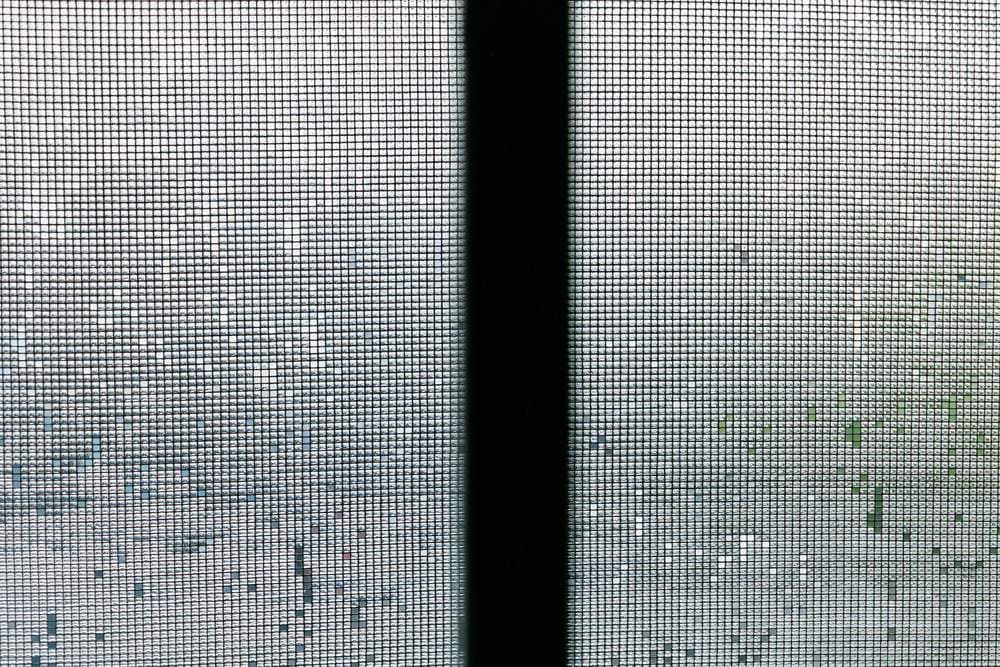
Mosquito season in Gurugram and Noida runs long, and a balcony door left open in the evening is an invitation. Pleated mesh is the screen many homeowners pick for those doors because it does not swing into the room, does not spring back like a roller, and folds into a narrow stack at the side. Here is how it works and when another type makes more sense.
How does a pleated mesh work?
The mesh, usually polyester or fibreglass, is heat-set into fine pleats so it can collapse like a paper fan. Thin cords run through the pleats from top to bottom to keep them evenly spaced and stop the mesh billowing. A vertical handle bar carries the mesh across the opening on a top guide and a very low bottom track, often only a few millimetres high, so it is easy to step over. When opened, the mesh folds into a compact stack at the side.
Pleated vs other mosquito mesh types
| Type | How it opens | Best for | Watch out for |
|---|---|---|---|
| Pleated | Slides sideways, folds into a stack | Balcony doors, wide openings, low-threshold doors | Cords and pleats need gentle handling |
| Roller | Rolls up into a cassette on a spring | Windows and small doors | Spring can snap back; wind can pull it out of guides |
| Sliding (framed shutter) | Rigid framed panel on a track | Sliding windows and doors | Takes a track; frame must be square |
| Hinged (openable) | Swings like a door | Main and kitchen doors | Needs swing space; closer or magnet catch |
| Fixed | Does not open | Windows that are rarely opened | Can't reach the window from inside |
| Velcro / magnetic | Peeled or pushed through | Temporary or rental use | Looks makeshift, sags |
For a fuller comparison of mesh fabrics and systems, see mosquito mesh types compared.
Where pleated mesh fits, and where it doesn't
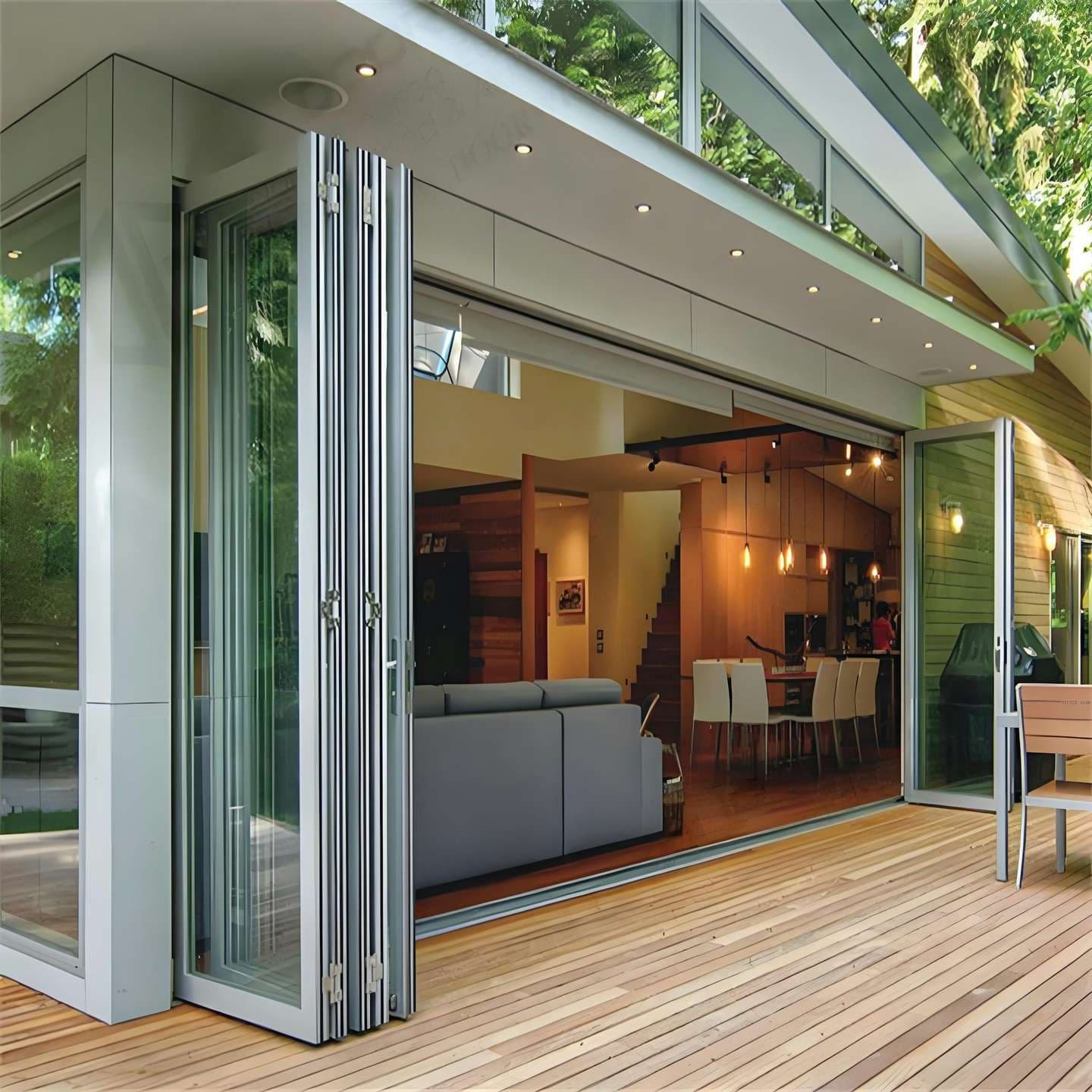
- Good: sliding balcony doors and slide and fold doors, French doors, wide openings up to the system's size limit, and doors used by elderly people or children where a low threshold matters.
- Good: casement windows that open outwards, where a mesh must sit on the inside.
- Less ideal: openings with heavy foot traffic and pets, since claws and repeated pushing wear the pleats.
- Less ideal: very windy, exposed openings, where the light mesh can flex in its guides.
What decides the quality?
- Mesh material: polyester or fibreglass with a fine weave; the weave must be small enough to stop mosquitoes while letting air through.
- Pleat retention: cheap mesh loses its fold and sags.
- Cords: strong, evenly tensioned cords keep the pleats parallel.
- Frame and track: rigid aluminium profiles with a firm, low bottom track.
- Fixing: the frame must be screwed square to the opening, with any gap filled.
Common confusions
Pleated mesh is sometimes called "plisse" mesh, after the French word for pleated. It is not the same as a roller mesh, even though both are retractable. And a pleated mesh door is not a security door: for that, a MS safety door with mesh is the option. A sliding mesh shutter that runs in its own track on an aluminium sliding window is a third, separate design.
Care and common problems
- Vacuum the mesh lightly with a brush attachment; wipe with a damp cloth, don't scrub.
- Keep the bottom track free of dust and sand so the handle bar runs smoothly.
- Open and close by the handle, never by pulling the mesh itself.
- A torn panel can usually be re-meshed; see mosquito mesh torn.
- If a mesh door will not stay shut or drifts, see mesh door not closing.
Where FabWise uses it
Mosquito mesh is part of our windows and doors range. The mesh type for each opening is chosen at the site visit, after measuring the opening and checking how it is used, and written into the quote.
Common questions
Is pleated mosquito mesh better than roller mesh?
For doors, usually yes. A pleated mesh stays wherever you leave it and has no spring to snap back, so it is easier for wide balcony doors and frequent use. Roller mesh is neater on windows and small openings. Pleated mesh does need gentle handling, as pulling the mesh rather than the handle damages the pleats.
How long does a pleated mesh last?
It depends on the mesh quality, how often it is used and whether children or pets push against it. With a good mesh and gentle use it commonly lasts several years before the pleats lose shape or the cords need attention. Damaged mesh can often be replaced within the same frame.
Can pleated mesh be fitted on a sliding door?
Yes, it is one of its most common uses. The frame is fixed inside or outside the sliding door opening, depending on the space, with a low bottom track that is easy to step over. The opening needs to be reasonably square; uneven floors or walls may need packing or a small sub-frame.
Pleated mesh mein machhar andar aa jaate hain, kyun?
Usually because of gaps, not the mesh itself: the frame is not square, the handle bar does not meet the side profile tightly, or the bottom track has a gap at the floor. Torn pleats and missing brush seals also let insects in. Checking the frame alignment and seals usually fixes it.
Services on this page

Related terms
- Aluminium sectionsAluminium sections are extruded aluminium alloy profiles, most often alloy 6063 in a T5 or T6 temper, that form the frames of windows, sliding doors, partitions, louvres and facades, finished by anodising or powder coating.
- Double-glazed unit (DGU)A double-glazed unit (DGU, or insulated glass unit) is two panes of glass held apart by a spacer and sealed around the edge, with dry air or gas trapped between them to cut heat and noise.
- EPDM gasketsEPDM gaskets are flexible synthetic-rubber seals, made from ethylene propylene diene monomer, used in windows, doors, facades and glass systems because they stay elastic and resist sun, ozone and weather far longer than PVC seals.
- Hydraulic door closerA hydraulic door closer is a spring-and-oil device, usually mounted at the top of a door, that pulls the door shut after it is opened and uses oil flow to control the closing speed.
- Low-E glassLow-E (low-emissivity) glass carries a microscopically thin metallic coating that reflects heat radiation while letting most visible light through, improving a window's insulation.
- uPVC profilesuPVC profiles are the hollow, multi-chambered frame sections of unplasticised polyvinyl chloride, stiffened inside with galvanised steel, that window and door frames are built from; they insulate well, need no painting and seal tightly.