

Glossary · Finishes · Gurgaon & Noida
Powder coating: what it is and why it outlasts paint
Powder coating is a factory finish where dry, electrostatically charged powder is sprayed onto cleaned metal and baked at around 180–200°C until it melts into a hard, continuous film. It is tougher and more uniform than liquid paint, but it only lasts if the steel or aluminium underneath was properly pretreated.
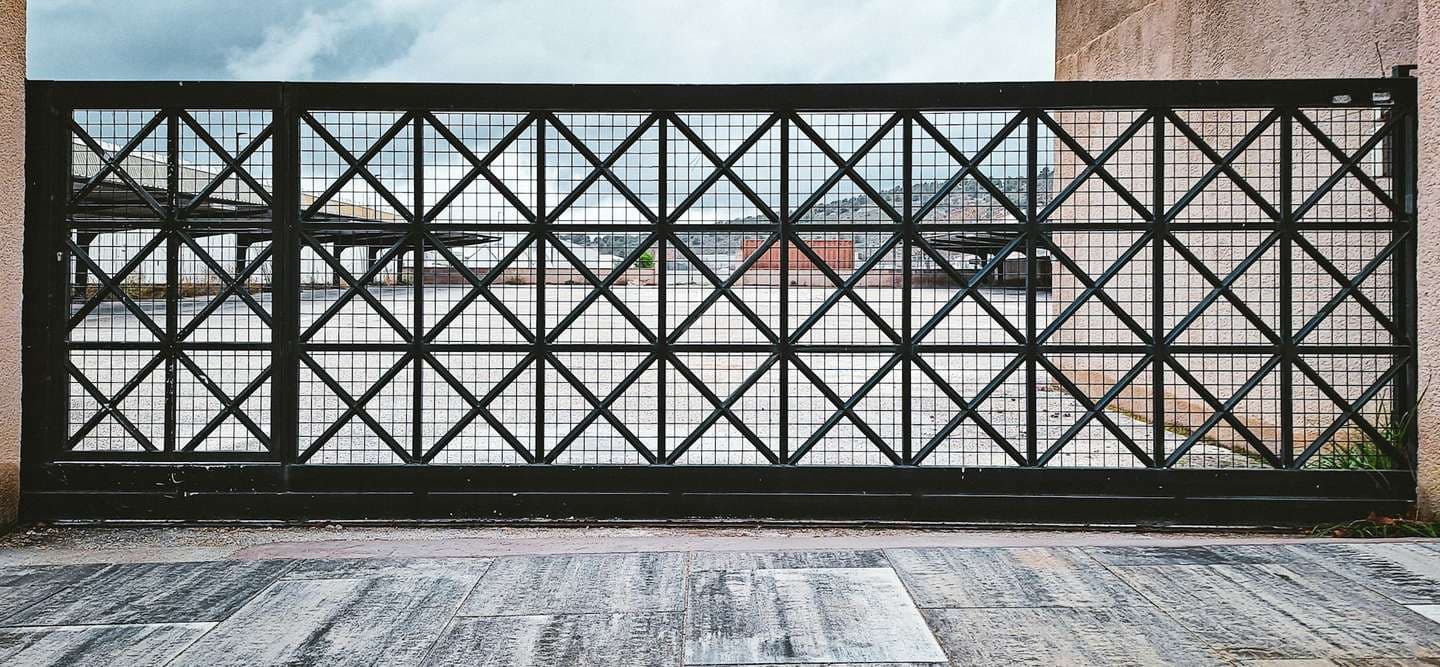
A black sliding gate, a bronze aluminium window or a white pergola: if the colour looks perfectly even with no brush marks, it is probably powder coated. In Gurugram and Noida it is the standard upgrade over enamel paint for metal fabrication, and the factory finish on most aluminium window and door sections. Here is how it works and what decides whether it lasts.
How does powder coating work?
- Pretreatment: the metal is degreased and cleaned. Steel is often shot-blasted to remove rust and mill scale, then given a phosphate conversion coat; aluminium gets its own chemical pretreatment.
- Spraying: a spray gun charges the powder electrostatically, and the earthed part attracts it, so it wraps around edges and the back of bars.
- Curing: the part goes into an oven, commonly around 180–200°C for 10–20 minutes depending on the powder, where the powder melts, flows and cross-links into a solid film.
- Cooling and inspection: film thickness is checked with a gauge, typically about 60–100 microns for exterior work depending on the powder system.
Powder coating vs paint vs galvanising
| Enamel paint | Powder coating | Hot-dip galvanising | |
|---|---|---|---|
| How applied | Brush or spray, air-dried | Electrostatic spray, oven-baked | Steel dipped in molten zinc |
| Typical film | Thin, varies with brushwork | Even, typically about 60–100 µm | Zinc layer bonded to the steel |
| Look | Brush marks possible | Smooth, uniform colour and gloss | Dull grey, spangled |
| Chip and scratch resistance | Low to moderate | Good | Very good (zinc is sacrificial) |
| On-site touch-up | Easy | Possible with matching paint, not identical | Zinc-rich paint |
| Best for | Budget, easily repainted items | Gates, grills, railings, aluminium sections | Sheds, structures, harsh exposure |
The strongest outdoor system on steel is a duplex: hot-dip galvanising followed by powder coating. The zinc protects the steel even if the powder is chipped, and the powder gives the colour.
Polyester, epoxy or hybrid powder?
Not all powders are equal outdoors. Epoxy powders have excellent adhesion and chemical resistance but chalk and fade in sunlight, so they suit interiors. Epoxy-polyester hybrids are a common indoor grade. Polyester (and super-durable polyester) powders are made for UV exposure and are what a gate, railing or window frame facing Delhi NCR summers should have. If a quote just says "powder coated", it is fair to ask which type.
Where powder coating is used, and where it isn't ideal
- Good: MS main gates, sliding gates, window grills, MS balcony railings, pergolas, aluminium window and door sections, aluminium louvres.
- Limited: very large or heavy structures that will not fit in an oven; these are usually painted or galvanised instead.
- Not ideal: items that will be welded or cut after coating, because the heat or cut edge breaks the film and the repair will never quite match.
How can you check a powder coat?
- Ask how the steel will be pretreated: blasting or chemical cleaning, and phosphate coat.
- Ask which powder type (polyester for outdoors) and the target thickness.
- Look at edges, corners and inside bends: they should be covered, not thin or bare.
- Check that welds were ground and that there are no pinholes or orange-peel patches.
- On delivery, look for chips from transport and get them touched up before final payment.
Common confusions
Powder coating is not the same as anodising: anodising is an electrochemical oxide layer grown on aluminium sections, with a metallic look, and it cannot be applied to steel. And powder coating on mild steel does not make it rust-proof forever; a deep scratch to bare steel can let rust creep under the film, which is why chips should be sealed early. The pergola rusting problem page shows how that looks in practice.
How do you care for a powder-coated finish?
Wash with water and mild detergent a few times a year, more often in dusty weather. Avoid solvent cleaners and abrasive pads. Touch up chips with a matching exterior paint promptly so water cannot reach the metal.
Where FabWise uses it
The finish for gates, grills, railings and pergolas is agreed with you after the site visit and written into the quote, along with section sizes. The aluminium profiles on our aluminium profile office partition come as a black aluminium frame. For gate planning, see our main gate design guide.
Common questions
Is powder coating better than paint for an MS gate?
Usually yes. A powder coat is applied as an even, baked film that resists chipping and fading better than brushed enamel, and it covers edges well. The catch is preparation: if the steel was not blasted or chemically cleaned before coating, it can peel. Paint is easier to touch up on site, so some owners still prefer it for very large gates.
How long does powder coating last outdoors?
With good pretreatment and an exterior polyester powder, a powder coat on a gate or railing commonly lasts many years before it looks tired, far longer than ordinary paint. Lifespan drops with poor preparation, thin film, unrepaired chips and heavy sun exposure. On steel, galvanising underneath the powder gives the longest life.
Can powder coating be done on site?
No. Powder coating needs a spray booth and a curing oven, so parts are coated at a coating shop before installation. On-site repairs to chips are done with matching liquid paint. That is why fabricators try to finish all cutting and welding before coating and use bolted joints where on-site adjustment is needed.
Powder coating chipped ho gayi hai, kya karein?
Clean the chipped spot, lightly sand the edges, and if bare steel shows any rust, remove it and apply a primer. Then touch up with a matching exterior enamel. Do it soon: once water gets under the film at a chip, rust spreads underneath and lifts the coating around it.
Services on this page
Related terms
- CNC laser-cut jaaliA CNC laser-cut jaali is a decorative perforated screen cut from metal sheet, usually mild steel, stainless steel or aluminium, by a computer-controlled laser that follows a digital pattern, used in gates, partitions, grills, facades and railings.
- Mild steel (MS)Mild steel (MS) is low-carbon steel, typically about 0.05–0.25% carbon, that is strong, easy to cut and weld and inexpensive, but rusts unless it is primed and painted, powder coated or galvanised.
- ACP fire-retardant (FR) coreAn FR-core ACP is an aluminium composite panel whose core between the two aluminium skins is heavily filled with mineral fire retardants instead of plain polyethylene, so it resists ignition and flame spread far better than a standard PE-core panel.
- Aluminium sectionsAluminium sections are extruded aluminium alloy profiles, most often alloy 6063 in a T5 or T6 temper, that form the frames of windows, sliding doors, partitions, louvres and facades, finished by anodising or powder coating.
- Back-painted glassBack-painted (lacquered) glass is glass with an opaque coloured coating applied to its rear face, so the colour is seen through a glossy glass surface; it is used for wall cladding, splashbacks and writing boards.
- Double-glazed unit (DGU)A double-glazed unit (DGU, or insulated glass unit) is two panes of glass held apart by a spacer and sealed around the edge, with dry air or gas trapped between them to cut heat and noise.
Where it is used
- MS & SS Metal FabricationGates, sliding gates, window grills, safety doors, staircases and mezzanines in mild and stainless steel.
- Iron gate or window grill is rusting and the paint is flaking
- Sliding gate is stuck, jerky or hard to push along its track
- Main gate has sagged and drags on the floor when opened