

Glossary · Sheds, structures & gates · Gurgaon & Noida
Hot-dip galvanising: zinc armour for outdoor steel
Hot-dip galvanising (HDG) means dipping finished steel into a bath of molten zinc, at about 450°C, so a zinc coating bonds to every surface, inside and out. It protects twice over: as a barrier, and sacrificially, because zinc corrodes before the steel even where the coating is scratched.
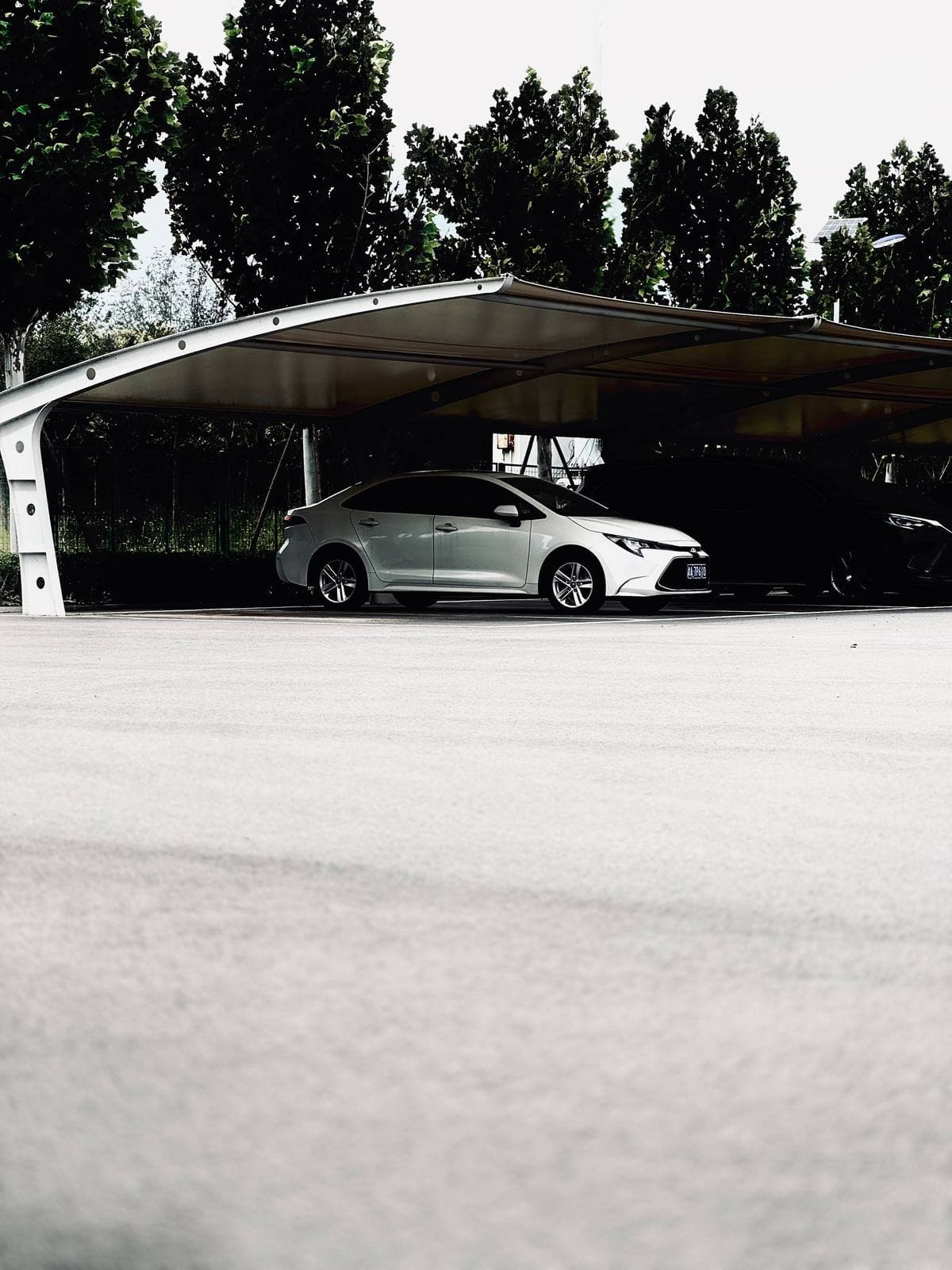
Paint sits on top of steel. Galvanising becomes part of it. That is the one-line reason engineers specify hot-dip galvanised steel for car parking sheds, terrace structures, highway barriers and transmission towers. For homeowners and businesses in Gurugram and Noida, it is the finish to ask about whenever a steel structure will sit in the open for years and repainting it would mean scaffolding.
How does hot-dip galvanising work?
- Fabricate first: the frame, gate or shed structure is cut and welded completely, with vent and drain holes in hollow sections.
- Clean: the steel is degreased, pickled in acid to remove rust and mill scale, and fluxed so the zinc can wet the surface.
- Dip: the part is lowered into molten zinc at roughly 450°C. Zinc reacts with the iron and forms a series of zinc-iron alloy layers topped by pure zinc.
- Withdraw and cool: excess zinc drains off; the part cools to the familiar grey, sometimes spangled finish.
Because the part is immersed, zinc reaches inside tubes, behind welds and into corners that a brush or spray gun cannot. For steel thicker than about 6mm, international standards such as ISO 1461 call for an average coating of about 85 microns; thinner steel gets a thinner minimum. In India, IS 4759 covers hot-dip zinc coatings on structural steel and specifies coating mass in grams per square metre.
Hot-dip galvanised vs pre-galvanised vs zinc-rich paint
| Hot-dip galvanised (after fabrication) | Pre-galvanised (GI) sheet or pipe | Zinc-rich primer | |
|---|---|---|---|
| When applied | After cutting and welding | At the mill, before fabrication | Brushed or sprayed on site |
| Coverage | All surfaces, inside and out, including welds | Factory surfaces only; cut ends and welds bare | Wherever the brush reaches |
| Typical zinc layer | Thicker; around 85 µm average on heavier steel | Thinner, set by the sheet's zinc grade | Depends on the paint and coats |
| Weld protection | Full | Welds need zinc paint touch-up | Full if applied well |
| Look | Grey, sometimes spangled | Bright, uniform | Matt grey |
Many "GI" pipes in the market are pre-galvanised: they are coated at the mill, then cut and welded, which burns off the zinc at every joint. Those joints must be cleaned and painted with zinc-rich primer or they become the first rust points.
Where is hot-dip galvanising worth it?
- Open structures in full weather: car parking sheds, polycarbonate terrace sheds and their purlins.
- Parts that are hard to reach for repainting: high shed frames, structural members above a roof.
- Bases and posts that sit in damp soil, planters or puddles.
- Gates and railings where a long life with minimal upkeep matters more than the lowest first cost.
Where it is not ideal
- Decorative pieces where the grey finish is unwanted, unless powder coating goes on top.
- Thin sheet that may warp in the hot bath, or very large frames that do not fit the galvanising kettle.
- Jobs that will be cut or welded after galvanising, since that damages the coating.
Can you paint or powder coat over galvanising?
Yes, and the combination (often called a duplex system) usually lasts longer than either alone. Fresh zinc is smooth and reactive, so it needs the right pretreatment or primer, otherwise paint peels off in sheets. See powder coating for what the finishing step involves.
How do you check galvanising?
- Ask whether the steel is hot-dip galvanised after fabrication or simply made from pre-galvanised pipe.
- A coating thickness gauge gives a quick reading in microns at several points.
- Look at welds and cut ends: on HDG they are coated; on pre-galvanised work they are bare or painted.
- Ask for the galvaniser's test certificate on larger structural jobs.
Common confusions
Galvanised does not mean stainless; for that, see SS304 vs SS202. Galvanising also does not stop white rust, a harmless-looking white powder on new zinc stored wet. And it is not a cure for poor drainage: a shed roof that holds water at a joint, as on our shed roof sagging page, will still corrode faster there.
Where FabWise uses it
For sheds and pergolas and gates, the steel finish is chosen at the site visit and written into the quote. If your structure is exposed, ask about galvanising alongside the terrace shed guide and our car parking shed options.
Common questions
What is the difference between GI and hot-dip galvanised steel?
"GI" usually refers to pre-galvanised pipe or sheet coated at the mill before fabrication. Hot-dip galvanising after fabrication coats the finished frame in a zinc bath, so welds, cut ends and the inside of tubes are covered too, typically with a thicker layer. Pre-galvanised work needs every weld cleaned and painted with zinc-rich primer.
How long does hot-dip galvanising last?
It depends on the coating thickness and the environment. In typical inland urban conditions like Delhi NCR, a properly hot-dip galvanised structure commonly lasts for decades before the zinc needs attention, much longer than paint alone. Industrial pollution, standing water and coastal salt shorten that life. Painting or powder coating over the zinc extends it further.
Does a terrace shed need galvanised steel?
It is not mandatory, but it is a good idea for a shed exposed to rain and sun, where repainting the high frame and purlins is difficult. A properly primed and painted or powder-coated MS frame also works if it is maintained. Ask how the welds and hollow sections will be protected, since that is where shed frames usually start rusting.
Can galvanised steel be welded on site?
It can, but welding burns off the zinc around the joint and releases zinc fumes that need ventilation. The damaged area must then be cleaned and coated with zinc-rich paint. That is why galvanised structures are usually designed with bolted site connections, and welding is finished before the steel goes for galvanising.
Services on this page

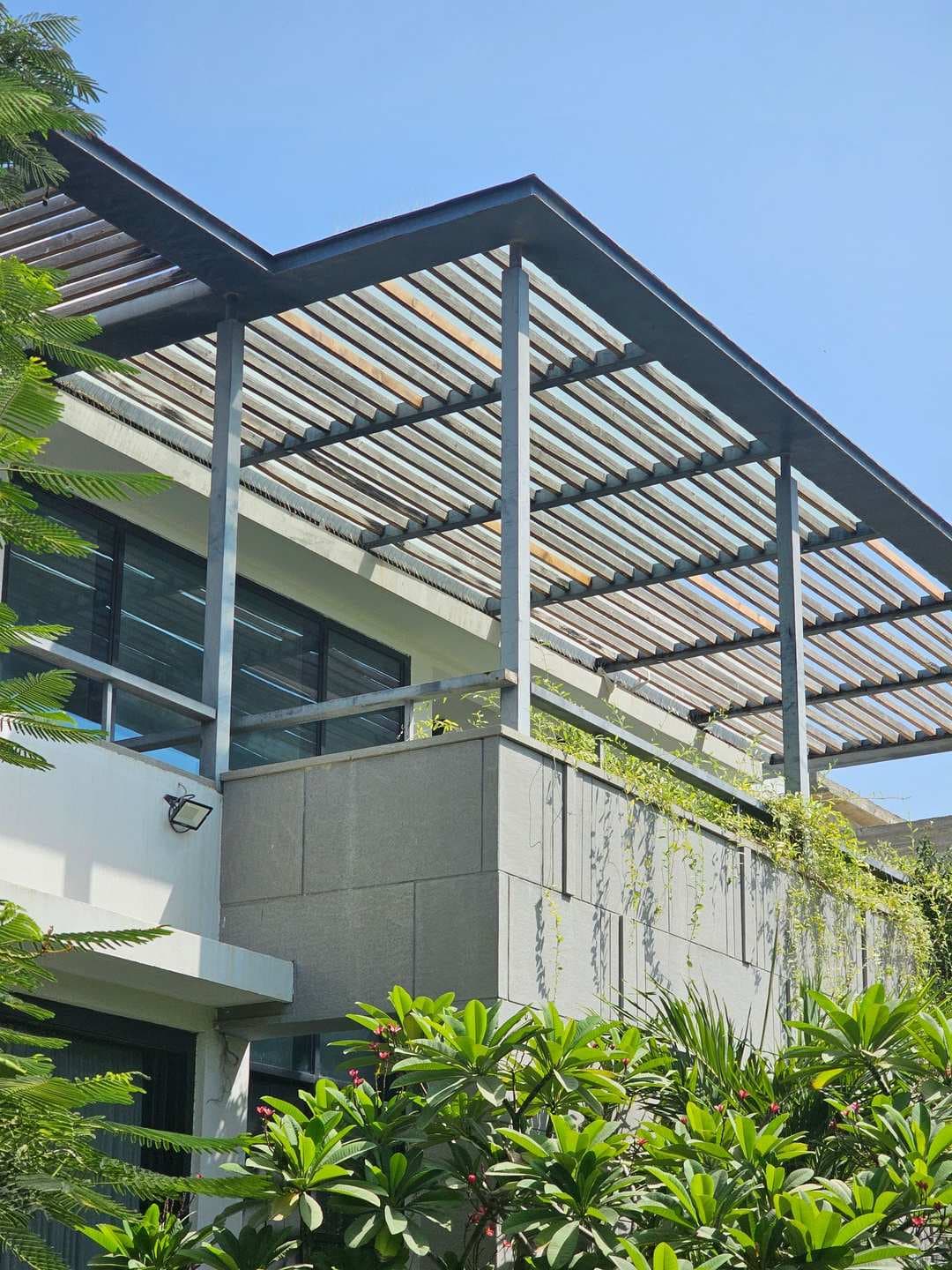
Related terms
- Polycarbonate sheetPolycarbonate sheet is a tough, lightweight, transparent thermoplastic roofing and glazing material, sold as solid or multiwall sheet, that is far more impact-resistant than glass and lasts outdoors only when it carries a UV-protective layer on the sun side.
- ACP fire-retardant (FR) coreAn FR-core ACP is an aluminium composite panel whose core between the two aluminium skins is heavily filled with mineral fire retardants instead of plain polyethylene, so it resists ignition and flame spread far better than a standard PE-core panel.
- Aluminium sectionsAluminium sections are extruded aluminium alloy profiles, most often alloy 6063 in a T5 or T6 temper, that form the frames of windows, sliding doors, partitions, louvres and facades, finished by anodising or powder coating.
- Back-painted glassBack-painted (lacquered) glass is glass with an opaque coloured coating applied to its rear face, so the colour is seen through a glossy glass surface; it is used for wall cladding, splashbacks and writing boards.
- CNC laser-cut jaaliA CNC laser-cut jaali is a decorative perforated screen cut from metal sheet, usually mild steel, stainless steel or aluminium, by a computer-controlled laser that follows a digital pattern, used in gates, partitions, grills, facades and railings.
- Double-glazed unit (DGU)A double-glazed unit (DGU, or insulated glass unit) is two panes of glass held apart by a spacer and sealed around the edge, with dry air or gas trapped between them to cut heat and noise.