
Shop front repair · Gurgaon & Noida
Shop front glass door slamming in Gurgaon: wind, footfall and the fix
A shop front door slams because it faces forces an office door doesn't: wind on an open street, pressure from the shop's AC and exhaust, and hundreds of customers letting go mid-swing. The answer is a floor spring sized for the door and setting, set with a slow latch, plus a stopper and sometimes a hold-open position.

Why shop doors slam more than office doors
A glass door inside an office opens a few dozen times a day in still air. The entrance door of a showroom on a Gurugram market road or a shop in a Noida sector market works in a different world. It might open hundreds of times on a weekend, it faces gusts and dust storms in May and June, and the shop behind it is often running AC and a kitchen or toilet exhaust that pull air through the gap. All of that pushes the door faster than its floor spring was set for.
A slam isn't just noise. It shakes the fixed shop front glass, loosens patch fittings and, over time, can crack a toughened panel. It also catches customers' fingers and heels.
What drives the slam on a shop front
Wind and street draughts
A door facing the road, especially at a corner or in a market corridor that channels wind, gets pushed shut by every gust. A floor spring that is right on a calm day can't hold back the extra force.
Air pressure from AC and exhaust
When a shop's exhaust pulls air out, or the door opens against a strong AC draught, the pressure difference can snap the door shut at the end of its swing. You'll notice it slams harder when the exhaust is on.
An undersized or worn floor spring
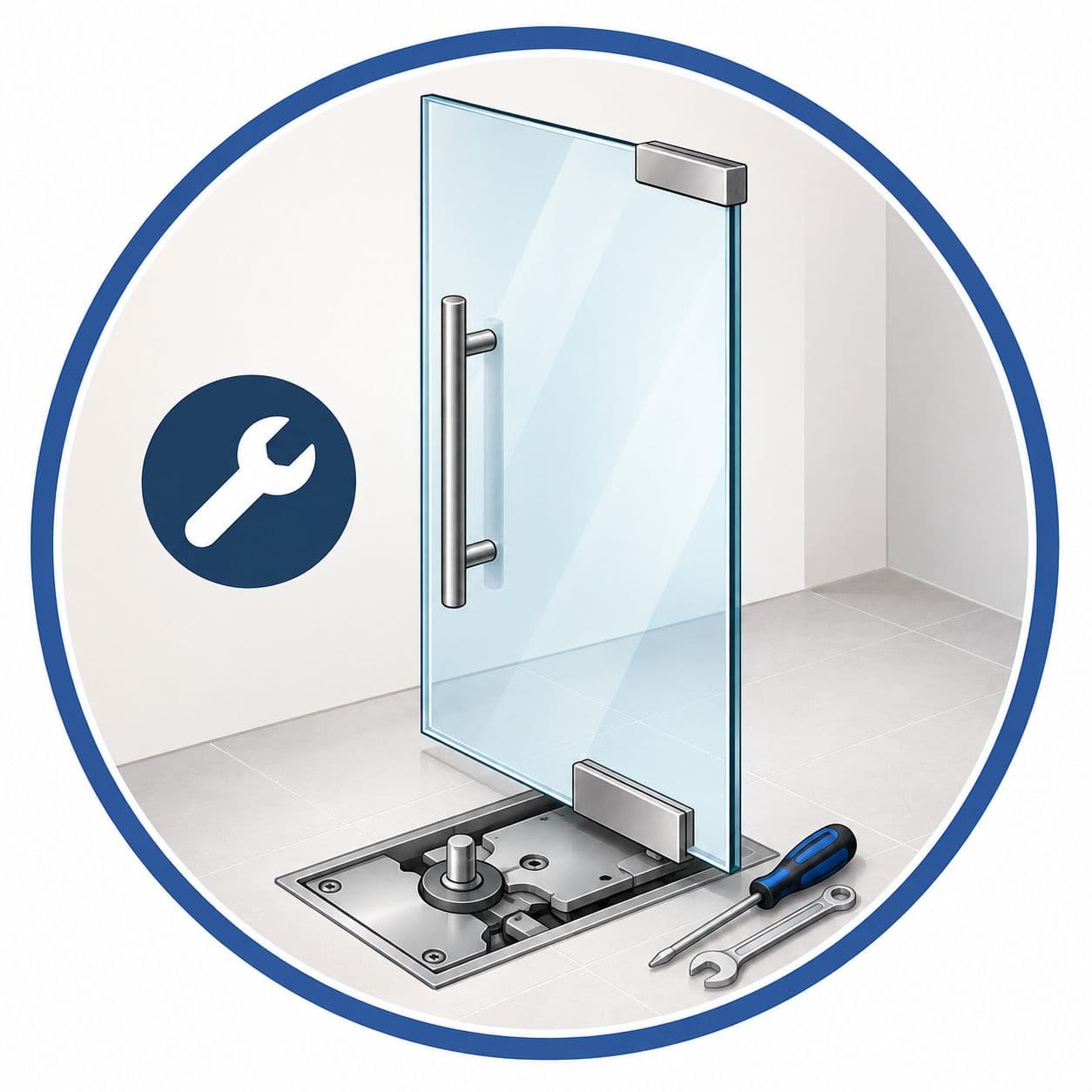
Shop doors are often big and heavy, 12mm glass and taller than standard. A floor spring rated for a smaller door is always working at its limit and wears out early. If oil is visible at the floor plate, read floor spring leaking oil.
No back-check or stop
Without a stopper or a back-check setting, customers fling the door wide, the wind catches it, and it either hits a wall or rebounds hard. Both strain the fittings.
| When it slams | Likely driver | What helps |
|---|---|---|
| Only on windy days | Wind load on the door | Stronger spring, slower latch, stopper |
| Worse when exhaust or AC is on | Pressure difference | Slower latch; balance ventilation |
| All the time, getting worse | Floor spring wearing or leaking | Replace with a correctly sized unit |
| When customers let go mid-swing | Latch speed set too fast | Re-set the latching valve |
| Door rebounds off the wall | No stopper or back-check | Fit a stopper; set back-check |
What a shop owner can check
- Does it slam on calm days, or only in wind? Watch for a week if you can.
- Switch the exhaust off and see whether the slam softens.
- Look at the floor plate for oil or rust from mopping water.
- Check the fixed glass and patch fittings around the door for movement or chips.
How it's fixed, and how it's quoted
Slamming shop doors are repair jobs: no paid visit, just a short video of the door closing (ideally on a windy afternoon) and photos of the floor plate and fittings on WhatsApp. The quote follows those photos.
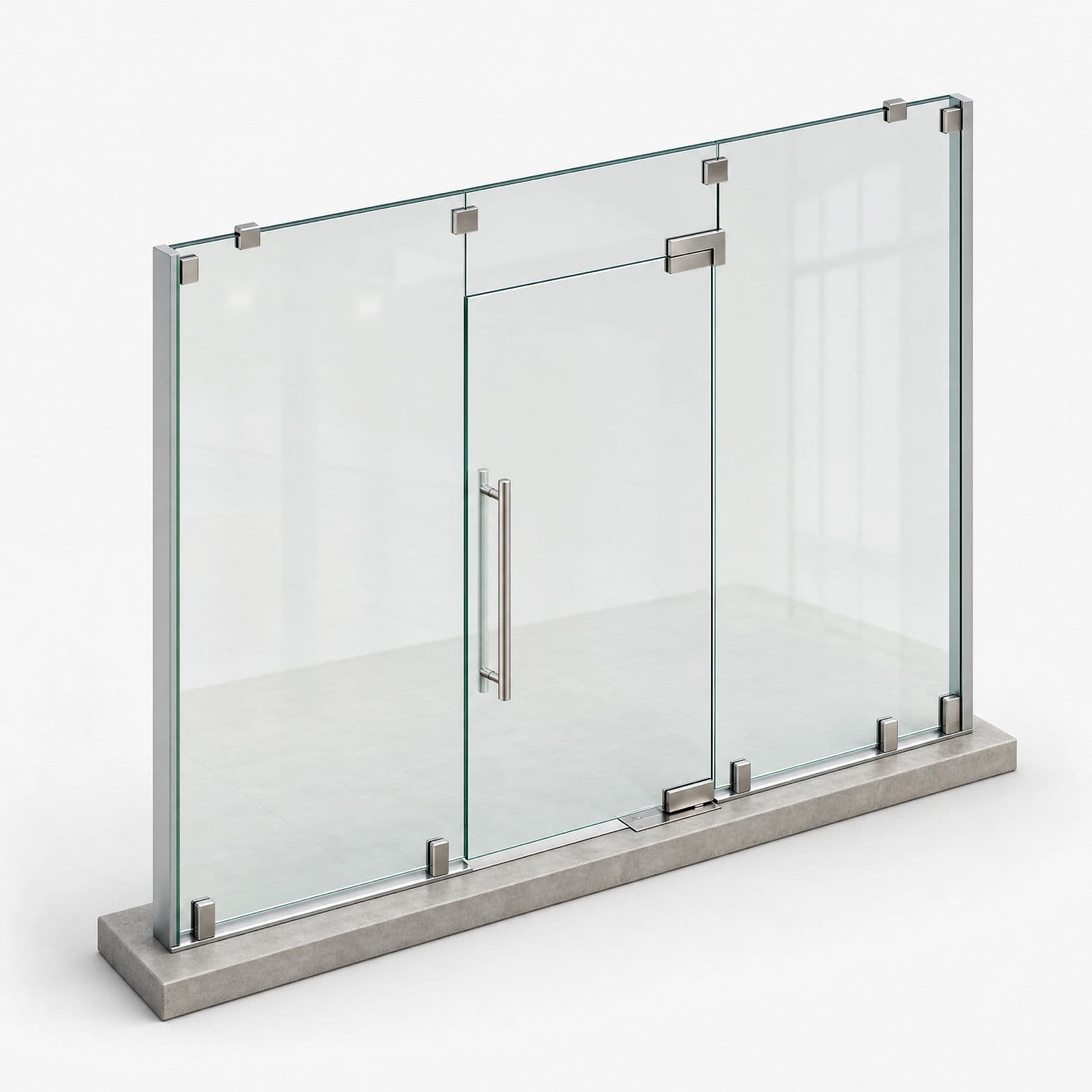
The fix might be re-setting the closing and latching valves, adding a stopper or a hold-open position for busy hours, or replacing the floor spring with a unit sized for the door's weight and exposure, which is a glass door floor machine repair. If the glass itself has been damaged, that's a broken toughened glass replacement. For a full new entrance, the toughened glass shop front with door starts from ₹500 per sq ft; our shop front design ideas help with layout.
Keeping the door under control
- Have the valves checked before summer and the monsoon, when wind and humidity change.
- Keep mopping water away from the floor plate.
- Don't let staff wedge the door open; use the hold-open setting if the spring has one.
A slam that has turned into a door that won't close at all is covered in glass door not closing; for an overhead closer, see door closer leaking oil. The floor spring explainer and the glass repair catalogue show the parts and fixes involved. Shops on the city's high streets can see MG Road Gurgaon. Send a video of the door on WhatsApp and we'll tell you what it needs.
Common questions
Why does my shop's glass door slam in the wind?
A street-facing door gets pushed by every gust, and a floor spring set for still air can't hold it back. A slower latching speed, a stopper and sometimes a stronger floor spring sized for the door's weight and exposure usually tame it.
Can the shop's AC or exhaust make the door slam?
Yes. An exhaust fan or a strong AC draught creates a pressure difference across the doorway, which snaps the door shut at the end of its swing. Test by switching the exhaust off. Setting a slower latch and balancing ventilation both help.
Will a slamming door break my shop front glass?
It can, over time. Every slam shakes the door and the fixed glass beside it, loosens fittings and puts shock into panel edges. If any panel already has a chip, a hard slam can be what breaks it. Get the door controlled before that happens.
Dukaan ka glass door zor se band hota hai, kya machine badalni padegi?
Sometimes just the valve setting needs changing. If the door slams even on calm days, has oil around the floor plate or keeps getting worse, the floor machine is usually worn or too small. Send a video on WhatsApp and we'll tell you which.
Should a shop door have a hold-open setting?
It's useful for busy hours or deliveries, if the floor spring supports it. It stops staff wedging the door open, which strains the spring and its seals. The door stays open at about 90 degrees and closes normally once it's pushed past the hold-open point, so it doesn't get in the way of normal use.