

Facades & Shutters
Shop Front Design Ideas That Pull People In Off the Street
A shop front has three jobs: be seen from across the road, show what's inside, and make walking in easy. Design ideas for glass, ACP, signage, doors and shutters that do all three.
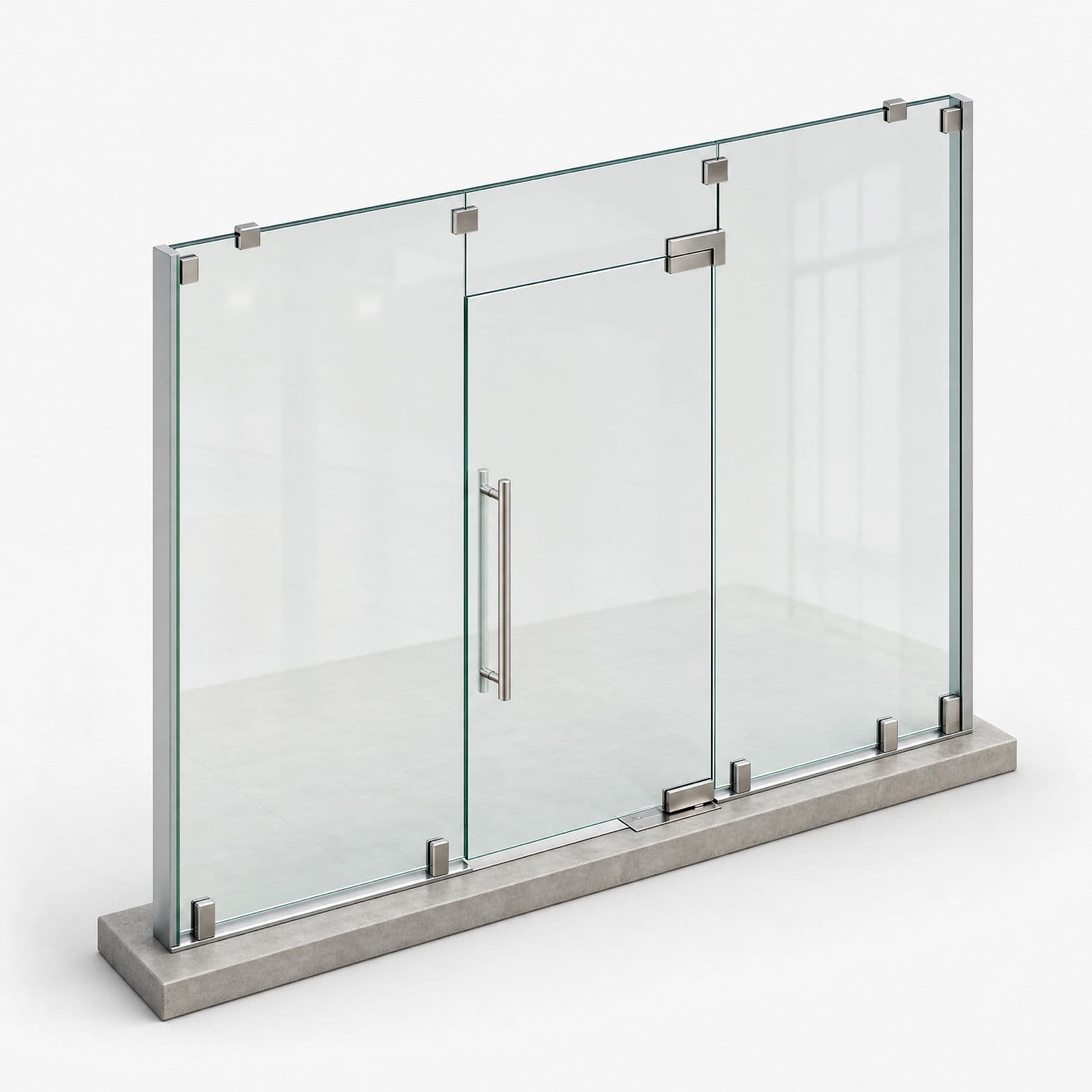
The shop fronts that work best in Delhi NCR markets combine a clear toughened glass front with a frameless door, so passers-by see straight into the store, a solid fascia band above it in ACP that carries the sign, and a rolling shutter that disappears into a box when the shop is open. Around that simple pattern you can vary the materials, the door position, the display depth and the lighting to suit a café, a clinic, a showroom or a kirana store. The goal is the same everywhere: visible from across the road, inviting at the door.
Whether your shop is in a Gurugram market like MG Road or Sohna Road, in Sector 18 Noida, or on a high street in Delhi, these are the ideas worth considering, and what each means once the shop is running.
What makes a shop front work?
- It can be read from a moving car. The sign sits high, in big letters, lit at night, with nothing in front of it.
- It shows the product. Glass, clean and uncluttered, with something worth looking at directly behind it.
- The door is obvious and easy. A customer should never wonder which panel opens or whether it's push or pull.
- It's secure and easy to close. A shutter or a strong door that one staff member can lock in two minutes.
- It survives the street. Dust, monsoon water, sun on the glass and the occasional knock from a scooter.
Which shop front styles suit which business?
| Style | Look | Best for | Things to plan |
|---|---|---|---|
| Full frameless toughened glass front | Open, premium, maximum view | Showrooms, cafés, boutiques, clinics | Glare in afternoon sun; cleaning; a shutter for night |
| Glass front with ACP fascia and sign band | Clean and branded | Most retail, pharmacies, salons | Fascia height for the sign; access for sign wiring |
| Glass with aluminium profile frame | Crisp lines, lighter budget | Offices on ground floor, service counters | Frame colour to match brand |
| Recessed glass entrance | Draws people in; shelter from rain | Deep shops, restaurants | Loses some floor area; lighting the recess |
| Structural glazing on a double-height front | Seamless glass wall | Car and furniture showrooms, banks | Building structure; specialist installation |
| Louvre or jaali screen over glass | Shade and character | West-facing fronts, restaurants | Signage still needs to be visible |
Why does a frameless glass front sell better?
Because people buy what they can see. A toughened glass shop front with a door turns the whole street face into a display window, with no thick frames cutting across the view. Ours uses 12mm Saint-Gobain toughened glass with SS304 anti-rust fittings, a floor spring door that swings both ways, and a 2 year functional warranty on the floor machine. It's priced at ₹500 per sq ft, and you can estimate a front with the glass partition cost calculator by entering the width and height of the opening.
Two practical points. First, toughened glass can't be cut after it's made, so every panel is measured on site and made to size, which usually takes 7–10 days. Second, a west- or south-facing front gets hot and glary in the afternoon; a tinted glass or a film, or a louvre screen above, keeps the display readable.
How should the signage and fascia be planned?
The band above the glass is where your name lives, and it's best built as part of the front rather than added later. ACP cladding is the usual material: flat, light, available in brand colours, and easy to cut for 3D letters or a lightbox. Ask for a fire-retardant core ACP on any commercial front, and plan the wiring for lit letters before the panels go up. Our ACP cladding guide for shop fronts covers thickness, fixing and signage in detail, so we won't repeat it here.
- Height: high enough to clear the shutter box and be seen over parked cars, low enough to read from the footpath.
- Lighting: backlit or halo-lit letters read better at night than a floodlight on a flat sign.
- Market rules: some malls and markets set the fascia height, colour or sign size; check before designing.
Where does the shutter go?
A rolling shutter is still the standard way to secure a ground-floor shop in NCR, and placing it is a design decision. Mounted outside the glass, the shutter box sits behind the fascia and the glass is protected at night. Mounted inside, the glass is the outer face and the shutter is hidden, which suits malls and covered arcades. A perforated or grille shutter lets the display stay visible after hours, which works for showrooms. Whether to motorise it depends on the width and who closes the shop; see rolling shutter manual vs motorised.
What makes the entrance easy to use?
A single frameless door on a floor spring is the most common entrance, and it should open outward or both ways and close gently on its own. Pull handles on both faces, full height or a long bar, make it obvious where to push. A double door suits restaurants and busy stores where people come in and go out at the same time. Don't forget a manifestation strip, a frosted band or your logo at eye level, so nobody walks into the glass. If an existing door bangs, see shopfront door slamming; the floor spring vs door closer guide explains the mechanism behind it.
How do you make it look good at night?
Many NCR markets are at their busiest after sunset, when the heat drops. Light the sign, light the first few feet inside the glass so the display glows, and avoid a single harsh tube on the ceiling, which reflects in the glass and hides the product. Warm light for cafés and fashion, cooler light for pharmacies and electronics.
How do you keep a glass front looking new?
Street dust settles on a shop front daily, and in a market with construction nearby it's worse. A quick squeegee clean every morning before opening keeps the display sharp; a full clean of both faces once a week. Check the floor spring door for a slow or banging close every few months, keep the SS fittings wiped, and watch for the silicone edge at the floor, where mopping water collects. Small chips at the edge of toughened glass are worth reporting early, because they can spread.
Which ideas work for specific kinds of business?
- Cafés and restaurants: a full glass front with a wide door, seating visible from the street, and a louvre or awning for shade. See restaurants and cafés.
- Clinics and pharmacies: frosted lower panels for privacy, clear glass above, a bright and clean sign. See clinics and hospitals.
- Showrooms: double-height glass, structural glazing where the building allows, and a grille shutter. See showrooms.
- Salons: glass front with a frosted band at seat height, warm lighting, a branded ACP fascia. See salons and spas.
What should you check before you book?
- Measure the opening and photograph it, including the floor, the lintel and any beam or shutter box.
- Ask the market association or mall about fascia and signage rules.
- Decide the door position and swing with your staff, who know where customers walk.
- Plan electrical points for the sign and display lighting before cladding goes on.
For shops across Delhi NCR, from retail stores in Gurgaon to retail stores in Noida and showrooms in Delhi, book a site visit and the team will measure and quote the whole front. For larger store fit-outs and facades in cities such as Chandigarh or Jaipur, send your drawings and photos on WhatsApp and the team will confirm the scope.
Common questions
What is the best shop front design for a small shop?
For most small shops, a toughened glass front with a frameless door, an ACP fascia band carrying the sign, and a rolling shutter outside is the best mix of visibility, branding and security. Keep the glass uncluttered, light the sign at night, and put the door where foot traffic already flows.
How much does a glass shop front cost in Gurgaon?
Our toughened glass shop front with a door is priced at ₹500 per sq ft, using 12mm Saint-Gobain toughened glass and SS304 fittings. The total depends on the width and height of the opening. ACP fascia, signage and a rolling shutter are quoted separately after the site visit, because they depend on the building.
Shop ke aage glass lagwane ke baad shutter kahan lagega?
Usually outside the glass, with the shutter box hidden behind the fascia band, so the glass is protected at night. In malls and covered arcades the shutter is often fitted inside instead, leaving the glass as the outer face. The site visit decides which works with your lintel and opening.
How long does a shop front take to install?
Toughened glass is made to measure after the site visit and advance, and production generally takes 7–10 days. Installation of the glass and door is then usually quick. ACP and shutters can be done in the same window, so the shop is closed for as little time as possible.
Is ACP or glass better for a shop front?
They do different jobs, and most fronts use both. Glass at street level shows the product and draws people in; ACP above it carries the sign and hides the shutter box and beam. A shop that is all ACP looks closed, and one that is all glass has nowhere for the brand.
What this page is about
Read next
- ACP Cladding for Shop Fronts: Grades, Fire Safety and UpkeepWhat to specify for an ACP shop front in Gurugram or Noida: fire-rated core, panel and skin thickness, coating, a proper sub-frame, signage planning and simple upkeep.
- Structural Glazing vs ACP Cladding: Choosing a Building FacadeStructural glazing turns a building face into glass; ACP gives it a solid, coloured skin. How they compare on light, heat, fire safety, upkeep and life, and why most facades use both.
- Rolling Shutter: Manual or Motorised? How to DecideA small shop shutter lifted twice a day is fine by hand; a wide warehouse shutter or one opened ten times a day wants a motor. How to decide, and what to plan for power cuts and upkeep.