

Hardware glossary · Gurgaon & Noida
What are patch fittings?
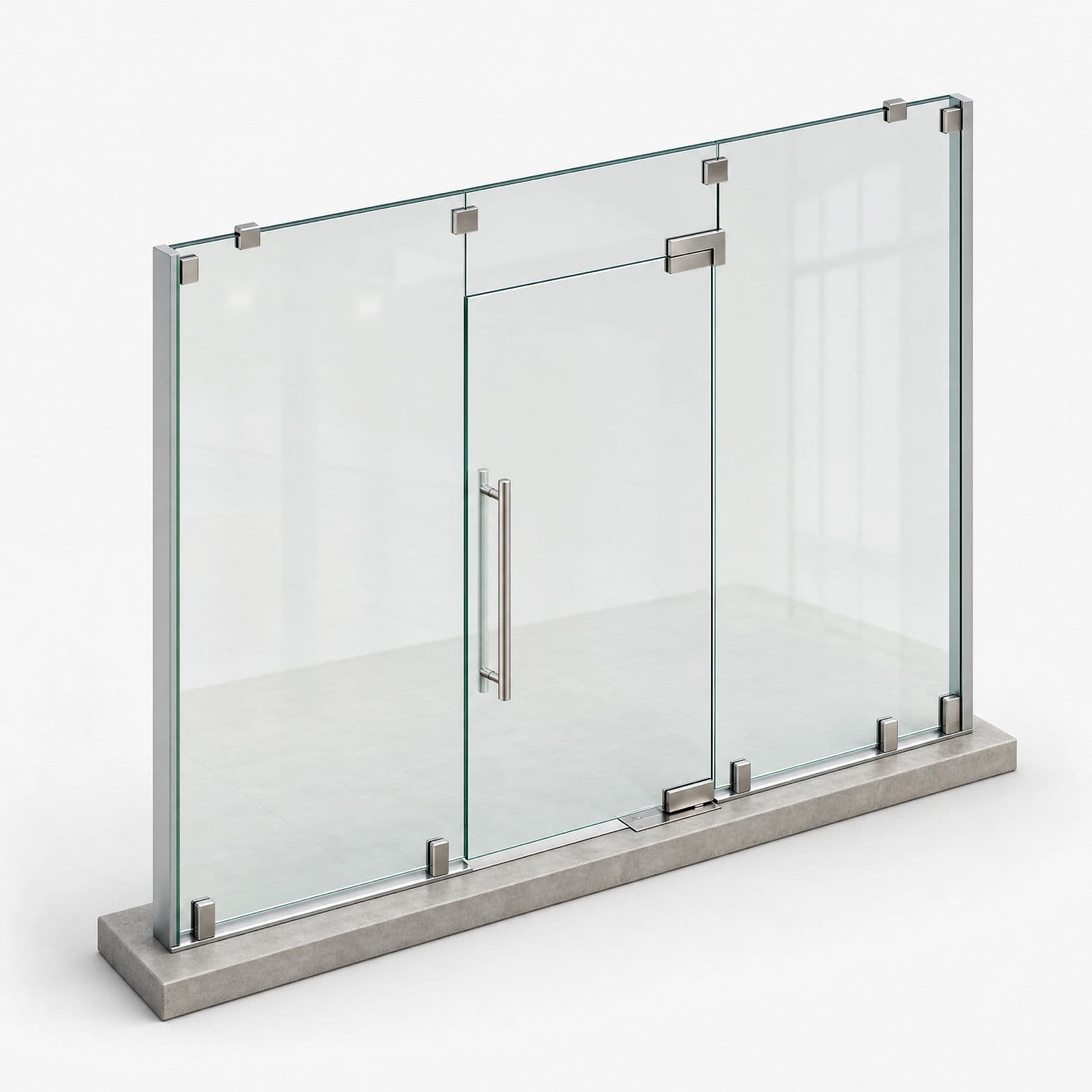
Patch fittings are the metal clamps fixed onto the corners of a frameless glass door or panel. They grip the glass between pads and connect it to the hardware: the bottom patch sits on the floor spring, the top patch holds the pivot, and other patches join the door to overhead or side glass and carry the lock.
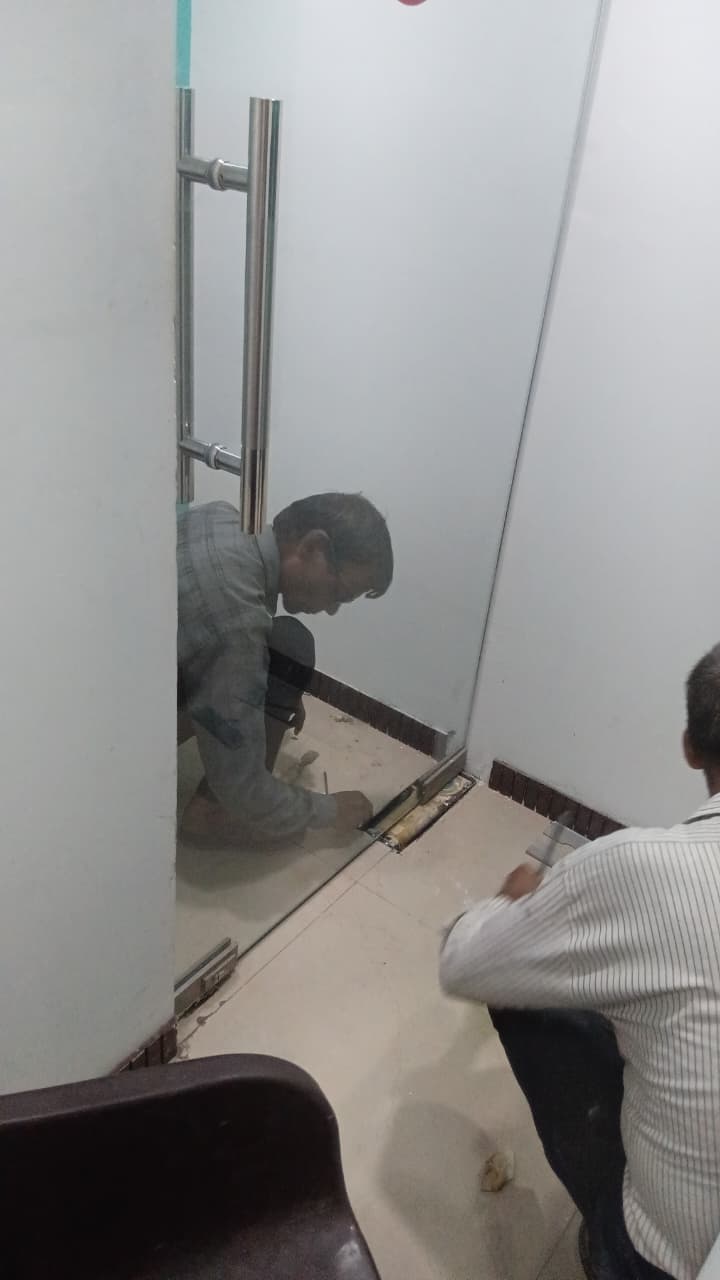
What does each patch fitting do?
| Fitting | Where | Job |
|---|---|---|
| Bottom patch | Lower corner of the door, pivot side | Sits on the floor spring spindle; carries the door's weight |
| Top patch | Upper corner of the door, pivot side | Holds the pivot pin that turns in the ceiling or transom socket |
| Transom patch | Fixed glass above the door | Joins the door's pivot to an overhead glass panel |
| Overpanel / corner patch | Corner where transom, side glass and door meet | Holds the pivot and ties fixed panels together |
| Lock patch | Bottom corner, closing side | Houses a floor lock bolt that shoots into a floor socket |
| Strike / keeper patch | Fixed glass beside the door | Receives the lock bolt where the door locks to glass |
Not every door uses all of them. A door between two walls, with a pivot socket in the ceiling, may need only a top and bottom patch and a lock. A shopfront with a glass transom and side lights uses several.
How do they hold the glass?
A patch fitting is a two-part body, usually an aluminium or steel core with a stainless or chrome cover, that clamps both faces of the glass. Fibre or rubber pads between metal and glass spread the pressure and stop direct metal contact, which would chip toughened glass. Most patches also locate on a notch or holes cut in the glass corner before toughening, so the fitting can't slide off under the door's weight. The pattern of holes and notches is fixed by the fitting chosen, which is why hardware has to be decided before the glass is ordered.
Fittings are made for a specific glass thickness, most commonly 10mm or 12mm. Using a 10mm fitting on 12mm glass, or packing a 12mm fitting to grip 10mm, is a common cause of slipping doors.
Where are they used?
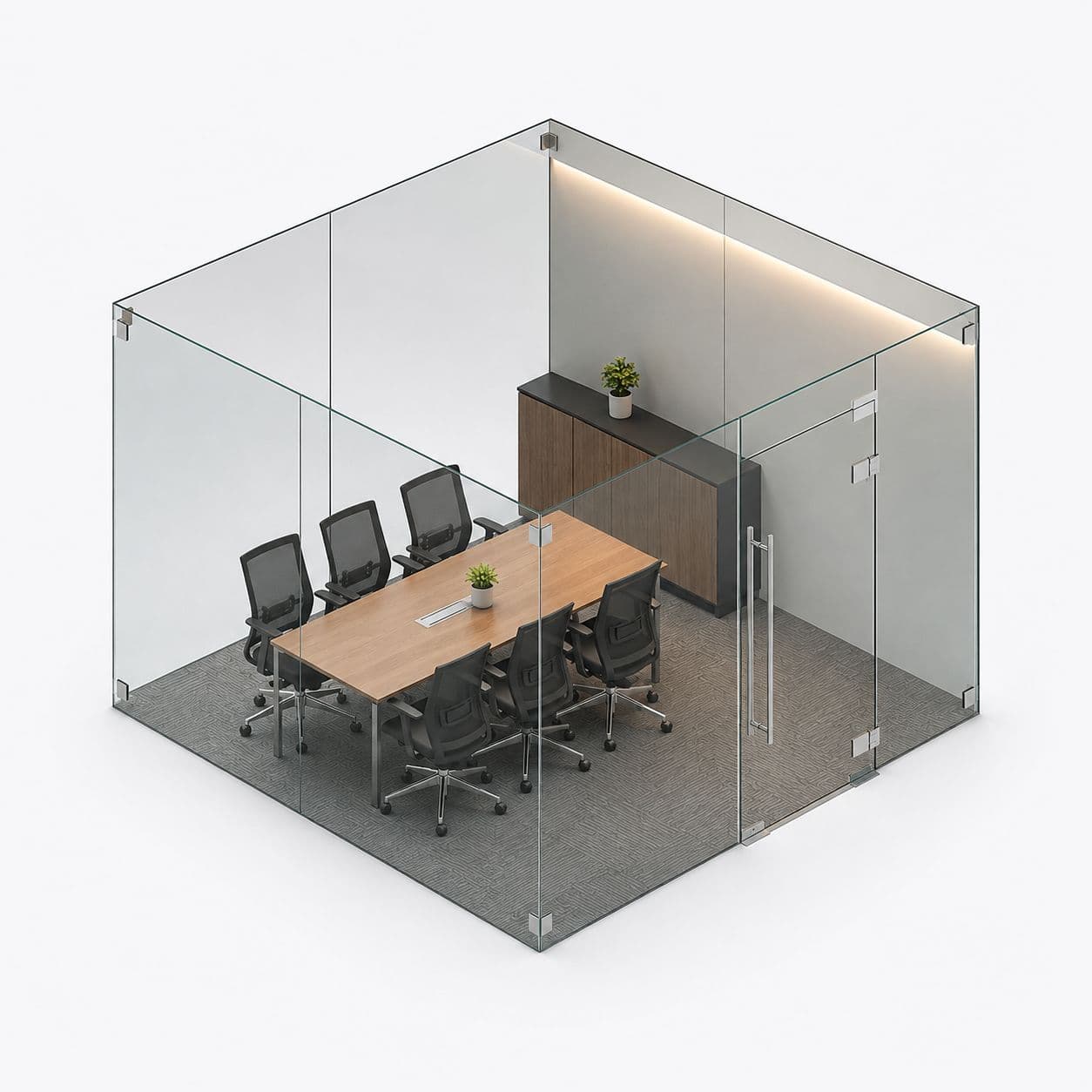
- Office cabin doors and conference rooms: frameless glass office partition with door.
- Shopfronts and showroom entrances: toughened glass shop front with door.
- Clinic, salon and restaurant doors, often double-action.
Shower doors don't use patch fittings; they hang on wall or glass-to-glass hinges. Patch fittings are designed for doors on floor springs or pivots.
Signs a patch fitting is failing
- The door has dropped and drags or scrapes the floor: often the bottom patch has slipped on the glass. See glass door dropped and dragging.
- Gap between door and fixed glass is wider at one end: glass doors uneven gap.
- The cover is loose, cracked or missing, or the door rocks: patch fitting broken.
- The lock bolt doesn't meet its socket: glass door lock not working.
Common confusions
- Patch fitting vs floor spring: the patch grips the glass; the floor spring underneath it does the closing.
- Patch fitting vs patch lock: a patch lock is one type of patch fitting, carrying the bolt.
- Patch fitting vs [spider fitting](/glossary/spider-fittings): spider fittings hold fixed facade glass at points through holes; patch fittings are for doors and interior glass.
- SS vs chrome covers: the visible cover may be stainless steel, chrome-plated or powder-coated; what matters for corrosion is the grade, and SS304 vs SS202 explains why.
Care
Wipe covers with a damp cloth and dry them; avoid acidic tile cleaners near the bottom patch, which can stain or corrode cheaper finishes. Every so often, check that the door still swings level and that the gap to the fixed glass is even. If it isn't, have it re-set early: a slipping patch lets the glass edge touch metal or the floor, and that is how chips, and later breakages, start.
Patch fittings at FabWise
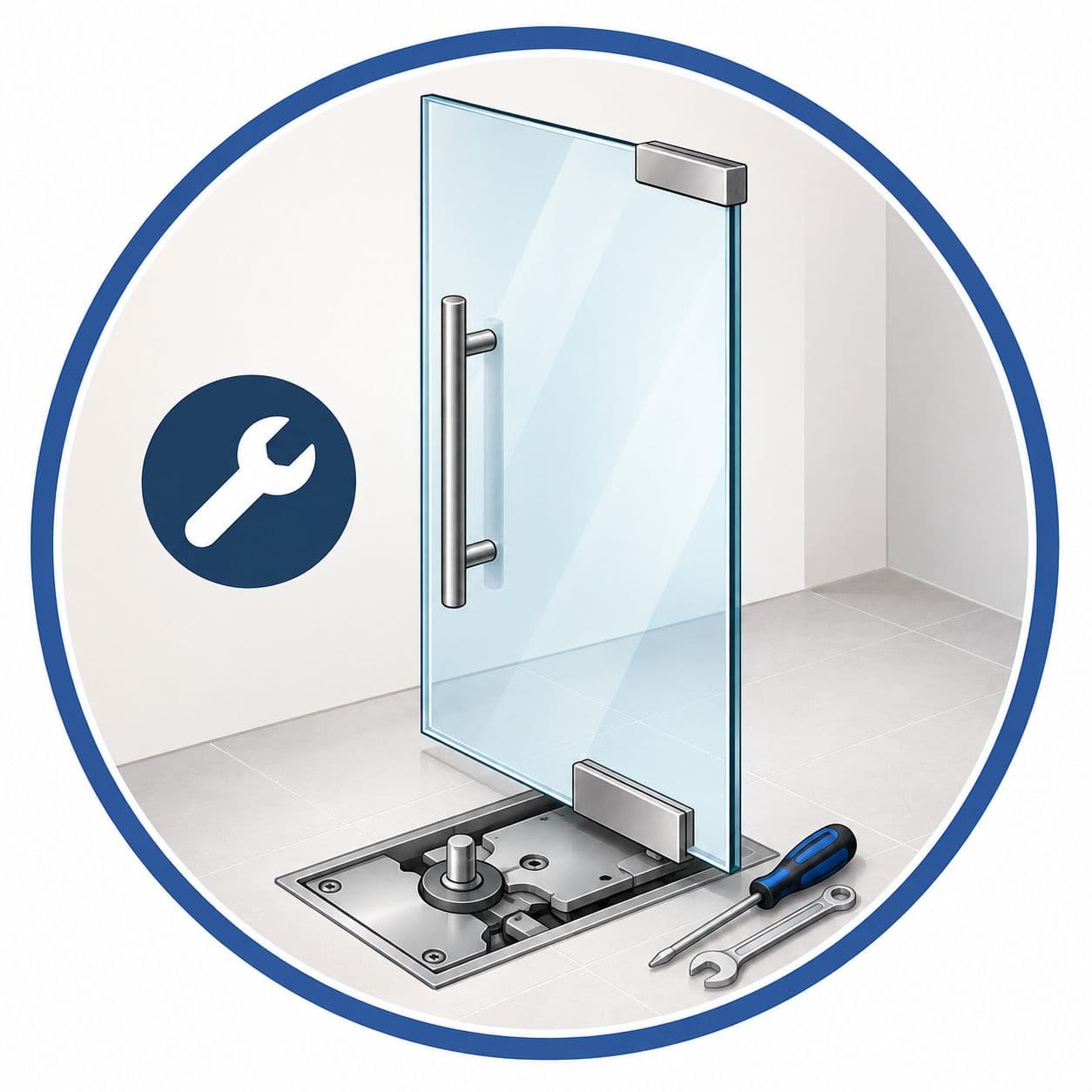
FabWise's office cabins and shopfronts in Gurugram and Noida use 12mm Saint-Gobain toughened glass with SS304 fittings, and the door hardware is fixed at the measurement visit so the glass is cut and drilled to match. Loose, broken or slipping fittings on existing doors are quoted from a photo on WhatsApp; start with glass door and partition repair.
Common questions
What are patch fittings on a glass door?
They are the metal clamp fittings on the corners of a frameless glass door. The bottom patch connects the glass to the floor spring, the top patch holds the pivot, and other patches join the door to overhead glass or carry a floor lock. They grip the glass between protective pads and usually locate on a notch cut before toughening.
Why has my glass door dropped at the bottom?
Often the bottom patch fitting has slipped on the glass, the top pivot has worn, or the fitting was meant for a different glass thickness. Less often the floor spring has sunk or failed. A dropped door rubs the floor or the fixed glass, which can chip the glass edge, so it is worth fixing quickly rather than living with it.
Can a broken patch fitting be replaced without changing the glass?
Usually yes, if the replacement suits the same glass thickness and the existing notch and holes in the glass. The door is supported, the old fitting removed and the new one clamped on with fresh pads. If the glass corner is chipped where the fitting grips, the glass itself may need replacing for safety.
Patch fitting aur hinge mein kya fark hai?
A hinge fixes a door to a wall or to another glass panel along its side and lets it swing on that edge, which is how shower doors work. A patch fitting clamps the corner of a heavy glass door and connects it to a floor spring below and a pivot above, so the door turns about a vertical axis near its edge.
Services on this page
Related terms
- Frosted glassFrosted glass is glass whose surface has been made matt and translucent, usually by acid-etching or sandblasting, so it lets light through but hides what is behind it.
- ACP fire-retardant (FR) coreAn FR-core ACP is an aluminium composite panel whose core between the two aluminium skins is heavily filled with mineral fire retardants instead of plain polyethylene, so it resists ignition and flame spread far better than a standard PE-core panel.
- Aluminium sectionsAluminium sections are extruded aluminium alloy profiles, most often alloy 6063 in a T5 or T6 temper, that form the frames of windows, sliding doors, partitions, louvres and facades, finished by anodising or powder coating.
- Back-painted glassBack-painted (lacquered) glass is glass with an opaque coloured coating applied to its rear face, so the colour is seen through a glossy glass surface; it is used for wall cladding, splashbacks and writing boards.
- CNC laser-cut jaaliA CNC laser-cut jaali is a decorative perforated screen cut from metal sheet, usually mild steel, stainless steel or aluminium, by a computer-controlled laser that follows a digital pattern, used in gates, partitions, grills, facades and railings.
- Double-glazed unit (DGU)A double-glazed unit (DGU, or insulated glass unit) is two panes of glass held apart by a spacer and sealed around the edge, with dry air or gas trapped between them to cut heat and noise.