
Mirrors · Gurgaon & Noida
Black spots on a mirror in Gurgaon: why mirrors desilver and what to do
Black spots and dark edges on a mirror are the silver backing corroding, usually from bathroom moisture, the wrong adhesive or silicone, or harsh cleaners creeping in at the edges. The damage can't be reversed. The fix is a new mirror, fixed with mirror-safe adhesive or clips and kept off damp walls.
What's actually going black
A mirror is a sheet of glass with a thin layer of silver on the back, protected by a coat of copper (on older mirrors) and paint. When moisture or chemicals get past the paint, they attack the silver, and it turns grey, then black. That's called desilvering. It nearly always starts at the edges or at a point where the back is damaged, and creeps inwards over months.
The glass itself is fine. It's the backing that's gone, which is why no amount of cleaning the front makes a difference.
Why mirrors develop black spots
Steam and splash at the edges
Bathroom mirrors in Gurugram and Noida flats face steam from hot showers twice a day and splashes from the basin. Water sits on the bottom edge, wicks behind the paint and starts corroding. Black creeping up from the bottom edge is the classic pattern.
The wrong silicone or adhesive
Acetic-cure (vinegar-smelling) silicone and some general-purpose adhesives react with mirror backing paint and silver. Spots appear exactly where the blobs of adhesive are: a mirror with neat dark patches in a grid is often a mirror glued with the wrong product.
Cleaners running behind the glass
Spraying glass cleaner straight onto the mirror lets ammonia and solvent run down and soak into the bottom edge. Over time it eats through the backing.
A damp wall behind it
A mirror fixed flat against a wall that's damp from a leak, a plumbing line or an outside wall in the monsoon has nowhere to breathe. Moisture attacks the whole back.
Damaged or unsealed edges
A chipped edge or an edge cut without any sealing gives moisture a direct path to the silver.
| Pattern of spots | Likely cause | What it tells you |
|---|---|---|
| Black creeping from the bottom edge | Steam, splash and cleaner run-off | Seal edges, wipe dry, spray cloth not mirror |
| Dark patches in a grid or dots | Wrong adhesive or silicone | Fix the new mirror with mirror-safe adhesive |
| Cloudy grey across the whole mirror | Damp wall behind | Fix the damp; mount with a gap |
| Spot spreading from a chip | Damaged edge | Replace with polished, sealed edges |
Can a desilvered mirror be repaired?
Not in any lasting way. Re-silvering is a factory process, and touch-up kits or paint on the back don't restore the reflection. A small spot at a corner can sometimes be hidden behind a frame or a shelf, but spreading black means the mirror is on its way out.
What you can check and do
- Note where the spots start: edges, grid pattern or all over.
- Feel the wall beside the mirror for damp, and check for a leak behind it.
- From now on, spray cleaner on a cloth, not on the mirror.
- Wipe the bottom edge dry after showers.
How a new mirror is fitted and quoted
Mirrors come under custom glass installation: cut to size, edges polished, and fixed with mirror-safe neutral-cure adhesive or mechanical clips, with a small gap to the wall where moisture is a concern. It's quoted from photos and sizes on WhatsApp, with no paid visit. Send a photo of the mirror and the spots, its size and how it's fixed now. If there's a damp wall behind it, we'll tell you to sort that first.
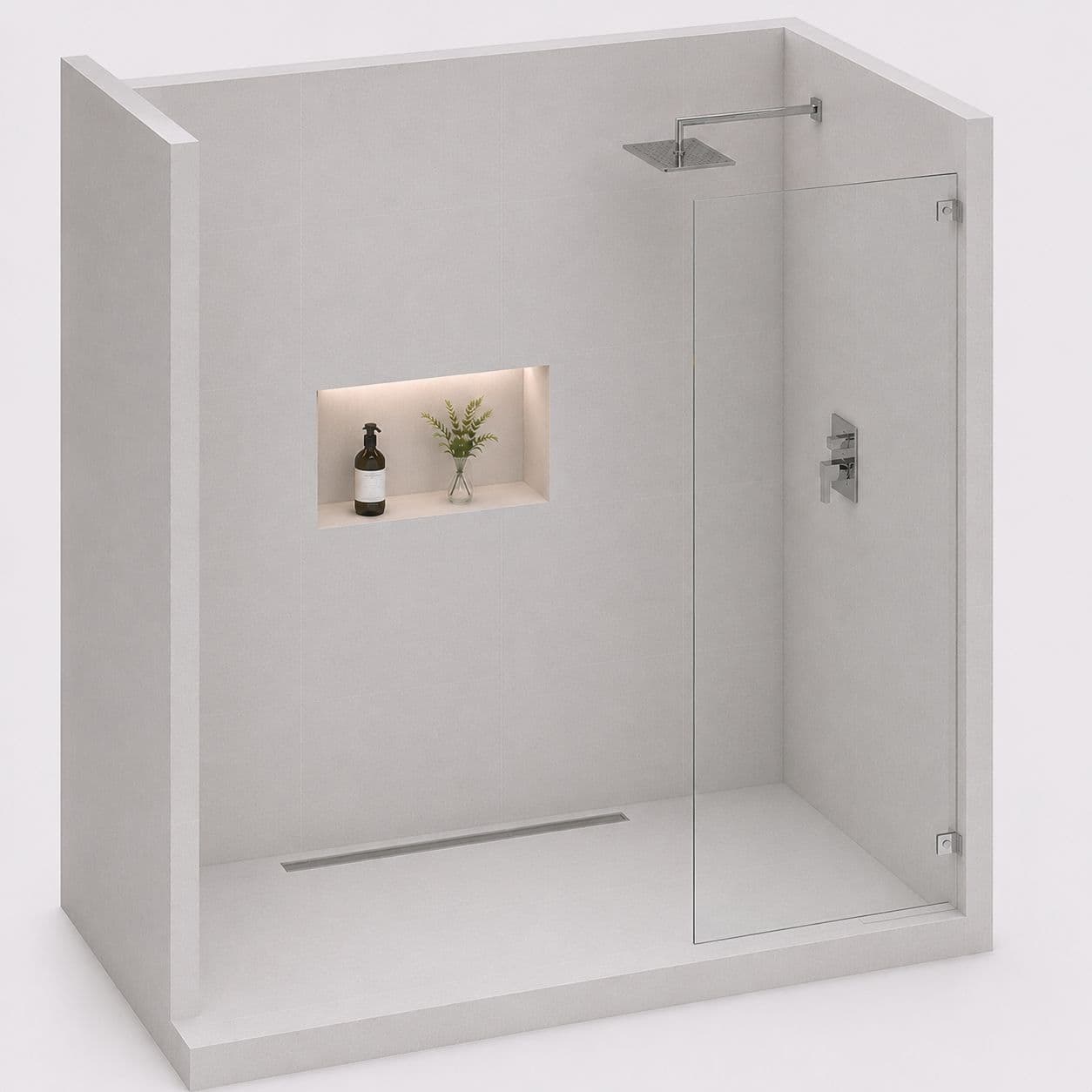
While the bathroom is being refreshed, a fixed frameless shower partition cuts splash and steam reaching the mirror; it starts from ₹370 per sq ft. The back-painted glass explainer explains a coated-glass alternative for splash-back walls.
Making the next mirror last
- Use an exhaust fan during and after showers.
- Keep a small gap behind mirrors on damp-prone walls.
- Polish and seal the edges, especially the bottom one.
- Never use acetic silicone near mirrors.
Steam damage often shows elsewhere too: see black mould in shower silicone and hard water stains on shower glass. For other cut-to-size glass, see glass table top chipped. Our glass work checklist for a new flat covers what to ask for, and the glass repair catalogue lists other fixes. Residents of the city's large townships can see South City. Send a photo of the mirror on WhatsApp and we'll quote a replacement.
Common questions
Why is my bathroom mirror getting black spots?
The silver backing is corroding. Usually steam and water get behind the bottom edge, or the mirror was fixed with acetic silicone or an adhesive that reacts with the backing. Cleaners sprayed on the mirror that run down behind it also cause it.
Can black spots on a mirror be removed?
No. The spots are damage to the silver layer behind the glass, not dirt on the front, so cleaning won't help. Re-silvering isn't practical outside a factory. A small spot at a corner can be hidden; spreading black means a replacement mirror.
What adhesive should be used to fix a mirror?
A mirror-safe adhesive or a neutral-cure silicone specifically rated for mirrors, applied in vertical strips so air can move behind, or mechanical clips. Acetic-cure silicone, the kind that smells of vinegar, attacks mirror backing and causes black spots.
Bathroom ke sheeshe pe kaale daag aa gaye, kya naya lagana padega?
Usually yes, if the black is spreading. It's the silver behind the glass corroding, so it can't be cleaned off. Send a photo, the size and how it's fixed now on WhatsApp, and we'll quote a new mirror fixed the right way.