

Staircase railings · Safety
Loose staircase handrail in Gurgaon: why it moves and how it's re-fixed
A handrail works loose when its wall brackets were screwed into plaster or hollow brick rather than solid masonry, when a weld or joint between lengths has cracked, or when the balusters below it have loosened. It's what people grab when they slip, so a loose handrail should be re-fixed properly, not just tightened.
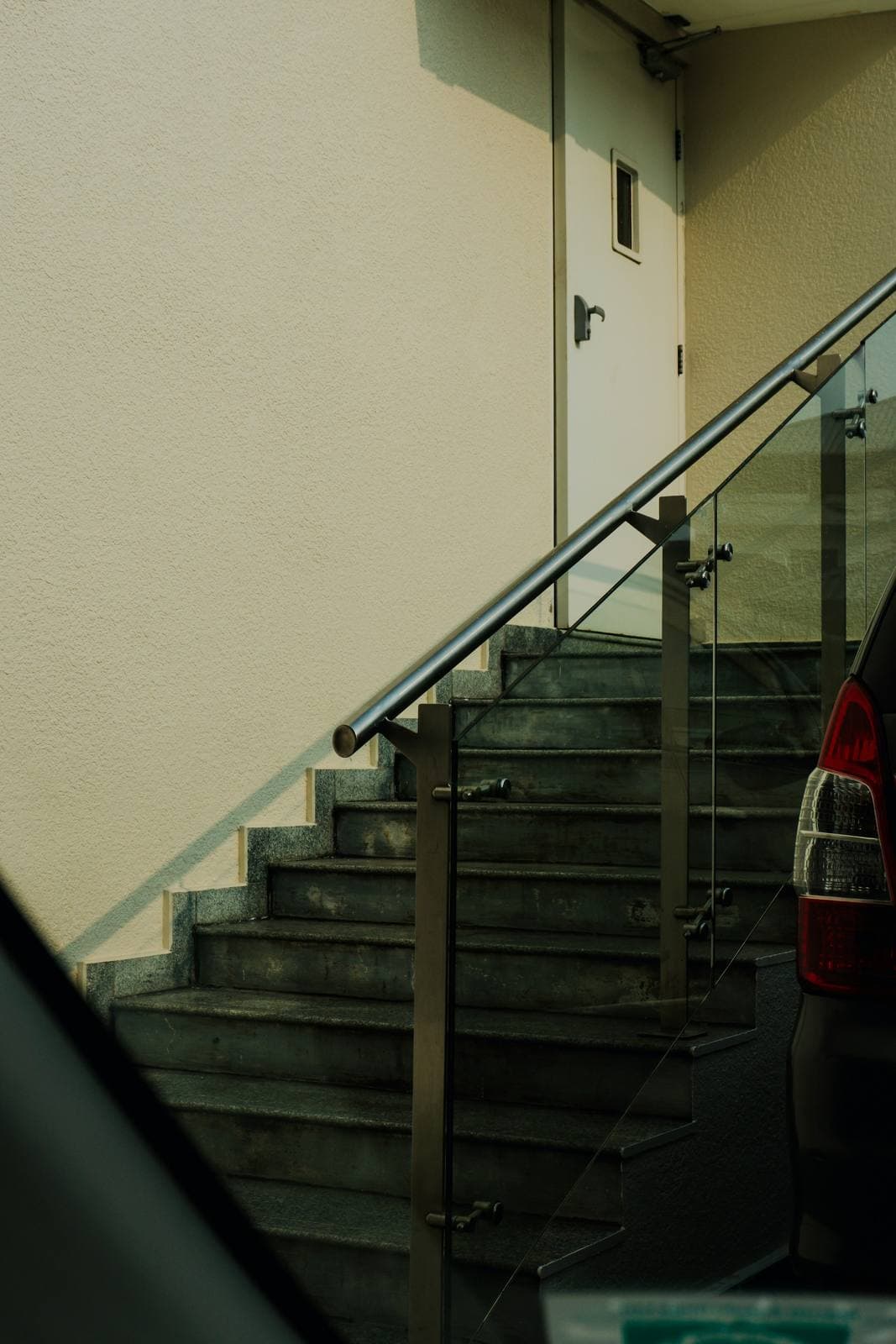
The handrail is the part of a staircase that has to work in the worst moment: when someone misses a step and grabs it with their full weight. A handrail that rattles or moves even slightly under a normal hand will move far more under a fall. In Gurugram's independent floors, builder floors and duplex flats, internal stairs often have a wall-mounted handrail on one side and a baluster railing on the other, and both come loose for different reasons.
Which kind of handrail do you have?
- Wall-mounted handrail on brackets screwed into the wall along the stair.
- Top rail of a baluster railing: a handrail welded or fixed onto vertical balusters or posts.
- Handrail on a glass railing: a cap or rail over glass panels.
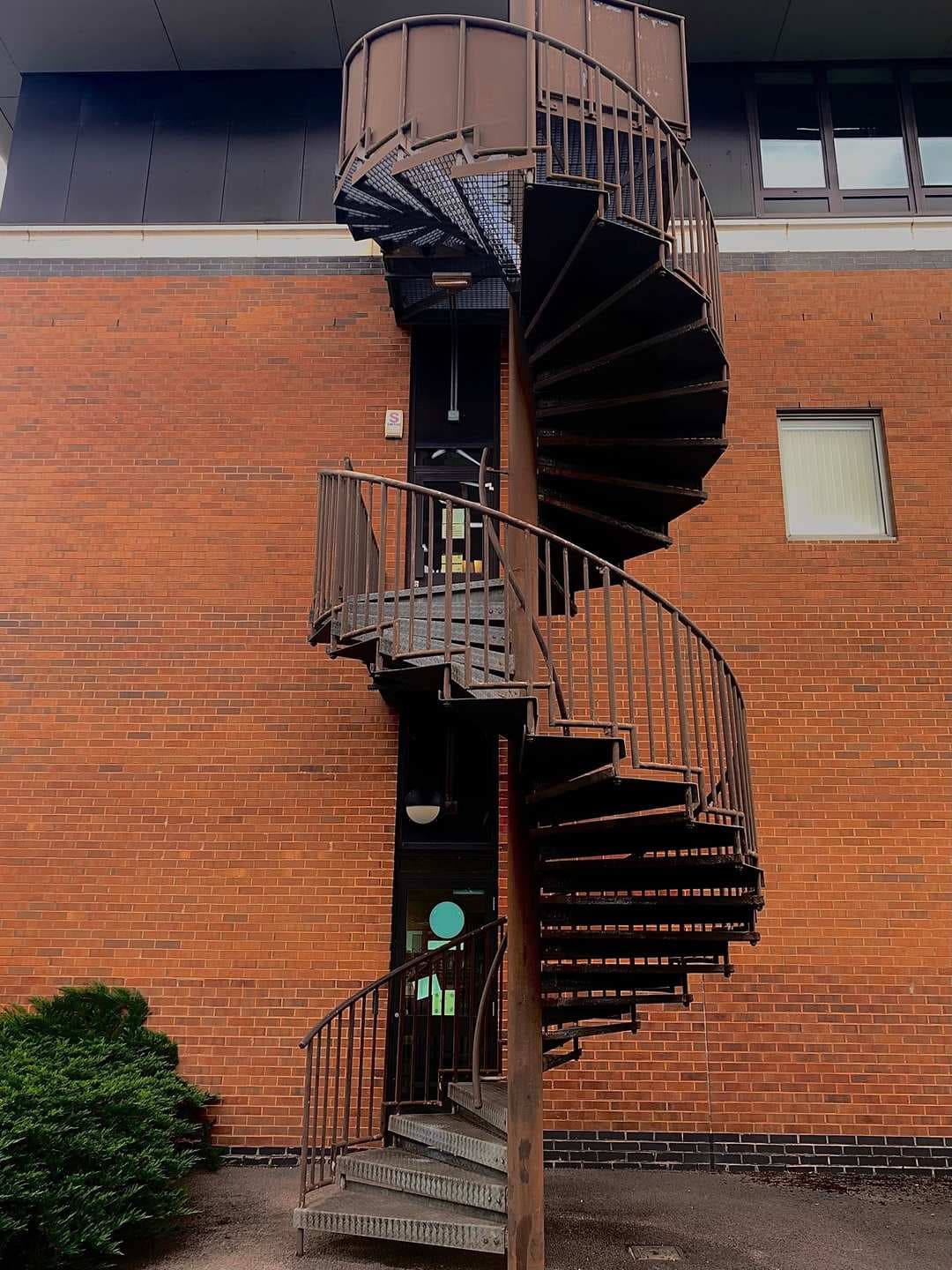
- Spiral or metal staircase with its own rail welded to the stair structure.
Why handrails come loose
Brackets in weak material
Wall brackets are often fixed with plastic plugs into plaster, hollow brick, AAC block or a tiled dado. Every grab works the screws, the plugs spin, and the bracket pulls out. A bracket that moves with a crack or crumbled plaster around it is the usual sign.
Too few brackets
A long handrail with brackets far apart flexes between them, and that movement loosens all the brackets over time. Ends without a bracket close to them are especially bouncy.
Cracked welds or open joints
Long handrails are made in lengths and joined. A cracked weld or a loose sleeve joint lets one length move on its own. On mild steel handrails, rust inside a joint can open it up; see welding joint cracked.
Loose balusters or posts below
On a baluster railing, the handrail is only as firm as what holds it up. If posts have loosened at their base plates or in the stair edge, the handrail moves with them; that's covered in railing wobbling.
Wood handrails on metal
Timber handrails fixed to metal balusters with screws can work loose as the wood shrinks in dry months and swells in the monsoon.
| Where it moves | Likely cause | Proper fix |
|---|---|---|
| At one wall bracket | Bracket in plaster or hollow brick | Re-fix into solid masonry with suitable anchors |
| Bounces between brackets | Brackets too far apart | Add brackets at closer spacing |
| At a joint between lengths | Cracked weld or loose sleeve | Re-weld or re-fix the joint |
| Whole rail moves with balusters | Posts loose at the base | Re-anchor posts, then the rail |
| Wooden rail on metal | Wood movement, loose screws | Re-fix with longer screws or through-bolts |
Checks you can do safely
- Standing on a landing, not mid-flight, grip the handrail and push gently in each direction.
- Find the point that moves most: a bracket, a joint or a post.
- Look around brackets for cracked plaster, gaps or rust stains.
- Look along joints and at the base of each baluster for cracks or rust.
Why tightening isn't enough
Turning the bracket screws tighter in a spun plug only crushes the plaster further. A proper fix removes the bracket, finds solid material behind the plaster or tile (sometimes by moving the bracket slightly), and fixes it with anchors suited to that material, such as chemical anchors in hollow or weak block. Mild steel parts may need rust treatment and powder coating or paint afterwards.
How FabWise handles it
Send photos on WhatsApp of the full staircase, each bracket or post near the loose section and a short video of the handrail moving. If a site visit is needed in Delhi NCR, it's ₹99, adjusted against the final bill if you go ahead; railing work is quoted after the visit, with no published rate. If the railing is old, low or has wide gaps, replacing it with a new staircase railing may be the safer route; our balcony railing height and safety guide explains the checks that apply to stairs too.
Keeping it firm
- Check the handrail by hand every few months on busy stairs.
- Fix any bracket the moment it moves; one loose bracket loads the rest.
- Repaint mild steel joints before rust opens them up.
For a whole staircase that moves, see metal staircase wobbling. Browse the railings catalogue or see railings in Gurgaon. Send a short video of the loose handrail on WhatsApp to get started.
Common questions
Why does my staircase handrail keep coming loose?
Usually because its wall brackets are fixed into plaster, hollow brick or AAC block with plastic plugs, which spin and pull out with use. Brackets too far apart, cracked welds and loose balusters below the rail are the other common causes.
Can I just tighten the screws on a loose handrail bracket?
Only if the plug and wall are sound. If the screws spin or the plaster around the bracket is cracked, tightening crushes it further. The bracket needs re-fixing into solid material with anchors suited to the wall, sometimes moved slightly to find it.
Is a loose handrail a safety risk?
Yes. A handrail is what people grab when they slip, so it has to hold a sudden full-body load. If it moves under a normal hand, it may fail in a fall. Warn everyone in the house and have it re-fixed properly.
Seedhi ki railing hil rahi hai, kaun theek karega?
Railing and handrail fixing is metal fabrication work. Send photos of the brackets or posts and a short video of it moving on WhatsApp. If a visit is needed in Delhi NCR it's ₹99, adjusted against the bill, and the work is quoted after the visit.
Services on this page
Related problems
Get it fixed
- Balcony & Staircase Railings: every option
- Balcony & Staircase Railings in Gurgaon
- Balcony & Staircase Railings in Noida
- Balcony & Staircase Railings in Delhi
- Balcony & Staircase Railings in Faridabad
- Balcony & Staircase Railings in Ghaziabad
- Balcony & Staircase Railings in Greater Noida
- SS railing price
- Glass railing price